
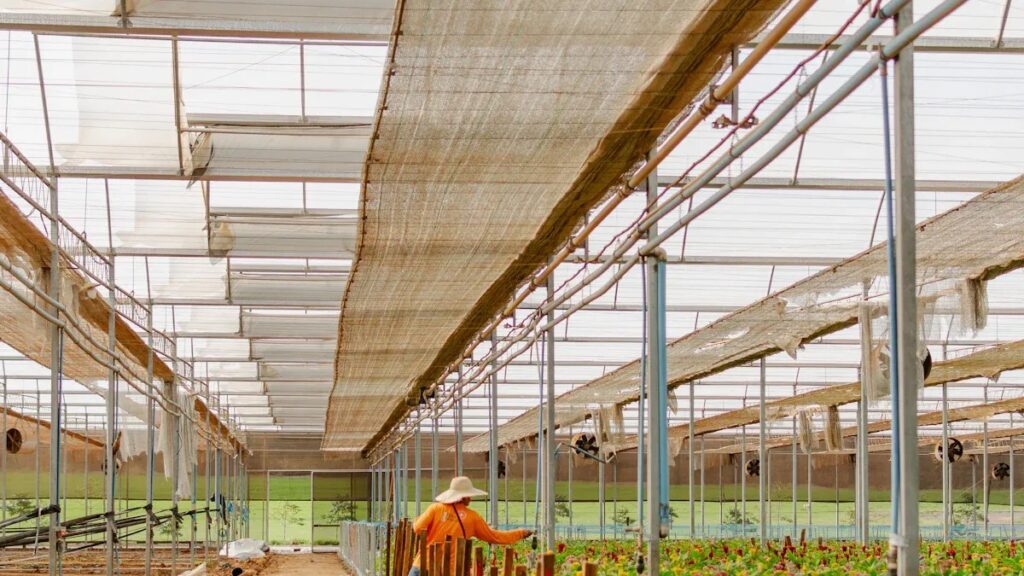
A shade net house is a protective structure designed to create a controlled environment for plants or other applications. It uses specialized nets to regulate sunlight, ensuring plants receive the optimal amount of light for healthy growth. This structure shields plants from harsh weather, such as excessive sunlight or strong winds, and minimizes damage caused by pests.
By using a shade net house, you can protect your crops while optimizing their growth conditions, making it an essential tool for sustainable farming practices.
How shade net houses work
Regulating sunlight with shade nets
Shade nets play a crucial role in managing the amount and quality of sunlight that reaches your crops. By using different types of photo-selective nets, you can adjust the intensity and spectrum of sunlight to suit specific plant needs.
- Blue, red, and white nets reduce sunlight radiation by 25%, while black nets provide up to 90% shading.
- White nets increase the UVA component, promoting healthier plant growth compared to open-field conditions.
- Black nets completely block UVA rays and alter the B/R ratio of sunlight radiation, increasing it from 0.66 to 0.75.
- The R/FR ratio remains stable across most nets, except under black nets in the early morning, where it can be two to three times higher.
These variations allow you to create an environment tailored to your crops, ensuring optimal photosynthesis and growth. Whether you need to protect plants from excessive sunlight or enhance specific light wavelengths, shade nets offer a versatile solution.
Controlling temperature and humidity
Shade net houses provide effective control over temperature and humidity, creating a stable microclimate for your plants. By attenuating solar radiation, shade nets reduce heat buildup, preventing temperature spikes that can harm crops.
- Climate screens used in greenhouses enhance humidity regulation, ensuring plants receive adequate moisture.
- Shade nets protect crops from hail, wind, and excessive solar radiation, indirectly influencing temperature and humidity levels.
- Studies measuring solar spectral photon-irradiance show that shade nets significantly reduce heat stress, promoting healthier plant development.
With these features, you can maintain consistent growing conditions, even in regions with unpredictable weather patterns. This level of control helps you maximize crop yield and quality while minimizing environmental stress on plants.
Ensuring proper ventilation and airflow
Proper ventilation is essential for maintaining healthy growing conditions, and shade net houses excel in this area. By leveraging natural ventilation techniques, such as the stack effect and cross ventilation, these structures ensure continuous airflow.
Warm air rises and escapes through openings in the shade net house, while cooler air enters from lower points. This movement of air prevents heat buildup and reduces humidity levels, creating an ideal environment for your crops. Enhanced airflow also minimizes the risk of fungal diseases and pest infestations, further protecting your plants.
With improved ventilation, shade net houses provide a balanced environment that supports robust plant growth and reduces the need for chemical interventions.
Benefits of shade net houses

Protection from extreme weather
Shade net houses provide a reliable shield against extreme weather conditions, ensuring your crops remain safe and healthy. These structures protect plants from excessive sunlight, heavy rainfall, strong winds, and hailstorms. By reducing the impact of harsh environmental factors, they minimize crop damage and improve overall plant survival rates.
For example, a study comparing different treatments demonstrated the effectiveness of shade net houses in protecting crops. The results showed that crops grown under a shade net with UV-stabilized polyethylene film and a 60-mesh insect net (T1) had significantly higher seed germination rates and lower seedling mortality compared to open-field conditions (T4). The table below highlights these findings:
| Treatment | Seed Germination (%) | Seedling Mortality (%) | Height (cm) at 30 days |
|---|---|---|---|
| T1 (UV stabilized polyethylene film with 60 mesh insect net along with green shade net) | 94.83 | 3.33 | 18.68 |
| T2 (UV stabilized polyethylene film with 60 mesh insect net) | 91.58 | 5.33 | 17.73 |
| T4 (Open field control) | 84.58 | 12.33 | 15.58 |
This data underscores the importance of shade net houses in creating a controlled environment that enhances crop resilience against extreme weather. By investing in a shade net house, you can safeguard your crops and ensure consistent growth, even in unpredictable climates.
Enhanced crop quality and yield
Shade net houses play a pivotal role in improving both the quality and yield of your crops. By regulating sunlight, temperature, and humidity, these structures create optimal growing conditions that promote healthy plant development. Crops grown under shade nets often exhibit better color, size, and texture compared to those grown in open fields.
Additionally, the controlled environment reduces the risk of pest infestations and diseases, which can otherwise compromise crop quality. For instance, vegetables and fruits grown under shade nets tend to have fewer blemishes and a longer shelf life. This not only enhances their market value but also ensures you get the most out of your harvest.
By using a shade net house, you can achieve higher yields while maintaining superior crop quality, making it a valuable investment for both small-scale and commercial farming operations.
Energy and water efficiency
Shade net houses contribute to sustainable farming by improving energy and water efficiency. The shading effect reduces the need for artificial cooling systems, helping you save on energy costs. At the same time, the controlled environment minimizes water evaporation, ensuring your plants retain adequate moisture.
For example, crops grown under shade nets require less frequent irrigation compared to those in open fields. This not only conserves water but also reduces labor and operational costs. Furthermore, the reduced heat stress on plants means they can utilize water more effectively, leading to healthier growth.
By adopting shade net houses, you can optimize resource usage while reducing your environmental footprint. This makes them an eco-friendly solution for modern agriculture.
Versatility for various applications
Shade net houses offer remarkable versatility, making them suitable for a wide range of applications. Their ability to create controlled environments allows you to adapt them to meet specific needs across different sectors. Here are some of the most common ways you can utilize shade net houses:
- Agriculture and Horticulture: Shade net houses are widely used to grow vegetables, fruits, and flowers. They help you regulate sunlight, temperature, and humidity, ensuring optimal growth conditions for crops. For instance, you can use them to cultivate delicate plants like orchids or leafy greens that thrive in partial shade.
- Nurseries and Home Gardening: If you manage a nursery or enjoy home gardening, shade net houses can protect your plants from harsh weather and pests. They are ideal for propagating seedlings, growing ornamental plants, or maintaining a small herb garden.
- Livestock and Poultry Farming: Shade net houses are not limited to plants. You can use them to provide shelter for livestock and poultry, shielding animals from extreme heat or cold. This improves their comfort and productivity, especially in regions with challenging climates.
- Industrial and Commercial Uses: Beyond agriculture, shade net houses serve industrial purposes. You can use them for drying agricultural produce, storing equipment, or even as temporary workspaces. Their lightweight structure and ease of installation make them a practical choice for various commercial needs.
チップ: When selecting a shade net house for your application, consider factors like shading percentage, net material, and structural design. These elements ensure the structure meets your specific requirements.
The adaptability of shade net houses makes them an invaluable tool across industries. Whether you are a farmer, gardener, or business owner, you can rely on these structures to create a controlled environment that enhances productivity and efficiency.
Applications of shade net houses
Agricultural and horticultural uses
Shade net houses are indispensable in agriculture and horticulture. They create a controlled environment that protects plants from excessive sunlight and harsh weather. By regulating sunlight exposure, they minimize UV radiation and heat stress, which can otherwise harm crops. Additionally, shade nets reduce evaporation, helping retain soil moisture and promoting healthier plant growth.
These structures also extend growing seasons. You can plant earlier in the year and harvest later, maximizing productivity. Shade net houses create a cooler environment, sometimes up to 30 degrees cooler than outside temperatures. This improves flower and fruit pollination, leading to higher yields. They also reduce the need for chemical pesticides by shielding plants from pests and diseases. For example, studies show that Habanero peppers grown in shade houses required 50% fewer insecticides and fungicides. The yield of these peppers was significantly higher compared to those grown outdoors.
By managing light, humidity, temperature, and carbon dioxide levels, shade net houses provide optimal conditions for crops. Whether you grow vegetables, fruits, or flowers, these structures enhance both quality and quantity.
Nurseries and home gardening
Shade net houses are equally valuable for nurseries and home gardening. They protect delicate seedlings and ornamental plants from extreme weather and pests. If you enjoy gardening at home, you can use a shade net house to grow herbs, flowers, or small vegetables. These structures help maintain consistent growing conditions, ensuring your plants thrive.
For nurseries, shade nets offer an ideal environment for propagating plants. They regulate sunlight and temperature, which are crucial for young plants. The controlled environment also reduces water loss, making it easier to manage irrigation. Whether you are a hobbyist or a professional, shade net houses simplify plant care and improve results.
Livestock and poultry farming
Shade net houses are not limited to plants. They also provide excellent shelter for livestock and poultry. By reducing heat and offering protection from harsh weather, these structures improve animal comfort and productivity. For instance, poultry housed under shade nets experience less heat stress, leading to better egg production. Similarly, livestock kept in shaded areas remain healthier and more active.
These structures are particularly useful in regions with extreme climates. They create a cooler environment, ensuring animals stay comfortable even during hot summers. Shade net houses are a practical solution for farmers looking to enhance animal welfare and efficiency.
Industrial and commercial purposes
Shade net houses have proven to be highly effective in industrial and commercial applications due to their versatility and cost-efficiency. These structures are widely used in industries that require controlled environments for production, storage, or processing. For example, they serve as temporary workspaces for drying agricultural produce, such as spices, herbs, and grains. By regulating sunlight and airflow, shade net houses ensure consistent drying conditions, which improve product quality and reduce spoilage.
In commercial settings, shade net houses are often utilized for equipment storage or as protective covers for construction materials. Their lightweight design and ease of installation make them a practical choice for businesses seeking quick and affordable solutions. Additionally, they are used in greenhouse operations to support sustainable farming practices, aligning with the growing demand for organic produce.
A recent market report highlights the economic potential of shade net houses in industrial and commercial sectors. The table below summarizes key insights from the “Shade Net Manufacturing Plant Project Report 2025”:
| Aspect | 詳細 |
|---|---|
| Report Title | Shade Net Manufacturing Plant Project Report 2025 |
| Focus | Manufacturing, project economics, and market trends |
| Key Insights | Capital investments, operating costs, market performance, and role in agricultural practices |
| Economic Analysis | Includes capital investments, project funding, operating expenses, income and expenditure projections, fixed vs. variable costs, expected ROI, NPV, profit and loss account, and financial analysis. |
| Market Drivers | Demand for sustainable farming, population growth, organic farming expansion, and government initiatives. |
| Applications | Used in agricultural and horticultural applications, including crop protection and greenhouse operations. |
This data underscores the growing importance of shade net houses in meeting industrial and commercial needs. By investing in these structures, you can enhance operational efficiency while contributing to sustainable practices.
Materials used in shade net houses
Types of shade nets (e.g., UV-stabilized, shading percentages)
Shade nets come in various types, each designed to meet specific agricultural or commercial needs. The most common types include UV-stabilized nets, which resist degradation from prolonged sun exposure, ensuring durability. These nets are available in different shading percentages, ranging from 30% to 90%, allowing you to control the amount of sunlight that reaches your crops.
For instance, a 50% shade net is ideal for vegetables like tomatoes, while a 75% net works better for delicate plants such as orchids. Some nets are also photo-selective, meaning they filter specific wavelengths of light to enhance plant growth. By choosing the right type of shade net, you can create an environment tailored to your plants’ requirements, improving their health and productivity.
Frame materials (e.g., metal, wood, PVC)
The frame of a shade net house provides structural support and determines its durability. Common materials include metal, wood, and PVC. Metal frames, often made of galvanized steel, offer excellent strength and resistance to corrosion, making them suitable for long-term use. Wooden frames are cost-effective but may require regular maintenance to prevent decay. PVC frames are lightweight and easy to assemble, making them a popular choice for smaller installations.
Engineering studies have validated the performance of these materials under various conditions. For example, researchers designed a shade structure capable of withstanding winds over 60 mph using 50% shade netting. The table below outlines key milestones from this study:
| Milestone | 説明 |
|---|---|
| 7.3 | Design a shade structure capable of withstanding sustained winds >60 mph |
| 7.4 | Define the load requirements of support posts and select the profile shape |
| 7.5 | Define the load requirements of ground anchors and develop a prototype design |
| 7.7 | Build and erect prototype shade structures |
| 7.8 | Evaluate the performance of prototype shade structures |
| 7.13 | Complete cost estimates |
This analysis highlights the importance of selecting the right frame material to ensure stability and cost-efficiency.
Additional components (e.g., fasteners, anchors)
In addition to shade nets and frames, several components play a crucial role in the functionality of a shade net house. Fasteners, such as clamps and ties, secure the net to the frame, ensuring it remains taut and stable. Ground anchors provide additional support, especially in areas prone to strong winds. Other components, like post caps and connectors, enhance the structure’s durability and ease of assembly.
By investing in high-quality components, you can extend the lifespan of your shade net house and reduce maintenance costs. These elements ensure the structure remains reliable, even under challenging environmental conditions.
Installation and cost of shade net houses
Steps for installing a shade net house
Installing a shade net house involves several key steps to ensure its stability and functionality. Begin by selecting a suitable location with proper sunlight exposure and minimal obstructions. Clear the site of debris and level the ground to create a stable foundation.
Next, assemble the frame using your chosen material, such as galvanized steel, wood, or PVC. Secure the frame firmly to the ground using anchors or concrete footings to withstand environmental stresses. Attach the shade net to the frame, ensuring it is taut and evenly distributed. Use fasteners like clamps or ties to secure the net in place.
Finally, inspect the structure for any loose components or gaps. Make adjustments as needed to ensure the shade net house provides optimal protection and ventilation. Regular inspections during installation help prevent future issues and extend the structure’s lifespan.
Factors influencing installation costs
The cost of installing a shade net house depends on various factors, including size, materials, and location. The table below highlights key elements that affect pricing:
| Factor | 説明 |
|---|---|
| Size and dimensions | Larger structures require more materials, increasing costs. |
| Material quality and type | Different grades of materials affect pricing significantly. |
| Design and customization | Complex designs lead to higher costs due to additional engineering. |
| Frame material | The choice of frame material impacts durability and cost. |
| Shade netting type and density | Different materials and densities have varying price points. |
| Installation requirements | Site preparation and labor costs can add to the overall price. |
| Accessories and features | Additional features enhance functionality but increase costs. |
| Geographic location | Local market conditions and labor rates affect pricing. |
| Manufacturer or supplier | Variations in pricing based on supplier reputation and quality. |
| Market demand and competition | Prices fluctuate based on supply and demand dynamics. |
Understanding these factors allows you to plan your budget effectively. For example, opting for a simpler design or locally sourced materials can help reduce costs without compromising quality.
Maintenance and durability tips
Proper maintenance ensures your shade net house remains functional and durable over time. Regularly inspect the structure for wear and tear, especially after extreme weather events. Check the shade net for tears or sagging and replace damaged sections promptly.
Clean the shade net periodically to remove dust and debris that may block sunlight or reduce ventilation. Use mild soap and water to avoid damaging the material. Inspect fasteners, anchors, and frame components for rust or loosening, and tighten or replace them as needed.
Additionally, store the shade net properly during off-seasons to prevent unnecessary wear. By following these maintenance practices, you can extend the lifespan of your shade net house and maximize its benefits.
Shade net houses offer a reliable way to regulate environmental conditions, making them essential for modern agriculture and beyond. They protect crops from harsh weather, improve yields, and reduce resource consumption. Their versatility extends to nurseries, livestock farming, and even industrial applications.
- Eco-friendly shade nets enhance crop yield by filtering light and reducing water evaporation.
- Biodegradable and recycled materials in nets lower the environmental impact.
- Global regulations now promote sustainable materials, driving innovation in shade net production.
By adopting shade net houses, you can create a sustainable, efficient, and productive environment tailored to your needs. 🌱
 Japanese
  English
  German
  French
  Spanish
  Russian