
You should pick a plastic shade net or other options based on your needs. Growers usually think about a few important things:
1. How much does it cost, and your budget? 2. How well does it control temperature and let air move? 3. How it deals with rain, snow, and water 4. If it sheds microplastics 5. How well it keeps away pests 6. How much shade it gives and how much area it covers 7. How strong the material is and if it resists UV rays 8. How easy it is to set up and take care of
Think about your weather, what you grow, and your money before you decide.
Основные выводы
- Plastic shade nets last longer, protect plants well, and cost less over time compared to natural fiber nets.
- Choose the net color and shade level based on your plants and climate to help them grow strong and healthy.
- Plastic nets resist bad weather, mold, and pests better than natural fiber nets, making them easier to care for.
- Natural fiber nets break down in soil and help the environment, but need frequent replacement and more care.
- Match your shade net choice to your budget, weather, and plant needs for the best results and savings.
Overview
Plastic Shade Net
Plastic shade net is used by many gardeners and farmers. It is made from high-density polyethylene (HDPE). This material is strong and can handle bad weather. These nets block harmful UV rays and protect plants from too much sun. They are made to last outside. There are different types of plastic shade nets. Each type has its own good points.
| Type | Описание | Durability / Features |
|---|---|---|
| HDPE Shade Net | UV stabilized, lightweight, strong | Lasts 3-5 years or more, weather-resistant |
| Aluminet Shade Net | HDPE with aluminum coating reflects sunlight | Reduces heat, 30%-70% shading, durable |
| Knitted Shade Net | Tough, flexible, easy to install | Good UV absorption, long-lasting |
| Monofilament Shade Net | Single HDPE strands, lightweight, strong | Resistant to wear, suitable for long-term outdoor use |
| Woven Shade Net | Closely knit HDPE fabric, very strong | Withstands harsh weather, heavy-duty applications |
You can pick how much shade you want, from 30% to 90%. Plastic shade net comes in colors like black, green, or white. You can choose the color that fits your weather and plants. Many people like these nets because they do not cost much. They are also easy to put up.
Альтернативы
There are other choices besides plastic shade net. Each one has its own good sides. Natural fiber nets, like burlap or Hessian, break down over time. They are good for short use or to stop frost. Shade cloth is made from woven or knitted fabric. It can be used again and again. You can also make your own shade with old bed sheets or window screens. These work well for small gardens or if you need shade fast.
- Natural Fiber Nets: Burlap and Hessian give soft shade and let air move. They are good for seedlings or weak plants.
- Shade Cloth: This fabric comes in different thicknesses. It is good for greenhouses and patios.
- DIY Solutions: Old sheets or mesh screens help cover small spots. They are cheap and easy to use.
Tip: If you want to help the planet, try natural fiber nets. If you need something fast, DIY ideas are best.
Пригодность к климату
Hot and Dry
Hot and dry places are hard for plants. The sun and heat can hurt plants and dry the soil fast. Plastic shade net helps in these areas. It is made from strong synthetic fibers. These fibers stand up to sunlight, heat, and germs. The net gives good UV protection. It keeps the area cooler for plants. This helps the soil stay wet and lets plants grow well. Natural fiber nets like burlap break down faster in strong sun. They do not block as much UV light and may not last all summer.
The color of the net changes how hot it gets. Black nets block more light and make the air inside more humid. Green and beige nets let in more light and keep the temperature steady. The table below shows how color changes with temperature and humidity:
| Climate Period | Shade Net Color | Air Temperature Impact | Relative Humidity Impact | Light Transmission Characteristics |
|---|---|---|---|---|
| Winter | Black | +3 °C inside | Highest humidity | Lowest PAR transmission |
| Winter | Green | Modest increase | Moderate humidity | High blue-green light |
| Winter | Beige | Modest increase | Moderate humidity | More infrared/red light |
| Spring | Black | Up to -9.6 °C cooler | Highest humidity | Reduced PAR transmission |
| Spring | Green | Cooler than beige | High humidity | High PAR transmission |
| Spring | Beige | Slightly warmer | High humidity | More infrared/red light |
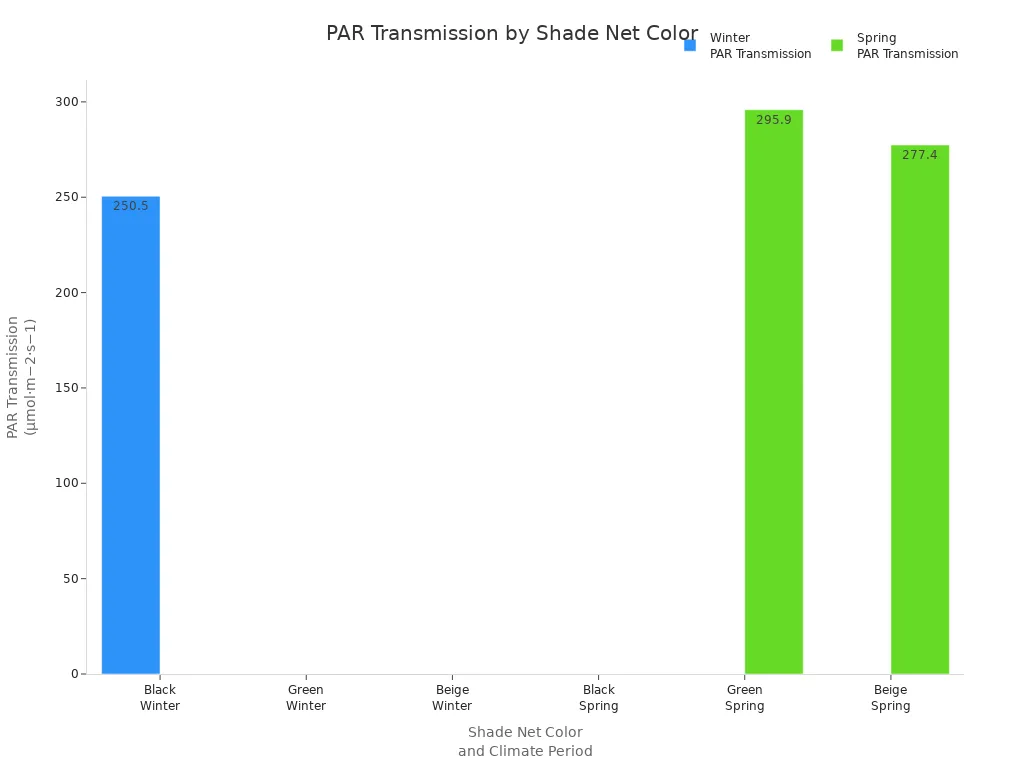
Tip: Use black nets for the most shade and humidity. Choose green or beige nets for more light and steady temperatures.
Humid and Rainy
Humid places get lots of rain and moisture. Plastic shade net does not rot in wet weather. It keeps its shape and protects plants from heavy rain and wind. Natural fiber nets soak up water and may sag or break faster. Shade cloth and DIY ideas, like old sheets, work for a short time but need to be replaced often.
Net color also matters in rainy weather. Black nets keep the air very humid. This helps some plants, but can cause mold. Green and beige nets let in more light and dry out faster after rain. Pick the net color that fits your plants and local weather.
Note: In rainy places, you need a net that dries fast and does not get moldy. Plastic shade net gives good protection and lasts longer than natural fiber nets.
Light and UV Protection
Shade Levels
You need to choose the right shade level for your plants. Shade nets and their alternatives come in different densities and colors. Each option changes how much sunlight and UV rays reach your crops. The right choice helps your plants grow strong and healthy.
- Light-loving vegetables, such as tomatoes, do best with about Оттенок 30%. Leafy greens, like lettuce, prefer a closer to 50%. Some shade-loving plants need up to 75% shade.
- Black shade nets absorb heat. These work well for cooler climates or for plants that like warmth.
- White shade nets reflect heat and keep temperatures lower. They provide a full light spectrum, which helps fruiting and flowering plants in warm areas.
- Colored nets, such as red or blue, change the light spectrum. Red nets can boost flowering. Blue nets help plants grow more leaves.
- Aluminum shade nets offer advanced light diffusion and temperature control. These are good for delicate or high-value crops.
- The percentage on a shade net tells you how much light it blocks. For example, a 40% net blocks 40% of sunlight and lets 60% through.
Tip: Match the net color and density to your plant type and climate. This helps you get better growth and higher yields.
Plant Health
The right shade net protects your plants from harsh sunlight and harmful UV rays. Plastic shade nets, especially those with UV stabilization, block damaging rays and lower the risk of leaf burn. Natural fiber nets, like burlap, offer some UV protection but break down faster and may not last through a full season.
A scientific study on tea plants showed that colored shade nets, such as red and blue, change the light spectrum and affect plant growth. Black nets lower light intensity but do not change the light quality. Red nets can help plants flower more, while blue nets support leafy growth. White nets keep the area cooler and help plants grow faster in hot weather.
You can combine different net colors in one area to meet the needs of many crops. Using the right shade net improves plant health, boosts yield, and can even save energy by reducing the need for extra cooling.
Note: If you want the best results, adjust your shade net choice as your plants grow and as the seasons change.
Долговечность
Weather Resistance
You want your shade net to handle bad weather. Plastic shade nets made from HDPE are very strong. They protect plants from wind, sun, and rain. The knitted design lets water go through. It also helps air move under the net. This stops heat from building up. The net slows down the wind, so it does not tear easily in storms.
Plastic nets do not rot or break down fast. They resist chemicals and moisture. You can use them in places with lots of rain or strong sun. Woven plastic nets are stiff and give strong protection. If they get damaged, they might start to unravel. Natural fiber nets like burlap or cotton do not work well in tough weather. They soak up water and get heavy. They can sag and tear quickly. You need to replace them often after rain or wind.
| Feature | Knitted Plastic Shade Cloth (HDPE) | Woven Plastic Shade Cloth | Natural Fiber Nets |
|---|---|---|---|
| Tear Resistance | Высокий | Высокий | Низкий |
| UV Resistance | Excellent | Excellent | Poor |
| Weather Resistance | Withstands wind, hail, and sun | Withstands harsh weather | Poor |
| Chemical Resistance | Высокий | Высокий | Низкий |
| Ventilation & Water | Good | Moderate | Poor |
Tip: Pick HDPE shade nets if your weather changes a lot. They last longer and you do not need to replace them often.
Lifespan
Think about how long your shade net will last. Plastic shade nets made from HDPE monofilament last five to seven years. Some good nets last up to fifteen years if you care for them. UV stabilizers help these nets fight sun damage. Makers add these to keep the net strong and bendy for years.
Natural fiber nets like cotton or jute do not last long. They last less than one year. They do not block UV rays well and tear easily. You have to buy new ones often. This costs more money and takes more work.
| Material Type | Average Lifespan (Years) | Maximum Lifespan (Years) | Notes on Durability and Usage |
|---|---|---|---|
| HDPE Monofilament | 5 | 7 | UV-treated, excellent UV resistance, high tear strength |
| HDPE Tape Nets | 1 | 3 | Moderate UV resistance and tear strength |
| Cotton/Jute Nets | < 1 | < 1 | Poor UV resistance, low tear strength, and high maintenance |
Note: If you want your net to last many years, choose HDPE plastic shade nets. You save time and money because you do not need to replace them often.
Стоимость
Upfront Cost
When you start a garden or farm, you look at prices first. Plastic shade nets made from HDPE are cheaper. They cost about $5.38 to $16.15 for each square meter. Polypropylene plastic nets are more expensive. These cost between $16.15 and $32.29 per square meter. If you build a plastic tunnel house, it costs about Rs 60, which is around $0.75 per square meter. Bamboo and wooden shade net houses cost a lot more money.
| Material/Structure Type | Typical Upfront Cost per Square Meter (USD or INR) | Notes on Cost and Features |
|---|---|---|
| HDPE Plastic Shade Nets | Approximately $5.38 to $16.15 | Affordable, UV-resistant, cost-effective |
| Polypropylene Plastic Nets | Approximately $16.15 to $32.29 | Higher upfront cost, longer lifespan, better durability |
| Plastic Tunnel Structures | Around Rs 60 (~$0.75) | Cheaper alternative to bamboo or wooden shade net houses |
| Bamboo Shade Net Houses | Rs 360 to Rs 450 | More expensive than plastic tunnels, eco-friendly |
| Wooden Shade Net Houses | Rs 492 to Rs 566 | Higher cost, requires maintenance |
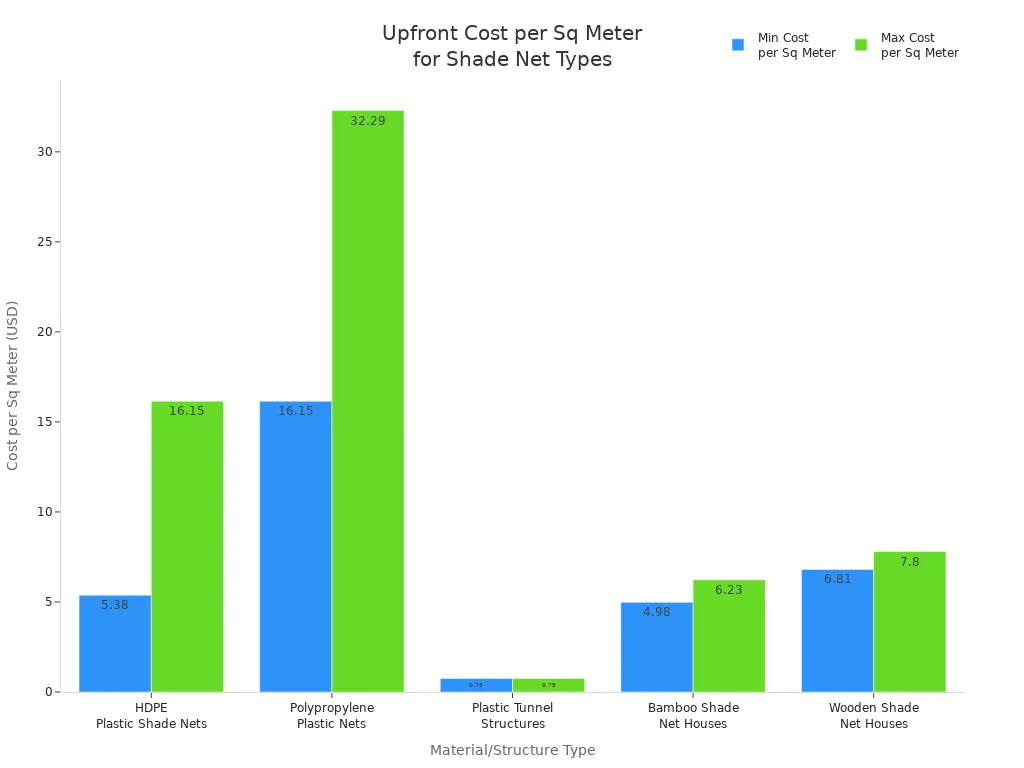
Natural fiber nets like burlap are often cheaper at first. But they do not last long. You might need to buy new ones more often. DIY ideas, like using old sheets, save money for small gardens. But they may not work well for big spaces.
Tip: If you want to cover a large area and spend less, HDPE plastic shade nets are the best deal.
Long-Term Value
You want your money to last a long time. Plastic shade nets made from polyethylene and HDPE are strong and easy to care for. They can handle sun, chemicals, and bad weather. You do not have to replace them often. Many people say plastic nets last for years, even in hard weather. This saves you money on fixing or buying new nets.
Natural fiber nets like jute or cotton break down fast. You may need to buy new ones every year. This costs more over time. Plastic nets use special things like UV stabilizers and antioxidants. These help the nets last longer and protect your plants better. Some new plastic nets use nanotechnology to make them even stronger.
Woven plastic nets also stop wind and pests better than natural fiber nets. You get more use from each net. Scientists are working on biodegradable plastics. These may soon give you more earth-friendly choices that still last a long time.
Note: If you want to save money and work in the future, pick plastic shade nets. They protect your plants, last longer, and need less care than natural fiber nets.
Установка и обслуживание
Setup
You can install plastic shade nets quickly, even if you have an irregular garden or a temporary setup. Most nets need only basic tools and a few support poles. You should lay the net evenly and avoid wrinkles or sagging. This helps your plants get uniform shade and keeps the net strong. Always secure the edges tightly, especially if you live in a windy area. Loose edges can flap and tear.
Many gardeners find plastic shade nets easier to install than alternatives like greenhouse films. Greenhouse films need careful sealing and strong support frames. If you use a commercial greenhouse, you may need professional help for installation. For DIY options, like old sheets, you can tie or clip them to stakes, but they may not last as long.
Common installation steps:
- Lay out the net flat and smooth.
- Attach the net to poles or a frame, pulling it tight.
- Secure all edges with clips, ropes, or ties.
- Check the structure for stability so it can handle wind.
- Inspect for wrinkles or sagging and adjust as needed.
Tip: Always check your setup after storms or strong winds. Quick fixes prevent bigger problems later.
Care
You want your shade net to last as long as possible. Regular care makes a big difference. Clean your net with mild soap and a soft brush. This removes dirt without harming the fibers. Avoid harsh chemicals, which can weaken the material and leave harmful residues.
Inspect your net often for small tears or fraying. Fix minor damage right away by stitching or patching. If you see large rips, replace the net to keep your plants safe. Store your net in a dry, cool place when you are not using it. Roll it up neatly to avoid creases.
Maintenance checklist:
- Clean nets regularly with gentle soap and water.
- Inspect for holes, tears, or fraying.
- Repair small damage promptly.
- Replace nets with severe damage.
- Store nets properly when not in use.
- Train helpers on correct handling to avoid stretching or overloading.
Note: Seasonal maintenance, especially after winter, helps you spot wear and prepare for the next growing season. Regular care keeps your nets strong and your plants protected.
Sustainability
Воздействие на окружающую среду
It is important to care for your plants and the planet. Plastic shade nets are made from things like polyethylene, polypropylene, or HDPE. These are synthetic materials that come from oil. Making these nets makes them strong, but it also hurts the environment. Plastic shade nets do not break down in nature. They can stay in landfills for a very long time and cause pollution.
Natural fiber nets, like cotton or jute, are better for the earth. These nets break down over time and go back into the soil. Using biodegradable nets helps cut down on waste. But you might need to get new ones more often because they do not last as long. Cotton nets need extra care so they do not get moldy. They let air move through and are good for the environment, but they are not as strong as plastic nets.
- Plastic shade nets:
- Made from synthetic materials that do not break down
- Last a long time and need less care
- Add to landfill waste and pollution
- Natural fiber nets:
- Break down in nature and are biodegradable
- Need to be replaced more often and need more care
- They are better for the environment in the long run
🌱 If you want to help the environment, pick natural fiber nets. They are not as strong, but they are better for the earth.
Disposal
When your shade net is old, you have to throw it away the right way. Most plastic shade nets end up in landfills or at recycling centers. About half of farm plastic waste goes to landfills. Recycling works best if the nets are clean and collected often. Dirt and plant bits can make recycling hard.
Biodegradable nets, made from things like starch or polylactic acid, are different. You can leave these nets in the field, and they will slowly break down and mix with the soil. This saves you time and work. But these nets might take longer to break down than you think. Scientists are still learning how they change the soil.
- Plastic nets:
- Can be thrown in landfills or sent for recycling
- Recycling is hard if the nets are dirty or not collected well
- Stay in the environment for a long time if not recycled
- Biodegradable nets:
- Can be left in the soil after use
- Break down on their own, so you do not have to throw them away
- Scientists are still checking if they are safe for the soil
♻️ Pick biodegradable nets if you want to throw them away easily and make less landfill waste. But remember, they may take a while to fully break down.
Decision Guide
Choosing by Climate
You need to match your shade solution to your local climate. Climate factors play a big role in your decision. Here is how you can decide:
- In cold climates, plastic film works best. It keeps heat inside and gives your plants stable temperatures.
- In hot climates, shade nets help most. They lower the temperature, control the light, and let the air move. This keeps your plants cool and healthy.
- If your crops need lots of sunlight, plastic film lets in more than 80% of light. This suits sun-loving plants.
- Shade nets come in many shading rates, from 20% to 90%. You can pick how much sun your plants get.
- In humid or rainy places, shade nets help air flow and lower humidity. This stops mold and keeps plants dry.
- Your budget also matters. Shade nets usually cost less and are easier to set up or replace.
🌡️ Tip: If you grow in a hot or humid area, choose shade nets for better cooling and air flow. If you face cold weather, plastic film gives better insulation.
Shade nets also change the microclimate. They lower the air and leaf temperature, cut down the wind, and raise humidity. This protects your crops from sunburn and heat stress. You use less water and see fewer fruit problems.
Choosing by Budget
Your budget shapes your options. Small-scale growers often need to save money. You want to get the best value for your investment. Here is a quick look at costs:
| Cost Component | Cost Range | Impact on Small-Scale Growers |
|---|---|---|
| Net Material | HDPE: $0.50–$1.50/sq.ft. | Most affordable, top pick for tight budgets |
| Polypropylene: $1.50–$3.00/sq ft. | Higher cost, less common for small growers | |
| Installation Labor | $75–$500+ | Lower for small farms affects net size and type |
| Support Structures | $50–$1,000+ | Varies by farm size, impacts total spend |
| Техническое обслуживание | $20–$100/year | Durable nets with UV protection save money long-term |
You can save more by picking HDPE nets. They cost less and last longer, especially if you choose UV-protected types. Shade nets also help you cut water and pest control costs. You can use one net for many crops, which lets you buy in bulk and save even more.
💡 Note: If you have a small budget, start with HDPE shade nets. They give you strong protection, last for years, and help you manage costs without sacrificing plant health.
Plastic Shade Net vs Alternatives
Pros and Cons
When you look at plastic shade net and other choices, you see big differences. Each one works in its own way. You want the best for your garden or farm. It helps to check what is good and bad about each.
Pros of Plastic Shade Net
- Plastic shade nets block almost all UV rays. They keep plants safe from sunburn.
- These nets last a long time. Most last three to seven years. You do not need to buy new ones often.
- They are light and easy to put up. You can cover big areas fast.
- You can pick how much shade you want. Nets come in many densities, like 30% or 70%.
- The material does not get moldy or rot. You spend less time cleaning or fixing them.
- They save money over time. They cost more at first but last longer.
- They work well in hard weather. You can use them in hot, dry, or wet places.
Cons of Plastic Shade Net
- Plastic nets are not good for the Earth. They do not break down and can fill up landfills.
- It can get hot under the net if the air does not move. This can slow plant growth on very hot days.
- You must recycle them the right way. Dirty or broken nets are hard to recycle.
- Small plastic pieces can fall off over time. This can hurt the soil.
Pros of Alternatives (Natural Fiber Nets, Shade Cloth, DIY Solutions)
- Natural fiber nets help the planet. Cotton and jute break down in the soil.
- They cost less when you buy them. Burlap and old sheets are cheap.
- They are good for short use. You can use them for one season or a small garden.
- Air moves well through these nets. This keeps plants from getting too hot.
Cons of Alternatives
- You need to replace them a lot. Cotton and jute last only six to twelve months.
- They can get moldy or rot. These nets soak up water and break down fast.
- They do not last in tough weather. Natural fibers tear in hot or wet places.
- You spend more time taking care of them. You must dry and handle them with care.
- You cannot control shade as well. Most do not let you pick the exact amount of shade.
| Feature | Plastic Shade Net | Alternatives (Cotton, Burlap, DIY) |
|---|---|---|
| Защита от ультрафиолета | Up to 98% | Low to moderate |
| Lifespan | 3–7 years | 6–12 months |
| Installation | Easy, lightweight | Easy, but less durable |
| Техническое обслуживание | Низкий | Высокий |
| Cost Efficiency | High (long-term) | Low (short-term) |
| Воздействие на окружающую среду | Non-biodegradable | Biodegradable |
| Shade Control | Customizable (30–70%) | Limited |
| Mold/Fungal Resistance | Высокий | Низкий |
| Пригодность к климату | Harsh, variable climates | Mild, temperate climates |
💡 Tip: Pick plastic shade net if you want it to last and need less work. If you care about the earth or want a cheap, quick fix, try cotton or burlap.
Studies show both types protect crops and do not hurt fruit or growth. You may see small changes in heat and air under each net. Plastic shade nets work better in hard weather and for important crops. Alternatives are best for short use or if you want something that breaks down in nature.
Pick your shade net based on your weather, plants, and money. If your garden is big or the weather is tough, HDPE or aluminum nets with UV protection are best. If you care about the environment, you might like biodegradable or natural fiber nets. These need to be replaced more often.
- Experts say you should choose the right shade rate and material for your plants and area.
- Do not make mistakes like picking the wrong color or using nets that are too big.
Ask local plant experts or try out a small spot first. Think about how your choice helps your plants now and how it affects the soil and earth later.
FAQ
What shade net color works best for most plants?
You should choose green or white теневые сетки for most crops. Green nets balance light and temperature. White nets reflect heat and help fruiting plants. Black nets suit cooler climates or shade-loving plants.
How do you clean and maintain a plastic shade net?
You can wash your net with mild soap and water. Use a soft brush to remove dirt. Inspect for tears often. Repair small holes quickly. Store the net dry and rolled up when not in use.
Can you recycle plastic shade nets?
You can recycle most HDPE shade nets at specialized centers. Clean the net before recycling. Dirty or damaged nets may not qualify. Contact your local recycling facility for specific instructions.
Do natural fiber nets attract pests or mold?
Natural fiber nets, like burlap, can absorb moisture. This makes them more likely to attract mold or pests. You should dry these nets after rain and store them in a cool, dry place.
How do you pick the right shade percentage?
You should match the shade percentage to your crop. Leafy greens need 50% shade. Tomatoes and peppers grow well with 30%. Shade-loving plants may need up to 75%. Check your plant’s needs before buying.
 Russian
  English
  German
  French
  Japanese
  Spanish