
A shade net is a specially designed fabric used to provide controlled shading for plants, outdoor spaces, and structures. Its primary purpose is to protect plants from excessive sunlight, regulate temperature, and create an environment conducive to growth. By reducing direct exposure to harsh sunlight, it helps prevent overheating and water loss in plants.
Studies have shown that plants grown under shade nets thrive better than those without shading. For example:
- Seedling survival rates increased significantly under shade, reaching their peak with two layers of shade net.
- Plant height, leaf area, and weight improved markedly in shaded conditions.
- Chlorophyll content rose, while stress indicators like MDA levels decreased, promoting healthier growth.
Whether you’re managing a garden or a farm, a shade net ensures optimal protection and fosters robust plant development.
Types of Shade Nets
Based on Material
Shade nets are made from different materials, each offering unique benefits. The most common materials include high-density polyethylene (HDPE) and polyester. HDPE nets are lightweight, durable, and resistant to UV radiation, making them ideal for long-term outdoor use. Polyester nets, on the other hand, provide excellent tensile strength and are often used in areas with high wind exposure.
When choosing a material, you should consider factors like weather conditions, intended use, and budget. For example, HDPE nets are more cost-effective and widely used in agriculture, while polyester nets are preferred for construction sites due to their strength.
Based on Color
The color of a shade net significantly impacts its performance. Common colors include black, green, and white, each serving specific purposes. Black nets provide maximum shading and are ideal for protecting plants from intense sunlight. Green nets balance shading and light diffusion, promoting healthy plant growth. White nets allow more light penetration and are often used in nurseries or areas requiring partial shading.
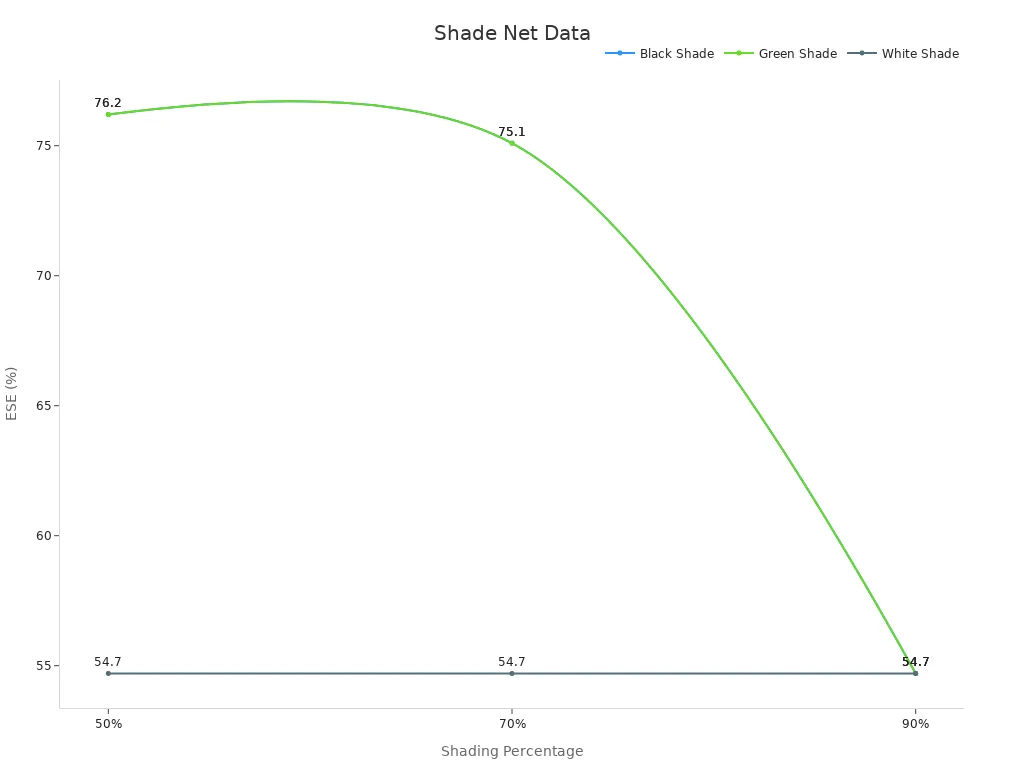
The table below highlights the evaporation suppression efficiency (ESE) of different shade net colors and shading percentages:
| Shade Color | Shading Percentage | Average Evaporation Suppression Efficiency (ESE %) |
|---|---|---|
| Black | 50% | 76.2% |
| Black | 70% | 75.1% |
| Black | 90% | 54.7% |
| Green | 50% | 76.2% |
| Green | 70% | 75.1% |
| Green | 90% | 54.7% |
| White | 50% | 54.7% |
| White | 70% | 54.7% |
| White | 90% | 54.7% |
Based on Shading Percentage
Shade nets are categorized by their shading percentage, which determines the amount of sunlight they block. Common shading percentages include 50%, 70%, and 90%. Lower percentages, like 50%, allow more light to pass through, making them suitable for crops requiring partial sunlight. Higher percentages, such as 90%, provide maximum shading and are ideal for delicate plants or areas with extreme heat.
Research shows that shading percentage directly affects plant growth. For instance:
- Under 50% shading (C1), plant height increased by 2% compared to the control group.
- At 70% shading (C2), plant height improved by 6%, and the photosynthetic rate reached 5.97 µmol·m−2·s−1, significantly higher than other treatments.
- However, 90% shading (C3) reduced plant growth by approximately 12%, indicating excessive shading can hinder development.
Selecting the right shading percentage depends on your specific needs. For agricultural purposes, 50%-70% shading is often optimal, while 90% shading works best for non-plant applications like construction or residential use.
Преимущества использования теневых сеток
Protection from Sunlight
Shade nets act as a barrier against harmful sunlight, shielding plants from excessive UV radiation. When plants are exposed to intense sunlight, they often suffer from leaf scorching, dehydration, and reduced photosynthesis. By using a shade net, you can minimize these risks and create a more stable environment for plant growth.
The material and shading percentage of the net play a crucial role in determining the level of protection. For instance, black shade nets with higher shading percentages (e.g., 70%-90%) are particularly effective in blocking sunlight, making them ideal for regions with extreme heat. This protection ensures that plants retain their moisture and remain healthy even during peak summer months.
🌱 Наконечник: Choose a shade net with the appropriate shading percentage based on your region’s sunlight intensity and the specific needs of your plants.
Temperature Control
One of the most significant benefits of shade nets is their ability to regulate temperature. By reducing direct sunlight exposure, they help maintain cooler temperatures underneath the net. This temperature moderation is essential for preventing heat stress in plants, which can hinder their growth and productivity.
Different types of shade fabrics offer varying levels of absorption, reflectance, and transparency, which directly impact their temperature-regulating capabilities. The table below highlights the performance of various shade fabrics:
| Shade Fabric Type | Absorption (%) | Reflectance (%) | Transparency (%) |
|---|---|---|---|
| White knit net (4 layers) | 27.5 | 76.1 | 11.5 |
| White polyethylene film (91% shade factor) | 15 | 76 | 9 |
| White shade net (88% shade factor) | 27 | 61 | N/A |
| Most reflective fabric (2 layers) | 3 | 92 | N/A |
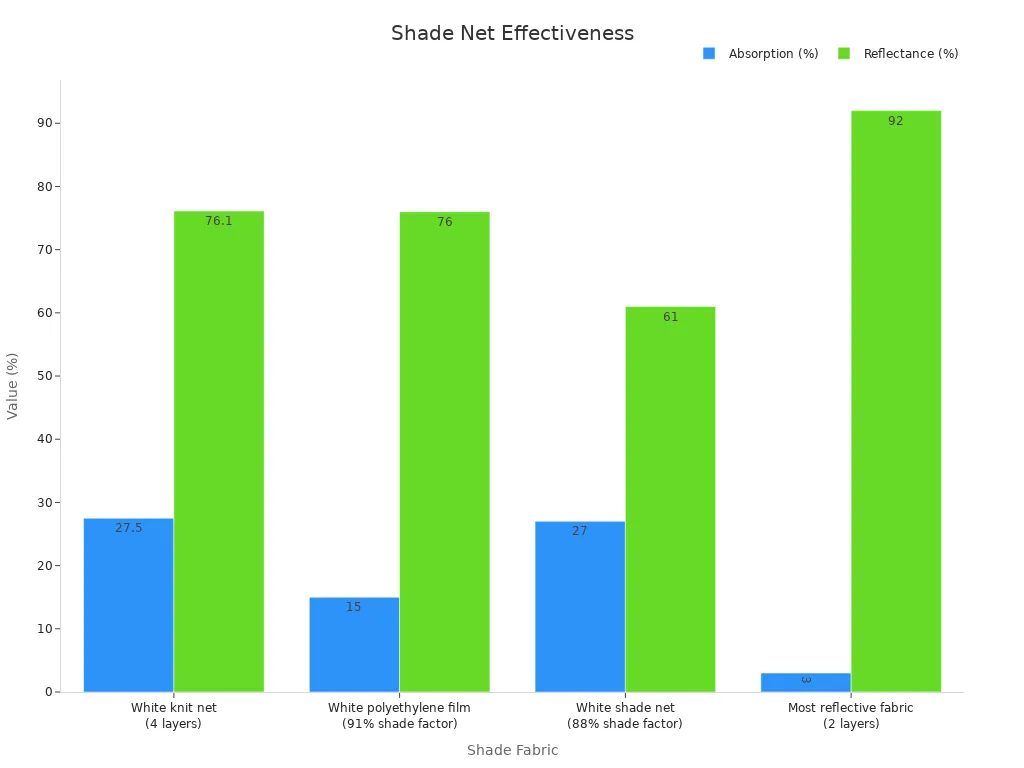
As shown in the data, white knit nets and polyethylene films excel in reflectance, making them highly effective for temperature control. By selecting the right shade net, you can ensure that your plants thrive in a cooler and more stable environment.
Enhanced Plant Growth
Shade nets not only protect plants but also enhance their overall growth. By filtering sunlight and reducing temperature fluctuations, they create an optimal microclimate for photosynthesis and nutrient absorption. This controlled environment promotes healthier and faster growth, especially for crops sensitive to extreme weather conditions.
Studies have demonstrated that plants grown under shade nets exhibit improved physiological traits. For example, leaf area, chlorophyll content, and plant height often increase under shaded conditions. Additionally, the reduced stress on plants leads to higher yields and better-quality produce.
🌟 Примечание: To maximize plant growth, select a shade net with a shading percentage that matches your crop’s light requirements. For most crops, a 50%-70% shading percentage works best.
Прочность и долговечность
When selecting a shade net, durability and longevity are critical factors to consider. These attributes determine how well the net withstands environmental stress and how long it remains effective in protecting plants or structures.
Modern shade nets are designed to endure harsh conditions, including prolonged exposure to sunlight, wind, and rain. Polyethylene nets, for example, are highly durable and resistant to UV radiation. Their lightweight structure makes them easy to install while maintaining their integrity over time. Farmers often prefer polyethylene nets due to their cost-effectiveness and ability to perform reliably in agricultural settings.
Polypropylene shade nets offer even greater strength and flexibility. These nets excel in extreme weather conditions, such as heavy storms or intense heat. Their robust construction ensures a longer lifespan compared to other materials. This makes polypropylene nets ideal for applications requiring maximum durability, such as construction sites or areas prone to severe weather.
Key advantages of durable shade nets include:
- Reduced Maintenance Costs: High-quality materials require fewer repairs and replacements, saving you money in the long run.
- Consistent Performance: Durable nets maintain their shading efficiency and structural integrity over time, ensuring reliable protection for plants and outdoor spaces.
- Environmental Sustainability: Longer-lasting nets reduce waste and the need for frequent replacements, contributing to eco-friendly practices.
By choosing a shade net made from polyethylene or polypropylene, you can ensure that your investment lasts for years while providing optimal protection.
🛠️ Наконечник: Evaluate the environmental conditions in your area before selecting a shade net material. For regions with extreme weather, polypropylene nets may offer the best balance of strength and longevity.
Применение теневых сеток
Agriculture
Shade nets play a vital role in modern agriculture by creating controlled environments for crops. They regulate temperature, reduce heat stress, and maintain optimal humidity levels, which are essential for healthy plant growth. Studies show that shade nets significantly enhance crop yields by mitigating environmental stressors like excessive sunlight and high temperatures. For instance, they help prevent leaf scorching and dehydration, ensuring better productivity.
The agricultural sector has seen a steady rise in demand for shade nets, with a compound annual growth rate (CAGR) of 5.3% from 2020 to 2025. This growth is driven by their use in crop protection, poultry farming, and commercial agriculture. In 2023, agriculture accounted for 35% of the global shade net market, valued at $1.4 billion. These figures highlight the increasing reliance on shade nets for sustainable farming practices.
🌾 Наконечник: Use shade nets with a 50%-70% shading percentage for crops requiring partial sunlight, such as vegetables and fruits.
Gardening
In gardening, shade nets provide an effective solution for protecting plants from harsh weather conditions. They filter harmful UV rays, regulate temperature, and retain soil moisture, creating an ideal environment for plant growth. Additionally, they act as barriers against pests, safeguarding delicate plants.
A study on garden productivity revealed several benefits of using shade nets:
- Защита от ультрафиолета: Reduced adverse effects on plant health.
- Temperature Regulation: Minimized heat stress.
- Moisture Retention: Ensured adequate hydration.
- Pest Management: Protection from insects.
- Extended Growing Season: Earlier planting and later harvesting.
These advantages make shade nets indispensable for both home gardeners and commercial nurseries.
Construction
Shade nets are widely used on construction sites to enhance safety and comfort. They provide shaded areas for workers, reducing heat stress and improving productivity. By protecting construction materials from sun damage, they also ensure compliance with safety regulations.
The use of shade nets in construction has grown by 22% over the past five years. This increase reflects their importance in maintaining worker safety and preserving material quality. For regions with extreme heat, shade nets are essential for creating a safer and more efficient work environment.
🏗️ Примечание: Opt for durable materials like polypropylene nets for construction applications to withstand harsh conditions.
Residential and Commercial Use (e.g., patios, playgrounds, outdoor spaces)
Shade nets have become a popular choice for enhancing residential and commercial outdoor spaces. You can use them to create comfortable, shaded areas that protect against harsh sunlight while maintaining an open and inviting atmosphere. Whether you’re designing a patio, playground, or outdoor seating area, shade nets offer a practical and aesthetically pleasing solution.
In residential settings, shade nets are ideal for patios, gardens, and balconies. They provide relief from intense sunlight, allowing you to enjoy outdoor spaces even during the hottest parts of the day. By reducing UV exposure, they also protect furniture and flooring from fading or damage. For families with children, shade nets over playgrounds ensure a safer environment by minimizing the risk of heat-related injuries.
Commercial spaces, such as cafes, restaurants, and event venues, benefit significantly from shade nets. They create a pleasant ambiance for customers, encouraging longer stays and enhancing overall satisfaction. Additionally, shade nets are a cost-effective way to expand usable outdoor areas without investing in permanent structures.
The growing demand for shade nets in these applications reflects their versatility and effectiveness. Market data highlights this trend:
| Year | Market Size (USD) | CAGR (%) |
|---|---|---|
| 2024 | 2.37 Billion | – |
| 2031 | 3.21 Billion | 4.25 |
This steady growth demonstrates how shade nets are becoming an essential feature in outdoor design. Their ability to combine functionality with visual appeal makes them a valuable addition to any space.
🌞 Наконечник: When selecting a shade net for residential or commercial use, consider factors like shading percentage, color, and material durability. These elements ensure the net meets your specific needs while complementing the overall design.
Как правильно выбрать сетку для затенения
Consider Shading Percentage
Selecting the correct shading percentage is crucial for achieving optimal results with your shade net. The shading percentage determines how much sunlight the net blocks, directly impacting its effectiveness for different applications. For example, a 50% shading percentage allows moderate sunlight penetration, making it suitable for crops that thrive in partial sunlight. On the other hand, a 90% shading percentage provides maximum coverage, ideal for areas requiring significant sun protection, such as pergolas or construction sites.
To evaluate the appropriate shading percentage, you can rely on performance metrics like the Shading Gain Ratio (SGR). This metric compares the energy saved by natural light to the energy gained from solar heat. If the SGR exceeds 1, the shading state is considered effective. The table below outlines key metrics used to assess shading performance:
| Metric | Описание |
|---|---|
| Effective Shading State | The condition where energy saved by natural light exceeds energy gained from solar heat gain. |
| Energy Saved | The amount of energy conserved by utilizing natural light for indoor lighting. |
| Energy Gained | The energy acquired from solar heat gain that needs to be compared against energy saved. |
| Shading Gain Ratio (SGR) | A ratio that compares energy saved to energy gained, indicating the effectiveness of shading states. |
| Effective Shading Assessment | If SGR > 1, the shading state is deemed effective, optimizing energy performance in buildings. |
By understanding these metrics, you can make an informed decision about the shading percentage that best suits your needs.
🌞 Наконечник: For agricultural purposes, choose a shading percentage between 50% and 70% to balance sunlight and protection. For non-plant applications, consider higher percentages like 90% for maximum coverage.
Evaluate Material Durability
The durability of a shade net plays a significant role in its long-term performance. Different materials offer varying levels of strength, flexibility, and resistance to environmental factors. High-density polyethylene (HDPE) is a popular choice due to its superior UV resistance, flexibility, and ability to withstand harsh weather conditions. Polypropylene nets also perform well, particularly in environments with high moisture or UV exposure. Nylon nets, while lightweight and flexible, may not provide the same level of robustness as HDPE or polypropylene.
For example, HDPE nets excel in regions with extreme heat or heavy rainfall, maintaining their structural integrity over time. Polypropylene nets are ideal for areas prone to moisture, as they resist water damage effectively. Nylon nets, though less durable, can be suitable for temporary or low-stress applications.
🛠️ Примечание: Assess the environmental conditions in your area before selecting a material. For regions with harsh weather, HDPE nets offer the best combination of strength and longevity.
Match to Intended Use
Matching the shade net to its intended use ensures optimal performance and cost-effectiveness. Different applications require specific features, such as shading percentage, material type, and UV protection. For agricultural purposes, nets with a 50%-70% shading percentage work well for crops like vegetables and fruits. In gardening, nets with UV protection and moderate shading percentages help protect delicate plants while promoting healthy growth.
For construction sites, durability becomes the top priority. Nets made from polypropylene or HDPE provide the strength needed to withstand tough conditions. Residential and commercial spaces, such as patios or playgrounds, benefit from nets with higher shading percentages (e.g., 90%) to create comfortable, shaded environments.
The table below highlights usage-specific recommendations for shade nets:
| Product No. | GSM | UV Block | Size[m] | UV Warranty | Ideal for |
|---|---|---|---|---|---|
| Garden Cover 50% | 120 | 50% | 1.83x50m ; 3.66x50m | 5 Years | Seedlings & Plants, Shade House |
| Screening 70% | 160 | 70% | 1.83x50m ; 3.66x50m | 5 Years | Privacy Screening, Wind Break, Vehicle Protection |
| People Cover 90+% | 190 | 90+% | 1.83x50m ; 3.66x50m | 8 Years | Pergolas & Gazebos, Play Area Cover, Pet Protection |
By aligning the shade net’s features with your specific requirements, you can maximize its effectiveness and longevity.
🌱 Наконечник: Always consider the size, UV warranty, and shading percentage when selecting a shade net for your intended application.
Assess Climate and Environmental Factors
When choosing a shade net, understanding the climate and environmental conditions in your area is essential. These factors directly impact the performance and longevity of the net. By assessing your local environment, you can select a shade net that meets your specific needs and ensures optimal results.
1. Temperature Extremes
Regions with high temperatures require shade nets that provide effective heat reduction. Nets with higher shading percentages (e.g., 70%-90%) are ideal for protecting plants and outdoor spaces from intense sunlight. In contrast, areas with moderate climates may benefit from nets with lower shading percentages, which allow more light penetration.
🌡️ Наконечник: If you live in a region with extreme heat, opt for nets made from materials like HDPE. These nets resist UV radiation and maintain their structural integrity under prolonged sun exposure.
2. Humidity Levels
High humidity can affect the durability of certain materials. For instance, polypropylene nets perform well in moist environments due to their resistance to water damage. On the other hand, nylon nets may degrade faster in such conditions. If you live in a coastal or tropical area, consider materials that can withstand high moisture levels.
3. Wind Conditions
Strong winds can strain shade nets, especially those installed in open areas. In windy regions, you should prioritize nets with high tensile strength, such as polyester or polypropylene. These materials are less likely to tear or sag under pressure.
💨 Примечание: Securely anchoring your shade net is just as important as choosing the right material. Use sturdy frames or poles to prevent damage during storms or high winds.
4. UV Radiation Intensity
The intensity of UV radiation varies by location and season. Areas closer to the equator experience higher UV levels, which can degrade shade nets over time. UV-stabilized nets are specifically designed to resist this damage, ensuring a longer lifespan.
| Region | UV Intensity | Recommended Net |
|---|---|---|
| Tropical (e.g., Florida) | Высокий | UV-stabilized HDPE (70%-90%) |
| Temperate (e.g., Midwest) | Moderate | Green or white nets (50%-70%) |
| Coastal (e.g., California) | Высокий | Polypropylene with UV coating |
5. Rainfall Patterns
Frequent rainfall can lead to water pooling on shade nets, causing sagging or damage. Nets with a tighter weave may trap water, while those with a looser weave allow better drainage. Consider the average rainfall in your area when selecting a net.
🌧️ Наконечник: For regions with heavy rainfall, choose nets with a looser weave or install them at an angle to facilitate water runoff.
6. Seasonal Variations
Some regions experience significant seasonal changes, such as harsh winters or scorching summers. In such cases, you may need to switch between different types of shade nets throughout the year. Alternatively, you can invest in versatile nets that perform well across various conditions.
By evaluating these climate and environmental factors, you can make an informed decision and maximize the benefits of your shade net. Tailoring your choice to your local conditions ensures better performance, durability, and value for your investment.
🌍 Reminder: Always consider your region’s unique environmental challenges when selecting a shade net. This approach not only protects your plants and spaces but also extends the lifespan of your net.
Shade nets offer versatile solutions for agriculture, construction, and residential spaces. Their types, ranging from material to shading percentage, cater to diverse needs. You can enjoy benefits like UV protection, temperature control, and enhanced plant growth. Selecting the right shade net ensures optimal performance and durability.
| Category | Insights |
|---|---|
| Material Types | Nylon, polyethylene, and polypropylene balance performance and cost. |
| Applications | Agriculture, construction, and domestic uses require tailored designs. |
| Процент затенения | Options from 30% to 95% allow precise sunlight filtration. |
| Life Span | Choices of 5, 10, or 15 years meet varying durability needs. |
🌱 Наконечник: Match the net’s features to your environment and purpose for the best results.
 Russian
  English
  German
  French
  Japanese
  Spanish