
Agro shade net is a specially designed fabric that helps you control sunlight, temperature, and humidity for your crops. You use it to protect plants from harsh weather, pests, and excessive heat. As more farmers in Asia Pacific regions like India and China adopt modern farming methods, the market for agricultural shade nets has grown rapidly. Understanding the right type and features of an agro shade net can help you improve crop health and increase yields.
Principaux enseignements
- Agro shade nets control sunlight, temperature, and humidity to protect crops from harsh weather and pests.
- Choose the right shading percentage and color based on your crop’s needs and local climate for best growth.
- HDPE material with UV stabilization offers strong, durable nets that last several years outdoors.
- Shade nets reduce water loss, lower chemical use, and improve crop health and yields sustainably.
- Proper installation and regular maintenance keep your shade net effective and extend its lifespan.
Agro Shade Net Types
When you choose an agro shade net, you need to understand the main types available. These types differ by shading percentage, color, and how manufacturers make them. Each type works best for certain crops and growing conditions.
Shading Percentage
Shading percentage tells you how much sunlight the net blocks. Most agro shade nets offer shading from 30% up to 90%. The right percentage helps you control light and temperature for your crops. Lower shading, like 30%, lets in about 70% of sunlight. This works well for sun-loving crops such as tomatoes and cucumbers. Moderate shading, between 40% and 60%, fits crops like pumpkins, peppers, lettuce, and spinach. Higher shading, from 70% to 90%, suits shade-loving plants such as orchids and ferns. Some special crops, like mushrooms, need very high shading, up to 100%.
Conseil : Le shading percentage you pick directly affects how much photosynthetically active radiation (PAR) reaches your plants. This controls their growth and health.
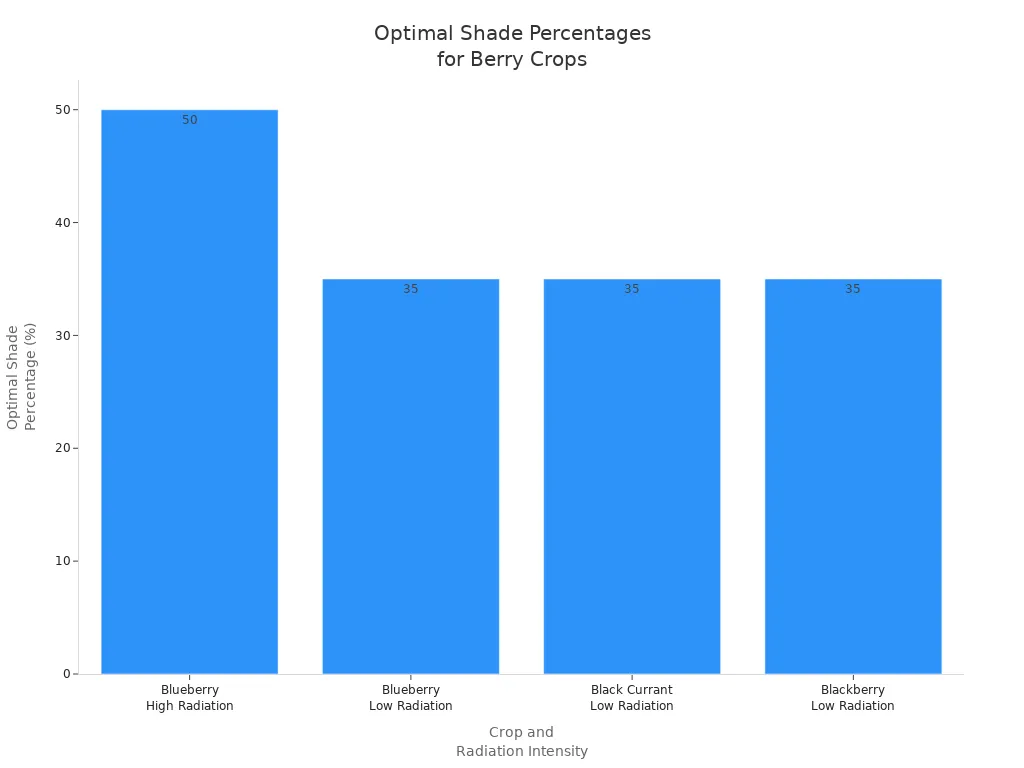
You can see how different crops respond to shade in the table below:
| Crop | Radiation Intensity | Optimal Shade Percentage | Yield Response to Shade |
|---|---|---|---|
| Blueberry | Haut | Up to 50% | Yield benefits from shading up to 50% |
| Blueberry | Faible | Up to ~35% | Tolerates shade without yield loss up to ~35% |
| Black Currant | Faible | Up to ~35% | Tolerates shade without yield loss up to ~35% |
| Blackberry | Faible | Up to ~35% | Tolerates shade without yield loss up to ~35% |
| Strawberry | Any | N/A | Yield declines with increasing shade |
Regional climate and season also play a role. In hot, sunny areas, you may need a higher shading percentage to protect crops from heat stress. In cooler regions, lower shading helps crops get enough light.
Color Options
Agro shade nets come in several colors. Each color changes how light and temperature affect your plants. The table below shows the main options and their effects:
| Shade Net Color | Effect on Light and Temperature | Impact on Plant Growth and Microclimate |
|---|---|---|
| Green | Absorbs some sunlight, moderate shading | Supports general photosynthesis; moderate growth support |
| Black | Absorbs more light and heat,reducings temperature significantly | Prevents sunburn; promotes leaf expansion and longer shoot growth in some crops |
| Red | Increases red-to-far-red light ratio | Enhances vegetative growth, leaf area, biomass; influences flowering in some species |
| Blue | Enhances the blue light spectrum | Promotes compact growth, thicker leaves; improves quality traits like polyphenol content in tea |
| White | Reflects more light and heat, a cooler environment | Beneficial for heat-sensitive crops; maintains flower color; delays flowering in ornamentals |
You should match the net color to your crop’s needs. For example, black nets help prevent sunburn and support leafy growth. Red nets can boost flowering and biomass in some plants. White nets keep the environment cooler, which helps heat-sensitive crops.
Knitted and Woven
Manufacturers make agro shade nets using two main methods: knitting and weaving. Both types use strong synthetic fibers like high-density polyethylene (HDPE) or polypropylene. Knitted nets have a flexible, uniform structure. They allow good airflow and are easy to install. You often see knitted nets in commercial nurseries and greenhouses. These nets work well for shading, protecting from cold, and keeping out birds.
Woven nets use a more traditional weaving process. They are thicker and more tear-resistant. Farmers use woven nets for ground covers, mulch mats, and general crop protection. Woven nets also serve as barriers against insects and birds. Both knitted and woven nets provide shade, control temperature, and protect crops from weather and pests. You should choose knitted nets when you need flexibility and custom mesh sizes. Woven nets are best for heavy-duty protection and ground use.
Remarque : Both types of agro shade net help you reduce water loss, lower pesticide use, and improve crop quality.
Materials and Features
HDPE Material
You will find that most modern shade nets use high-density polyethylene (HDPE) as the main material. HDPE stands out because it is strong, lightweight, and does not absorb water. This makes it easy for you to handle and install. The material also resists tearing and stays stable when exposed to chemicals or fertilizers. HDPE nets keep their shape and strength even after long periods outdoors.
Here is a table that compares the most common materials used for shade nets:
| Matériau | Durabilité | Résistance aux UV | Poids | Common Use |
|---|---|---|---|---|
| PE | Moyen | Bon | Light | Gardens, patios |
| PP | Haut | Bon | Light | Agriculture, farms |
| PEHD | Very high | Excellent | Moyen | Greenhouses, open fields |
| Canvas | Faible | Poor | Heavy | Temporary covers (less common today) |
You should choose HDPE if you want a net that lasts longer and protects your crops better. Other materials like PE and PP are also used, but HDPE offers the best mix of durability and UV resistance. Canvas is heavy and breaks down quickly, so it is not a popular choice anymore.
Conseil : HDPE nets are non-absorbent, so they dry quickly after rain and do not promote mold growth.
UV Stabilization
When you use a shade net outdoors, sunlight and UV rays can damage the fibers over time. Manufacturers solve this problem by adding UV stabilizers to HDPE during production. These stabilizers protect the net from breaking down in harsh sunlight. As a result, your net can last from 3 to 5 years, even in strong sun.
UV-stabilized nets also stand up to wind, light rain, and moderate hail. You can use them year-round without worrying about quick wear and tear. While you may not see a specific UV resistance rating on every product, you can trust that UV-stabilized HDPE nets are built for multi-year use in the field.
Remarque : Always check if your net is UV-stabilized before buying. This feature is key for long-term performance.
Durabilité
You want your shade net to last through many seasons. HDPE nets are designed for this purpose. They resist damage from sun, wind, and rain. The material absorbs heat but does not weaken easily. Nets made with mono filament yarns are even more durable and less likely to fray or tear than those made with tape filaments.
Here is a summary of how these nets perform under different conditions:
| Factor/Aspect | Description |
|---|---|
| Matériau | UV-stabilized HDPE resists sunlight and weather |
| Impact sur l'environnement | Sun, rain, and wind can shorten lifespan, but quality nets last longer |
| Lifespan | 3 à 10 ans, depending on care and local climate |
| Maintenance | Cleaning and proper storage help extend the net life |
| Filament Types | Monofilament nets last longer than tape filament nets |
| Protection Provided | Shields crops from wind, rain, hail, and sun damage |
You can extend the life of your net by cleaning it regularly and storing it properly when not in use. Nets act as a barrier, protecting your crops from harsh weather and reducing the risk of physical damage.
Conseil : Inspect your net often for small tears or weak spots. Early repairs can prevent bigger problems later.
Uses
Protection des cultures
You can use shade nets to protect your crops from many threats. These nets help block strong sunlight, which prevents sunburn and keeps the temperature and humidity at the right level for plant growth. When you cover your crops, you also shield them from heavy rain, strong winds, and hail. This reduces physical damage to leaves, flowers, and fruits. In field studies, using a 60% shade net dropped floral bud damage from 93% to just 4%. Damage to young shoots also fell sharply. Shade nets act as a barrier against insects, birds, and small animals, so you see less crop loss and disease spread. You also save water because the nets slow down evaporation.
| Protection Type | Without Shade Net | With Shade Net (60%) |
|---|---|---|
| Floral Bud Damage (%) | 93% | 4% |
| Young Shoot Damage | 4.35 (scale 1-5) | 0.5 (scale 1-5) |
Tip: Shade nets help you create a controlled environment, which leads to healthier plants and better yields.
Greenhouses and Gardens
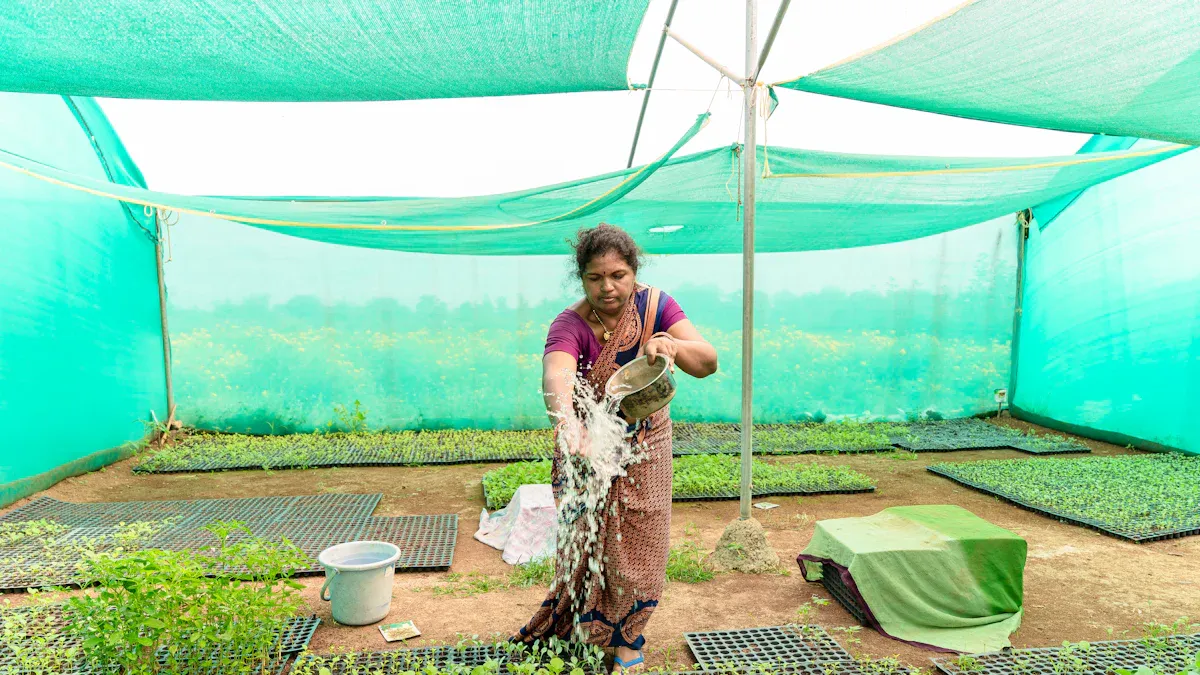
You often see shade nets in greenhouses and home gardens. In greenhouses, you use them to control light and temperature for vegetables, flowers, and nursery plants. This helps you grow crops like tomatoes, cucumbers, and lettuce all year round. In gardens and on terraces, shade nets protect delicate flowers and herbs from harsh weather. You can also use them over fish ponds to keep the water cool and protect aquatic life. Different shading rates fit different needs: 35% nets work for herbs and vegetables, while 70% or 80% nets suit shade-loving plants and nursery stock.
- Greenhouses: Control the climate for vegetables, flowers, and seedlings.
- Gardens: Protect ornamental plants, herbs, and small fruit trees.
- Fish ponds: Reduce sunlight and keep water temperatures stable.
Fencing and Other Uses
Shade nets have many non-agricultural uses. You can use them as fencing for privacy or to keep animals in or out. In construction, you see them as safety barriers and dust screens. They also provide shade in parking lots, playgrounds, swimming pools, and animal farms. For example, 50% shading nets work well for carports and open-air pools, while 90% nets offer privacy and strong sun protection in public spaces. This wide range of uses shows how versatile shade nets are for both farming and daily life.
Note: High-quality nets last for years, even in tough outdoor conditions.
Agro Shade Net Benefits
Crop Growth
Vous pouvez boost your crop growth by using an agro shade net. These nets help you create the best environment for your plants. They control sunlight, temperature, and wind, which helps your crops grow faster and healthier. When you use a shade net, you protect your plants from harsh weather like heavy rain, hail, and strong winds. This protection means you lose fewer crops to damage. Shade nets also lower water loss by reducing evaporation, so your irrigation works better and you save water. Scientific studies show that shade nets improve plant growth, increase photosynthesis, and help crops handle heat and drought. You get higher yields and better quality produce.
- Regulates sunlight and temperature for optimal growth
- Reduces water loss and saves irrigation costs
- Shields crops from weather damage and pests
- Increases yield and improves crop quality
Tip: Shade nets can even help your plants flower earlier and grow stronger, giving you a better harvest.
Sustainable Farming
Agro shade nets support sustainable farming. You can use them to create a microclimate that keeps your soil moist and cool. This means you need less water for your crops, which helps you conserve resources. Shade nets also protect your plants from too much sun and heat, so you do not have to rely on chemicals to fix sunburn or heat stress. By using shade nets, you help your farm adapt to climate change and extreme weather. You also reduce soil erosion and keep your land healthy for future planting.
- Maintains soil moisture and reduces irrigation needs
- Protects crops from extreme weather and sunburn
- Supports organic and resource-efficient farming
- Helps you adapt to changing climate conditions
Reduced Chemicals
When you use an agro shade net, you lower your need for chemical pesticides and fertilizers. The net acts as a barrier, keeping out many pests and birds. This means you do not have to spray as many chemicals to protect your crops. Some farmers have seen big drops in their spending on plant protection and nutrition by switching to natural methods and using shade nets. Even though you may need more labor for tasks like hand weeding, you can still get higher returns and healthier crops. Shade nets help you grow food that is safer for you and the environment.
- Blocks pests and birds, reducing pesticide use
- Lowers fertilizer needs by keeping plants healthy
- Supports natural and eco-friendly farming practices
Choosing Agro Shade Net
Crop Needs
You should always start by matching the agro shade net to your crop’s specific needs. Different plants require different levels of sunlight and protection. For example, vegetables like tomatoes and cucumbers thrive under nets with 30% to 50% shading, while orchids and ferns do better with 70% or more. Consider your local climate as well. In hot, sunny regions, higher shading percentages help prevent heat stress. In cooler areas, lower shading allows more light for healthy growth. You also need to think about the color of the net. Green and black nets work well for most crops, but red or blue nets can enhance growth for certain plants. Always check the manufacturer’s recommendations for your crop type.
Conseils d'installation
Proper installation ensures your agro shade net lasts longer and works effectively. Begin by assessing your site. Look at wind direction, sunlight patterns, and any existing structures. Choose a durable, UV-resistant net that fits your climate. Prepare a strong support structure using poles or frames. Attach the net tightly with hooks, ropes, or clips to prevent sagging or tearing. After installation, check that all fastenings are secure. Test the coverage to make sure your crops get the right amount of protection. Regular inspections help you spot and fix any damage early.
Tip: Avoid common mistakes like loose installation or using weak materials. These can shorten the lifespan of your net.
Maintenance
Routine care keeps your agro shade net in top condition. Inspect the net for holes or frayed edges, especially after storms or winter. Clean off dirt and debris to maintain good airflow and light transmission. Repair small tears right away to stop them from getting worse. Replace sections that are too damaged to fix. Some nets benefit from protective coatings to extend their life. Schedule regular check-ups during the growing season to ensure your net continues to protect your crops.
| Tâche de maintenance | How Often | Pourquoi c'est important |
|---|---|---|
| Inspect for damage | Every season | Prevents bigger problems |
| Clean the net | Selon les besoins | Maintains effectiveness |
| Repair or replace | When needed | Extends net lifespan |
Understanding shade nets helps you protect crops, improve yields, and support sustainable farming.
- Bird and shade nets reduce crop damage by up to 90%, maintain healthy growth, and lower chemical use.
- Choosing the right net and maintaining it ensures long-lasting benefits.
- Experts like PM Agro Biotech offer guidance tailored to your farm’s needs.
Consider reaching out to specialists or local programs for advice. Take the next step to explore shade nets and make your farm more resilient and productive.
 French
  English
  German
  Japanese
  Spanish
  Russian