
Installing a shade sail transforms your outdoor space, but safety and durability depend on your approach. You must select strong anchor points and use quality hardware, such as products from Retek Motion. Pay close attention to tension and drainage to avoid common issues:
- Weak anchor points or improper tension often cause sagging and water pooling.
- Ignoring wind direction or using corroded hardware increases risk.
- Uneven installation or skipped maintenance can lead to structural failure.
Quality materials and regular checks help ensure your installation remains safe and long-lasting.
Key Takeaways
- Choose strong anchor points like sturdy posts or solid structures to keep your shade sail safe and secure.
- Measure carefully and create a slope in your sail to prevent water pooling and sagging.
- Use high-quality, rust-resistant hardware such as marine-grade stainless steel for durability and easy tension adjustments.
- Tension the sail evenly using turnbuckles to keep it tight and stable, avoiding damage from wind or water.
- Inspect and maintain your shade sail regularly by checking for wear, adjusting tension, and cleaning to extend its life.
Planning Installation
Location Selection
Selecting the right location for your sun shade sail sets the foundation for a successful installation. Start by analyzing the sun’s path throughout the day and year. This helps you maximize shade and comfort. Place your sail where it blocks the most intense sunlight, especially during peak hours. Consider the direction and strength of prevailing winds. Avoid areas exposed to strong gusts, as wind can damage the sail or its anchors.
Tip: Choose a spot that complements your outdoor space visually and functionally. A well-placed sail enhances both aesthetics and usability.
Check the strength of existing structures, such as walls, beams, or large trees. Ensure these can handle the tension and wind loads. If you need to install new posts, verify that you have enough space and ground depth for secure footings.
Measuring Area
Accurate measurements prevent costly mistakes and ensure a snug fit. Begin by marking the corners of your desired shade area. Use a tape measure to record the distances between each point, including the height differences. This step is crucial for creating the necessary slope for water runoff.
- Draw a rough sketch of the area and label each corner.
- Measure and note the perimeter and diagonal distances.
- Record the height at each mounting point.
- Add about 10% to each measurement for tensioning.
- Double-check all numbers and consider asking for help to avoid errors.
Note: Use chalk or string to mark points and a ladder for high spots. Always factor in the sun’s orientation and local wind conditions.
Choosing Anchor Points
Anchor points must be strong and reliable. Evaluate existing structures for their ability to withstand at least 100 pounds of pretension and significant wind loads. For new posts, use at least 6×6 or 8×8-inch treated wood or 4-inch schedule 40 steel pipe. Posts should be set in concrete footings, with the footing depth at least half the exposed post length.
| Anchor Point Type | Criteria |
|---|---|
| Fixing height | Minimum 2.4 meters above ground |
| Wooden posts | 6×6 or 8×8 inch treated wood, set in concrete |
| Metal poles | 4-inch schedule 40 steel, galvanized, angled away from the sail center |
| Existing structures | Walls, beams, large trees (min 10 in diameter) |
Check local building codes before installation. If unsure about structural integrity, consult a builder or engineer. Proper planning ensures your shade sail remains safe, secure, and effective for years to come.
Tools and Materials
Required Tools
You need the right tools to ensure a smooth and secure installation. Industry professionals recommend several essential items for this project. Gather these before you begin:
- Impact drill for driving screws into tough surfaces
- Screws and plastic expansions for mounting hardware
- Adjustable width pliers for tightening turnbuckles
- Ladder for reaching high anchor points
- A tape measure for accurate measurements
- Awl for marking pilot holes
- Rope for temporary support or tensioning
- Posts or poles, sized and installed as previously described
Tip: Use a pulley system if you want to make tensioning easier, especially for larger sails.
Having these tools on hand will help you work efficiently and achieve a professional result.
Hardware and Accessories
Choosing the right hardware is critical for safety and durability. You should always select marine-grade stainless steel components, which resist rust and provide long-term strength. For triangle sails, a dedicated hardware kit simplifies the process. Look for kits that include turnbuckles, pad eyes, and snap hooks. Turnbuckles allow you to adjust tension precisely, while snap hooks make removal easy.
| Hardware/Accessory | Purpose/Use | Material Recommendation |
|---|---|---|
| Turnbuckles | Tighten and adjust the tension for stability | Heavy-duty, marine-grade stainless steel |
| Pad eyes | Provide secure anchor points | Marine-grade stainless steel |
| Snap hooks | Connect the sail to the mounting points | Heavy-duty stainless steel |
| Eyebolts | Attachment points for triangle sails | Marine-grade stainless steel |
| Wire ropes & pulleys | Add strength for large rectangular sails | Marine-grade stainless steel |
| HDPE shade sail fabric | High-quality UV protection | Durable, weather-resistant fabric |
| Reinforcement cables | Support large or heavy-duty sails | Strong steel cables |
| Protective covers | Protect the hardware to extend its lifespan | Suitable protective materials |
Note: Premium kits may offer smart tensioning systems or eco-friendly options. Investing in quality hardware ensures your installation stays secure and looks great for years.
Retek Motion Recommendations
Retek Motion offers hardware kits designed for both triangle and rectangular shade sails. Their kits use 316 marine-grade stainless steel, which holds up to 6000 pounds and comes with a lifetime warranty. You get all the essentials: turnbuckles, diamond pad eyes, and snap hooks. These components simplify installation and provide peace of mind. For best results, choose Retek Motion’s hardware to guarantee strength, durability, and easy maintenance.
Shade Sail Installation
Installing Anchor Points
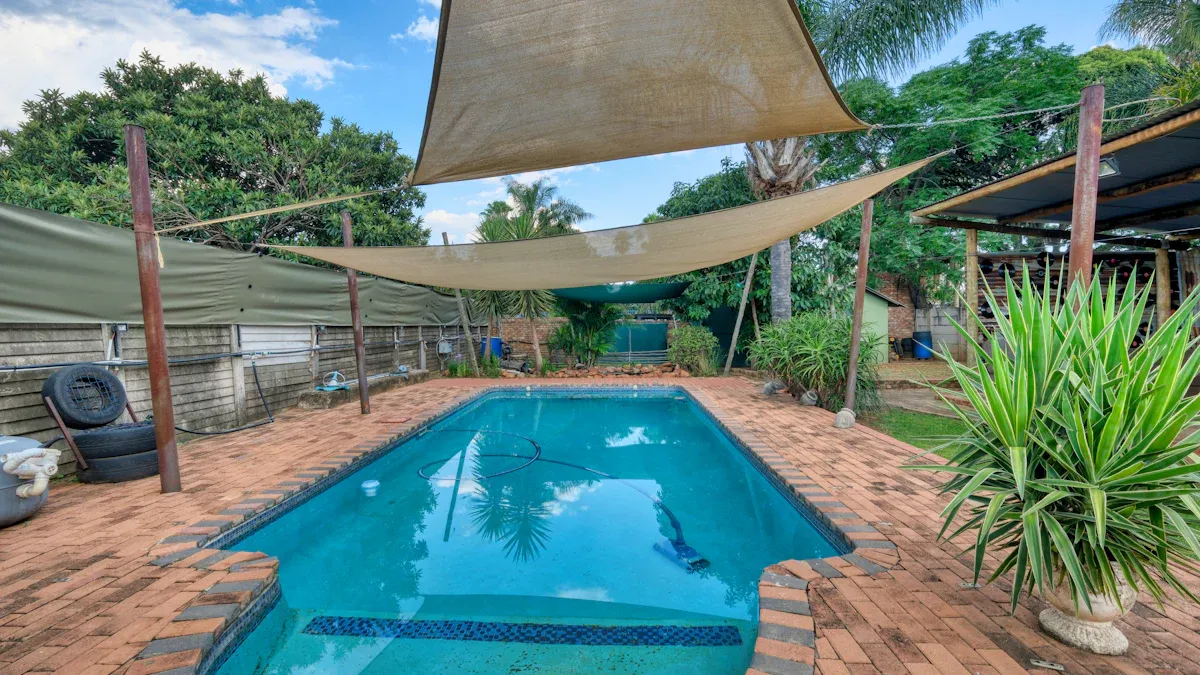
Proper anchor point installation forms the backbone of a safe and long-lasting shade sail setup. You must match your installation method to the substrate—wood, brick, or concrete—to ensure maximum strength and safety.
- For wood, use welded screw eyes or lag bolts. Always drive these into solid wood, not just fascia boards, to prevent failure.
- For brick, drill through the brick to reach a structural stud behind. Secure a brick anchor point using a threaded rod with a welded eye, a transition piece, and a lag screw.
- For concrete, use chemical anchors. Drill holes, clean them, inject chemical anchors, and insert threaded rods. Once cured, secure mounting plates with nuts.
- For posts, through bolts with welded eyes provide the best support. Use through bolts for large sails, especially on wood or steel posts.
- Always pre-drill pilot holes to avoid cracking and ensure a secure fit.
Tip: Never attach a shade sail to fascia boards alone. Drill through to structural wood or reinforce mounting points for safety.
When installing posts in concrete, orient them toward the center of the slab. Use a concrete plinth at least 25″ x 25″ x 25″ to withstand tension. Wait at least 30 minutes after applying chemical anchors before tightening hardware.
Attaching Hardware
Selecting and installing the right hardware ensures your shade sail remains secure and easy to adjust. Use only marine-grade or galvanized components to resist corrosion and weathering.
| Hardware Type | Material/Specification | Function/Use Case |
|---|---|---|
| Stainless Steel Carabiners | 316 stainless steel, strong spring | Quick, robust connection between sail and anchor points |
| Steel Tensioners (Turnbuckles) | Steel, adjustable, high load rating | Regulate tension, maintain durability, and stability |
| Nautical Rope | Double-braid, high resistance | Adjustable length, professional fixing for large sails |
| Threaded Rods | Galvanized steel | Fix the base plates of poles, provide strong anchorage |
| Eyebolts | Stainless or galvanized steel | Attach sails or accessories to poles |
| Wall Mounting Kits | Nautical stainless steel | Anchor sails directly to the walls, ensuring effective tension |
| Chemical Anchoring Cartridge | Injection mortar | Secure wall mountings and poles with threaded rods |
Install pad eyes, eyebolts, or mounting plates at each anchor point. Use turnbuckles and snap hooks for each corner. These components allow you to adjust tension and remove the sail easily for cleaning or seasonal changes.
Hanging the Shade Sail
You can now hang your shade sail once all anchor points and hardware are in place. Follow these steps for a smooth and safe installation:
- Plan the layout by visualizing the sail’s placement with stakes and string. Confirm the orientation for maximum shade and aesthetics.
- Attach the highest corner of the sail first. This step helps you create the necessary slope for water runoff.
- Loosely connect the remaining corners using snap hooks or carabiners. Work with a partner for large sails to avoid stretching or damaging the fabric.
- Partially extend the turnbuckles at each corner. This setup allows for easy tension adjustments later.
- Check that the sail edges curve inward slightly. This shape, called a catenary curve, helps distribute tension and resist wind loads.
Note: Position at least two corners higher than the others. This slope prevents water from pooling and improves wind resistance.
Shade Sail Tensioning
Proper tensioning keeps your shade sail taut, stable, and free from sagging or water pooling. Use turnbuckles to fine-tune the tension at each corner.
- Apply about 100 pounds of tension to the sail. The fabric should appear tight with minimal wrinkles.
- Adjust turnbuckles evenly, moving from corner to corner. Tighten opposite corners at the same time to distribute force.
- Maintain a height difference of at least 1 foot for every 5 feet of span between attachment points. This slope ensures water drains off the sail.
- Visually inspect the sail for sagging or bunching. Walk around the installation and make small adjustments as needed.
- Avoid over-tensioning, which can damage the fabric or hardware. Plan to re-tension the sail periodically, as the material may stretch over time.
🌧️ Pro Tip: A well-tensioned shade sail with alternating high and low corners forms a hyperbolic parabola. This shape sheds water efficiently and withstands strong winds, extending the life of your installation.
Turnbuckles and snap hooks play a crucial role in this process. Turnbuckles let you adjust tension precisely, preventing sagging and fabric damage. Snap hooks provide a secure yet easily removable connection, making seasonal adjustments or maintenance simple. Stainless steel construction ensures these components resist weathering, supporting the longevity and reliability of your shade sail.
Maintenance and Adjustments
Checking Stability
You should inspect your shade sail regularly to maintain its safety and performance. Start by looking for signs of wear, such as small tears, frayed edges, or loose stitching, especially at the corners and attachment points. Examine all anchor points and hardware for rust, looseness, or damage. If you notice sagging or uneven tension, check that the support structures—like galvanized steel poles or posts set in concrete—remain sturdy.
Tip: Schedule a detailed inspection at least once a month and after any severe weather. Early detection of issues helps prevent costly repairs.
Adjusting Tension
Proper tension keeps your shade sail looking sharp and functioning well. You should perform a quick visual check every week to spot sagging or flapping. If you see dips or water pooling, use turnbuckles or pulleys to adjust the tension. Maintain about 80-100 pounds of tension at each corner to avoid fabric warping or tearing.
- Tighten or loosen the hardware as needed to keep the fabric taut but not overstretched.
- Make seasonal adjustments, especially after strong winds or heavy rain.
- Replace any rusted or weakened bolts and hooks promptly.
🛠️ Note: If you find any tears or major damage, consult a professional for repairs rather than attempting DIY fixes.
Cleaning and Care
Routine cleaning extends the life of your shade sail and keeps it looking new. Sweep off leaves and debris weekly to prevent buildup. Clean the fabric at least twice a year using a mild detergent and a soft-bristled brush. Avoid harsh chemicals, pressure washers, or abrasive tools, as these can damage the material. For mold or mildew, use a solution of vinegar and water, then rinse thoroughly.
- Always let the sail dry completely before reinstalling or storing it.
- Store the sail in a cool, dry place during the off-season, folded neatly in a protective cover.
- Remove the sail before heavy snow or storms to prevent damage.
Pro Tip: Apply a UV-protectant spray and reapply waterproof coatings as recommended to shield the fabric from sun and rain.
You can achieve a safe and effective shade sail installation by following each step carefully. High-quality hardware and professional techniques protect your investment, ensuring your outdoor area stays cool, comfortable, and visually appealing for years. Many homeowners report cooler spaces, improved comfort, and lasting UV protection after installation. Choose trusted products like Retek Motion to maximize durability and enjoy your new shaded retreat with confidence.
 English
  German
  French
  Japanese
  Spanish
  Russian