
A shade net shields plants from intense sunlight by filtering light and reducing heat, while a greenhouse creates a controlled environment by trapping warmth and moisture. Your choice between these two can greatly affect how well your crops grow, especially in different climates. For example, using a beige or green shade net in hot regions can boost strawberry yield, as shown in the chart below:

Government support, such as subsidies and technical help, also makes it easier for you to adopt modern growing methods and increase your farm’s success.
Shade Net

What Is a Shade Net
A shade net is a protective covering that you can use to shield your plants from harsh sunlight and extreme weather. You stretch this netting over crops or garden beds to filter sunlight, reduce heat, and create a cooler environment. The main purpose of a shade net is to protect sensitive plants from sunburn, heat stress, and even hail. You will often see shade nets in regions with strong sunlight or high temperatures.
Materials
Most shade nets are made from synthetic fibers, especially high-density polyethylene (HDPE). This material stands out for its strength, flexibility, and resistance to weather. You can find two main types of shade net fabric:
- Knitted shade mesh: Highly durable, resists tearing and fraying, and maintains flexibility under the sun. Many come with warranties up to 10 years.
- Woven shade mesh: Less durable, more prone to tearing, and best for short-term use.
HDPE shade nets offer excellent UV protection, with some blocking over 90% of harmful rays. The density and mesh size affect how much light passes through and how much shade your plants receive. With proper care, a quality shade net can last between 3 and 10 years.
Uses
You can use a shade net for many crops that need protection from intense sunlight or heat. Common crops grown under shade nets include:
- Tea plants
- Bell peppers
- Basil
- Grapes
- Apples and blueberries
- Lettuce
- Herbaceous peony
Shade nets also help you improve water use efficiency and create a more humid, less windy microclimate for your plants. Many growers choose shade nets for their flexibility and lower cost compared to other structures.
Pros and Cons
| Aspect | Advantages | Disadvantages |
|---|---|---|
| Protection | Shields crops from hail, heat waves, and sunburn | Less protection from cold and frost |
| Microclimate | Creates cooler, less windy, and more humid conditions; improves water use efficiency | Not as sturdy as greenhouses |
| Yield & Quality | Increases fruit size, yield, and quality (especially with pearl, red, and white nets) | Some crops may grow too vigorously |
| Cost | Lower cost and easy installation | Shorter lifespan than permanent structures |
Tip: Choose the right color and density of shade net for your crop and climate to get the best results.
Greenhouse

What Is a Greenhouse
A greenhouse is a structure that lets you grow plants in a protected and controlled environment. You build it with a frame and cover it with transparent or translucent materials. The main purpose is to trap heat from sunlight, creating a warmer space inside. This helps you grow crops even when the outside weather is cold or unpredictable. Many people also call plastic-covered greenhouses “polyhouses.” You can use greenhouses to start seedlings, grow vegetables out of season, or protect delicate plants from frost and wind.
Materials
You can choose from several materials when building a greenhouse. Glass is traditional and gives you excellent light for your plants, but it does not insulate well and can break easily. Polycarbonate panels offer better insulation and resist impacts, so they last longer and help you save on heating costs. Polyethylene film is lightweight and affordable, making it popular for large commercial greenhouses, but it needs UV treatment to last and may not insulate as well as other options. When you select materials, look at their R-value, which tells you how well they resist heat flow. Higher R-values mean better insulation and more stable temperatures for your plants. Moisture resistance is also important, since greenhouses can get very humid. Regular cleaning and repairs help keep your greenhouse working well.
Uses
You can use a greenhouse for many purposes:
- Extend the growing season or grow crops all year.
- Protect plants from rain, snow, wind, and pests.
- Control temperature, humidity, and light for better plant growth.
- Start seedlings or grow high-value crops like tomatoes, cucumbers, or flowers.
- Use hydroponic systems or automated irrigation to save water and labor.
Greenhouses let you grow crops that might not survive in your local climate. You can also use them to improve yields and reduce the risk of crop failure.
Pros and Cons
| Aspect | Advantages | Disadvantages |
|---|---|---|
| Climate Control | Let’s you manage temperature, humidity, and light for optimal growth | Needs expertise to regulate the environment |
| Protection | Shields plants from harsh weather and pests | High initial and maintenance costs |
| Productivity | Increases yield and allows year-round production | Risk of overheating or poor ventilation |
| Technology | Supports automation for irrigation and climate control | Requires regular monitoring and energy input |
Note: Greenhouses can boost your crop yield by up to 12% and let you grow plants year-round, but you must invest in proper setup and maintenance to get the best results.
Key Differences
Structure
You will notice clear differences in the structure of shade nets and greenhouses. Shade nets use a simple frame covered with mesh fabric. This design allows air to move freely and keeps the setup lightweight. You can install shade nets quickly and move them if needed. Greenhouses, on the other hand, have a more solid frame made from metal or wood. They use glass, polycarbonate, or polyethylene film as a cover. This closed structure traps heat and moisture, creating a stable environment for your plants.
Here is a comparison table to help you see the main structural differences:
| Feature | Shade Net Structure | Greenhouse Structure |
|---|---|---|
| Frame | Lightweight, easy to assemble | Heavy-duty, permanent, or semi-permanent |
| Cover Material | HDPE mesh, UV-stabilized | Glass, polycarbonate, or PE film |
| Ventilation | Natural, open sides | Controlled, with vents or fans |
| Mobility | Portable, flexible | Fixed, less portable |
| Lifespan (outdoors) | Over 5 years | 12-24 months for film, longer for glass/panels |
Note: Shade nets last longer than greenhouse films under similar conditions because of their UV resistance and durable materials.
Climate Suitability
Choosing the right structure depends on your local climate. Shade nets work best in hot or mild climates. They protect your crops from intense sunlight, heat, and wind. You can use them for shade-loving plants or for propagation in nurseries. Greenhouses suit cold climates. They provide insulation and keep your plants warm during winter. You can also use greenhouses in areas with unpredictable weather to grow crops out of season.
| Climate Type | Best Structure | Why It Works Best |
|---|---|---|
| Hot | Shade Net | Reduces heat, filters sunlight, and improves ventilation |
| Cold | Greenhouse | Maintains warmth, protects from frost, and supports year-round growing |
| Mild | Shade Net (Shade House) | Shields from heat, wind, hail, and pests; ideal for propagation and shade plants |
Shade houses, which use shade nets, offer protection from heat, frost, hail, and pests. Greenhouses create a warm, stable environment for crops that need steady temperatures.
Environmental Control
You can control the environment inside a greenhouse much more than with a shade net. Greenhouses let you adjust temperature, humidity, and light. You can use fans, heaters, and automated systems to keep conditions just right for your crops. However, greenhouses can overheat if you do not ventilate them well. Shade nets mainly reduce sunlight and heat. They help keep temperatures lower and more stable, especially in summer. You can choose different shading percentages to match your crop’s needs.
- Shade nets lower internal temperatures and prevent overheating.
- They help maintain stable humidity, which reduces stress on plants.
- Greenhouses can reach very high temperatures without proper ventilation.
- You must use cooling systems or shade nets inside greenhouses to avoid heat stress.
Tip: Use a shade net with the right shading percentage to balance light and temperature for your plants.
Cost
Cost is a major factor when you decide between a shade net and a greenhouse. Shade nets have a lower installation cost and require less maintenance. You can expect a shade net to last over five years outdoors if you care for it properly. Repairs are simple and affordable. Greenhouses need a higher initial investment, especially if you use glass or polycarbonate panels. The film covering many greenhouses lasts only 12 to 24 months before you need to replace it. Maintenance costs are higher because you must clean and repair the structure more often.
| Cost Aspect | Shade Net (per sq. meter) | Greenhouse Film (per sq. meter) |
|---|---|---|
| Installation | Rs. 375 | Higher, varies by design/material |
| Maintenance | Low | Moderate to high |
| Lifespan | 5+ years | 1-2 years (film), longer (glass) |
| Reusability | High | Often single-use (film) |
Shade net farming gives you a quicker return on investment. It suits small-scale farmers with limited budgets. Greenhouses cost more but can increase your yield and quality, which may pay off in the long run.
Plant Suitability
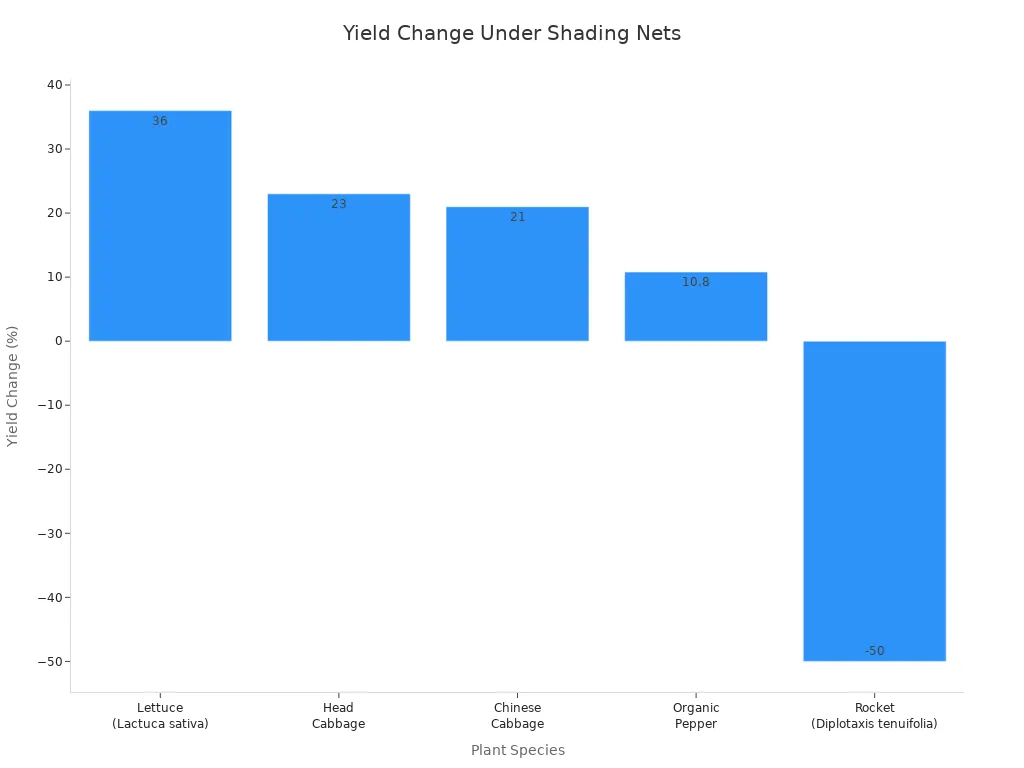
Different plants thrive under different structures. Shade nets work well for crops that need protection from strong sunlight or heat. Lettuce, head cabbage, and Chinese cabbage show higher yields under shade nets compared to open fields. Organic peppers also benefit from shading. However, some crops, like rocket (Diplotaxis tenuifolia), lose yield under shade nets and do better in greenhouses.
Greenhouses allow you to grow a wider range of crops, including those that need steady warmth or protection from frost. You can grow tomatoes, cucumbers, flowers, and even out-of-season vegetables. Greenhouses also support hydroponic systems and advanced automation.
Note: Choose your structure based on the specific needs of your crops and your local climate.
Choosing the Right Option
For Hot Climates
You face unique challenges when growing plants in hot climates. High temperatures and strong sunlight can damage crops and reduce yields. To protect your plants, you have several options:
- Greenhouses with efficient cooling systems help maintain safe temperatures. In very hot regions, uncooled greenhouses can become dangerously hot, sometimes reaching over 60°C.
- Screen houses and plastic net houses offer partial protection. These structures lower water and energy use, reduce pesticide needs, and shield plants from harsh sunlight.
- Shading techniques, such as using a shade net or UV-absorbing plastic films, play a key role. These methods cut down on solar radiation and heat, especially during the hottest hours.
- Traditional methods, like spraying hydrated calcium oxide, can lower temperatures by up to 10°C. However, these may also reduce the light your plants need and require frequent reapplication.
You should choose a structure based on your crop type, budget, and the level of protection you need. For most small farms, a shade net or net house provides a good balance between cost and plant safety.
Tip: Always monitor the temperature and humidity inside your structure. Adjust shading or cooling as needed to keep your plants healthy.
For Cold Climates
Cold climates demand more protection for your crops. Greenhouses work best in these regions. They trap heat and keep your plants warm, even when outside temperatures drop below freezing. You can grow crops year-round and protect them from frost, snow, and cold winds. Polycarbonate or glass greenhouses offer better insulation than plastic film. If you want to save on heating costs, choose materials with a high R-value. Make sure your greenhouse has proper ventilation to prevent excess humidity and disease.
For Different Plants
Different plants have different needs. Leafy greens, herbs, and shade-loving crops thrive under a shade net. These structures protect them from sunburn and heat stress. Fruit crops, flowers, and vegetables that need steady warmth do better in a greenhouse. If you want to grow out-of-season crops or start seedlings early, a greenhouse gives you more control. Always match your structure to your plant’s needs, your climate, and your budget.
Note: The right choice helps you save resources, improve yields, and grow healthier plants.
You now know that greenhouses offer steady warmth and pest protection for crops like tomatoes and tropical plants, while shade nets excel in hot, dry climates by reducing heat stress and conserving water. Always match your structure to your local climate and crop needs.
Remember: Choosing the right system—considering durability, installation, and budget—will help you achieve healthy plants and sustainable yields.
FAQ
What percentage of shade net should you use for vegetables?
You should use a 35% to 50% shade net for most vegetables. This range blocks enough sunlight to prevent heat stress but still lets in enough light for healthy growth. Always check your crop’s specific needs before choosing the shade percentage.
Can you use a greenhouse and a shade net together?
Yes, you can combine both. You can install a shade net inside a greenhouse to reduce excess sunlight and control temperature. This setup helps you protect sensitive crops during hot weather and gives you more control over the growing environment.
How long does a shade net last outdoors?
A high-quality HDPE shade net lasts 5 to 10 years outdoors. UV-stabilized nets resist sun damage and weathering. You should inspect your net regularly for tears or wear to extend its lifespan.
Do greenhouses need ventilation?
Yes, greenhouses need proper ventilation. You should use vents, fans, or open windows to control temperature and humidity. Good airflow prevents overheating and reduces the risk of plant diseases.
Which is cheaper: a shade net or a greenhouse?
A shade net costs less than a greenhouse. You spend less on materials and installation. Shade nets also require less maintenance. Greenhouses need a higher initial investment but offer more climate control and protection.
 English
  German
  French
  Japanese
  Spanish
  Russian