
When you see a label stating “30% shade,” it means the cloth blocks 30% of sunlight and allows about 70% to pass through.
- This type of shade cloth is popular in vegetable gardens, greenhouses, and outdoor areas where you want to balance sunlight and protection for your plants.
- You can use it to shield crops from heat, wind, and pests, or to create comfortable outdoor spaces.
Understanding shade percentages helps you manage plant health and outdoor comfort. Studies show that the right shade improves UV protection, reduces heat stress, and enhances thermal comfort for both people and plants.
Key Takeaways
- 30% shade cloth blocks 30% of sunlight while letting 70% pass through, making it ideal for plants that need partial sun.
- Using 30% shade helps protect plants from heat stress, sunburn, and water loss, improving growth and crop yields.
- This shade level balances sunlight and cooling, perfect for vegetables like tomatoes, cucumbers, and herbs.
- Proper installation includes suspending the cloth above plants, securing it tightly, and adjusting it seasonally for best results.
- Choosing the right shade cloth color and material boosts plant health and outdoor comfort while lasting many years.
30% Shade Meaning
Definition
When you see the term 30% shade, you are looking at a specific type of shade cloth designed to block 30% of sunlight. This means that about 70% of the sun’s rays still reach your plants or outdoor area. Manufacturers create these shade nets from high-density polyethylene (HDPE) or other synthetic polymers. They weave or knit the material into a mesh that lets air move freely while reducing the intensity of direct sunlight.
You often use 30% shade in nurseries, greenhouses, and gardens. This level of shading works well for plants that need partial sunlight, such as tomatoes, cucumbers, strawberries, herbs, and many flowers. By blocking just enough sunlight, you help these plants avoid heat stress while still giving them the light they need for healthy growth and fruit production.
Tip: If you want to protect your plants from harsh midday sun but still encourage strong growth, 30% shade offers a balanced solution.
Measurement
Manufacturers assign the shade percentage based on the color and structure of the net. The 30% shade value is a nominal rating, not a result of direct laboratory measurement. You will find that the actual shading effect depends on the mesh’s density, color, and how it interacts with sunlight.
- Shade percentages like 30%, 40%, or 50% are standard values provided by the manufacturer.
- These ratings reflect the proportion of sunlight the net blocks, not a precise measurement taken in the field.
- The structure of the net, including its porosity and thickness, influences how much light passes through.
Direct measurement of shade percentage can be challenging. The mesh is not uniform, and its three-dimensional structure scatters light in different ways. Some researchers use methods that measure how much light, heat, or radiation passes through the net under natural conditions. However, most gardeners and growers rely on the manufacturer’s rating when choosing a shade cloth.
Note: Always check the product label for the shade percentage. This helps you match the right level of protection to your plants’ needs.
Benefits of 30% Shade

Plant Protection
You can use 30% shade cloth to create a healthier environment for your plants. This type of shade acts like sunscreen, blocking a significant portion of solar radiation and harmful UVB rays. By reducing sunlight intensity, you lower the risk of sunburn, heat stress, and photoinhibition, which can damage the photosynthetic process. Plants under 30% shade often show improved health, stronger growth, and better yields.
- 30% shade cloth helps keep soil moisture higher by reducing evaporation, so you water less often.
- The cooler microclimate under the cloth protects plants from heat damage and reduces water loss.
- Studies show that using shade cloth can increase crop yields by up to 20% and improve overall crop quality.
- You can use it to acclimate young plants, such as tomato transplants, when moving them from artificial light to natural sunlight.
Here is a table showing how different crops benefit from 30% shade cloth:
| Crop/Plant | Growing Condition | Observed Benefits |
|---|---|---|
| Tomato Transplants | Cooler regions, spring/fall | 40% more leaf area, 50% more marketable yield, less sunscald, better acclimation |
| Kale and Beets | Post-transplant, mild summer | Reduced stress, improved adjustment, healthier leaves |
| Mixed Vegetables | Northern climates | Improved plant health, higher yield, less water loss |
Tip: Choose black shade cloth in cooler regions to trap warmth, or white shade cloth in hot climates to reflect heat and keep plants cooler.
Outdoor Uses
You can also use 30% shade cloth for many outdoor applications beyond gardening. The material is UV-treated and durable, making it ideal for long-term use in different environments.
- Use it as pond netting to keep leaves, insects, and debris out of your water features.
- Install it over pools to prevent leaves and bugs from falling in, which keeps your pool cleaner with less effort.
- The fine mesh design allows air to flow while blocking unwanted debris, so you maintain ventilation and protection at the same time.
- You can easily attach the cloth with staples, nails, or screws, making installation quick and simple.
Note: 30% shade cloth balances protection and airflow, making it a smart choice for both plant care and outdoor maintenance.
Shade Level Comparison
30% vs. Other Percentages
When you compare 30% shade to higher or lower shade percentages, you see clear differences in how much sunlight and protection each provides. A 30% shade cloth blocks about 30% of sunlight, letting 70% reach your plants. This level works well for crops that need plenty of light but still benefit from some heat and sun protection. For example, gardeners in northern climates often use 30% shade to help young tomato transplants adjust to outdoor conditions. You get a balance between light for photosynthesis and enough cooling to prevent leaf burn.
Higher shade percentages, such as 50% to 70%, block more sunlight. These levels suit leafy greens, herbs, and flowers that can suffer from intense light or heat. You create a cooler, more humid microclimate under these cloths, which helps reduce water loss and heat stress. However, too much shade can limit growth for sun-loving crops. Very high shade levels, like 70% to 90%, are best for shade-loving plants, mushrooms, or areas where you want deep shade, such as seating zones.
Here is a table to help you compare shade percentages:
| Shade Percentage Range | Suitable Crops/Uses | Advantages | Disadvantages |
|---|---|---|---|
| 30%-50% (Low) | Tomatoes, cucumbers, strawberries, basil | Good sunlight supports fruiting, moderate protection | Less cooling, not for shade-sensitive plants |
| 50%-70% (Medium) | Lettuce, spinach, kale, mint, roses | Balances light and shade, prevents leaf burn | May limit sun-loving crops |
| 70%-90% (High) | Ferns, orchids, mushrooms, and deep shade areas | Maximum cooling protects shade-adapted species | Too dark for most vegetables |
You also influence the microclimate with your choice. Higher shade percentages lower temperatures and increase humidity, which helps plants stay healthy during hot spells.
Choosing the Right Shade
Selecting the best shade level depends on several factors. You should consider plant type, climate, garden layout, and your goals for shade. For vegetables and flowers that need lots of sunlight, 30% shade offers a good compromise. In hot regions, you may need 50% or more to protect sensitive crops. Seedlings and young plants often require extra shade to avoid scorching.
The following chart shows how experts classify shade levels:
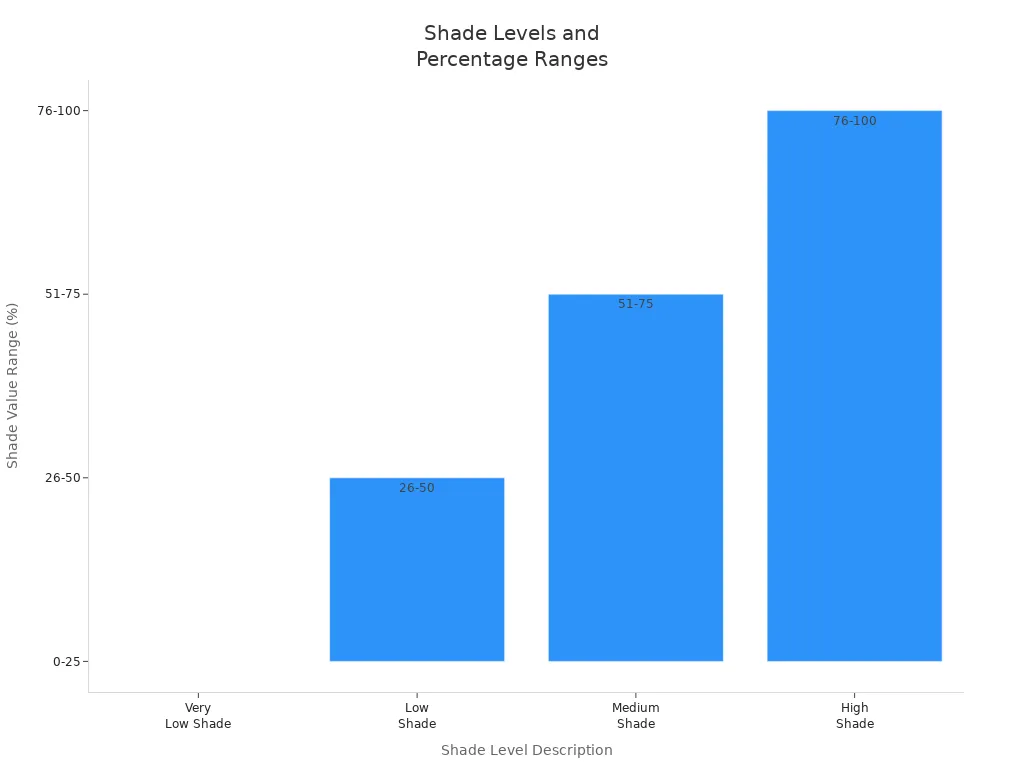
You can use this guide to match your plants to the right shade:
- Light shade (up to 25%): For sun-loving plants and open areas.
- Low shade (26%-50%): For most vegetables, berries, and herbs.
- Medium shade (51%-75%): For leafy greens, some flowers, and herbs.
- High shade (76%-100%): For shade-adapted plants and deep shade needs.
When you plan your garden or outdoor space, always match the shade cloth to your plant’s light needs and your local climate. This approach ensures healthy growth and better yields.
Using Shade Cloth

Installation Tips
Proper installation of 30% shade cloth ensures you get the best results for your plants and outdoor spaces. Follow these steps to maximize effectiveness and durability:
- Suspend the cloth above your plants. This setup allows air to circulate freely, which prevents overheating and keeps your plants healthy.
- Secure the cloth with tension. Use clips, ties, or a sturdy framework to keep the shade cloth tight. This prevents sagging and stops water from pooling, which can damage both the cloth and your plants.
- Adjust seasonally. Remove or reposition the shade cloth as the seasons change. In cooler months, you can reduce shading to let in more sunlight.
- Choose the right material and color. Knitted shade cloth lasts longer and does not unravel. Black cloth absorbs heat and resists UV rays, while white cloth reflects sunlight and keeps temperatures lower. Aluminet cloth offers maximum heat reflection and light diffusion.
- Maintain your shade cloth. Clean it regularly with mild soap and a soft brush. Inspect for damage and repair small tears promptly. Store the cloth in a dry, cool place when not in use.
🛠️ Tip: Most 30% shade cloths last 8–12 years outdoors, with some guaranteed for at least ten years. Rotate the cloth annually to extend its lifespan.
Common Mistakes
Mistakes during installation or use can reduce the benefits of your shade cloth. Here are some common errors and their effects:
| Common Installation Mistakes | Negative Effects on 30% Shade Cloth Performance |
|---|---|
| Blocking airflow by installing too close to plants | Traps heat, causing stress and possible stem damage |
| Using too much shade all season | Reduces blooming and slows plant growth |
| Letting cloth touch plant leaves | Causes mechanical injury or increases the risk of fungal issues |
| Installing too late during a heatwave | Misses the chance to prevent heat damage |
| Not removing the cloth when no longer needed | Weakens stems and lowers the flowering potential |
⚠️ Note: Always check local building codes and permit requirements before installing shade cloth in public or commercial spaces. Regulations vary by location and may affect your project.
You now understand how 30% shade can protect your plants and outdoor spaces while allowing enough sunlight for healthy growth. Choosing the right shade level ensures your plants thrive in your specific climate. When selecting and installing shade cloth, keep these tips in mind:
- Match the shade percentage to your plants’ sunlight needs.
- Measure your area carefully for proper coverage.
- Select durable, UV-resistant materials for long-lasting results.
- Secure the cloth tightly to prevent sagging or wind damage.
Experiment with different options to find the best fit for your garden.
 English
  German
  French
  Japanese
  Spanish
  Russian