
You can expect the lifespan of shade netting to vary based on several key factors:
- The quality of the material, such as high-density polyethylene (HDPE), is durable and resistant to chemicals.
- UV resistance, since exposure to sunlight can quickly degrade the netting if it lacks proper protection.
- Environmental conditions include wind, rain, and significant temperature fluctuations.
- Proper installation and regular maintenance will prevent sagging and damage.
With good care, the lifespan of shade netting made from high-quality materials typically ranges from 3 to 10 years, with the best options lasting up to 15 years.
Key Takeaways
- Pick good quality, UV-stabilized materials like HDPE monofilament for shade netting that lasts longer. – Keep your netting safe from strong sun by choosing products with strong UV resistance and cleaning them often. – Put up shade netting the right way using strong anchors, and do not break the fastener, so it stays tight and safe. – Take care of your netting by cleaning it every month, looking for rips, and fixing any damage fast to make it last longer. – Keep your netting dry and out of the sun and away from sharp things when you are not using it to stop it from wearing out early or getting mold.
Lifespan of Shade Netting
Materials
The material you pick is very important for how long shade netting lasts. Each material has its own good and bad points. You can see their average and top lifespans in the table below:
| Material Type | Average Lifespan (Years) | Maximum Lifespan (Years) | Notes on Durability and Usage |
|---|---|---|---|
| HDPE Monofilament | 5 | 7 | UV-treated, excellent UV resistance, high tear strength, recyclable, ISO certified, used widely in agriculture |
| HDPE Tape Nets | 1 | 3 | Moderate UV resistance and tear strength, limited weather resistance |
| Cotton/Jute Nets | < 1 | < 1 | Poor UV resistance, low tear strength, high maintenance, single-use |
| Knitted Nets | N/A | N/A | No explicit lifespan data provided |
| Woven Nets | N/A | N/A | No explicit lifespan data provided |
| Natural Fiber Nets | N/A | N/A | No explicit lifespan data provided |
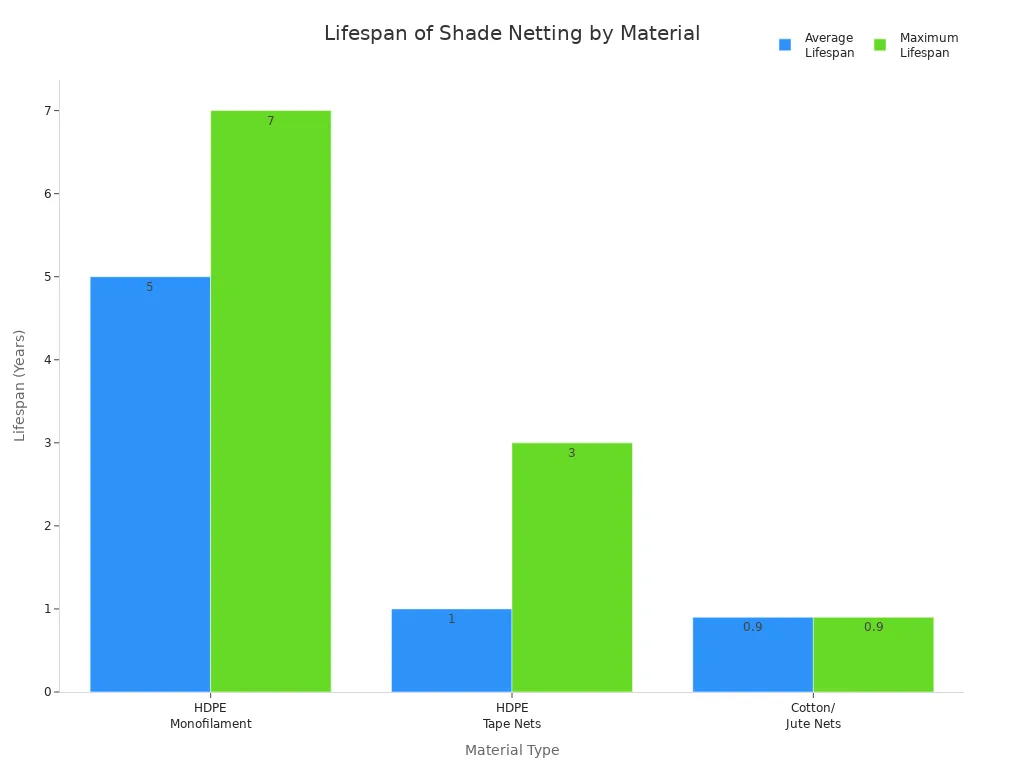
HDPE monofilament nets are strong and last a long time. They use single strands, so they are tough and work well outside. HDPE tape nets cost less but do not last as long. They break down faster because they are not as strong against UV and tearing. Cotton and jute nets wear out quickly and need to be replaced often.
Tip: For the best deal, pick HDPE monofilament netting. It stands up to UV rays and lasts longer than natural fiber nets.
Good material helps your netting handle tough weather. HDPE is very strong and blocks UV rays, so it works well in sunny places. Nylon nets are light and bend easily, but do not last as long. Polypropylene nets do not soak up water and can handle chemicals, but they do not last as long as HDPE. Knitted nets can stretch and do well in the wind. Woven nets are sturdy but can get stiff after a while.
UV Resistance
UV resistance is very important for how long shade netting lasts. Sunlight has ultraviolet rays that can break down plastic fibers. This makes the netting weak and easy to break. Makers add UV stabilizers like benzotriazole absorbers and HALS to help protect the netting. The amount of these stabilizers, usually about 1%, really matters for how long the netting will last.
| Parameter/Condition | Details/Results |
|---|---|
| UV Stabilizer Types | Benzotriazole UV absorbers, Hindered Amine Light Stabilizers (HALS) |
| Concentration of UV Stabilizers | Approximately 1% |
| Test Method | Weatherometer exposure (simulated UV exposure) |
| Exposure Duration | 360 hours (discoloration test), 2500 hours (tensile strength test for sealants) |
| Effects Observed | Significant reduction in discoloration and mechanical degradation; no loss of tensile strength |
| Service Life Estimation Based on Local UV | 1 KLY = 41.84 MJ/m² |
| Example: Spain Local KLY Value | 120 KLY |
| Resulting Net Lifespan in Spain | More than 5 years, retaining 50% mechanical properties after 4 years |
| UV Stability Ratings and Corresponding Lifespan | 500 KLY = 3 years, 700 KLY = 5 years, 1400 KLY = 10 years |
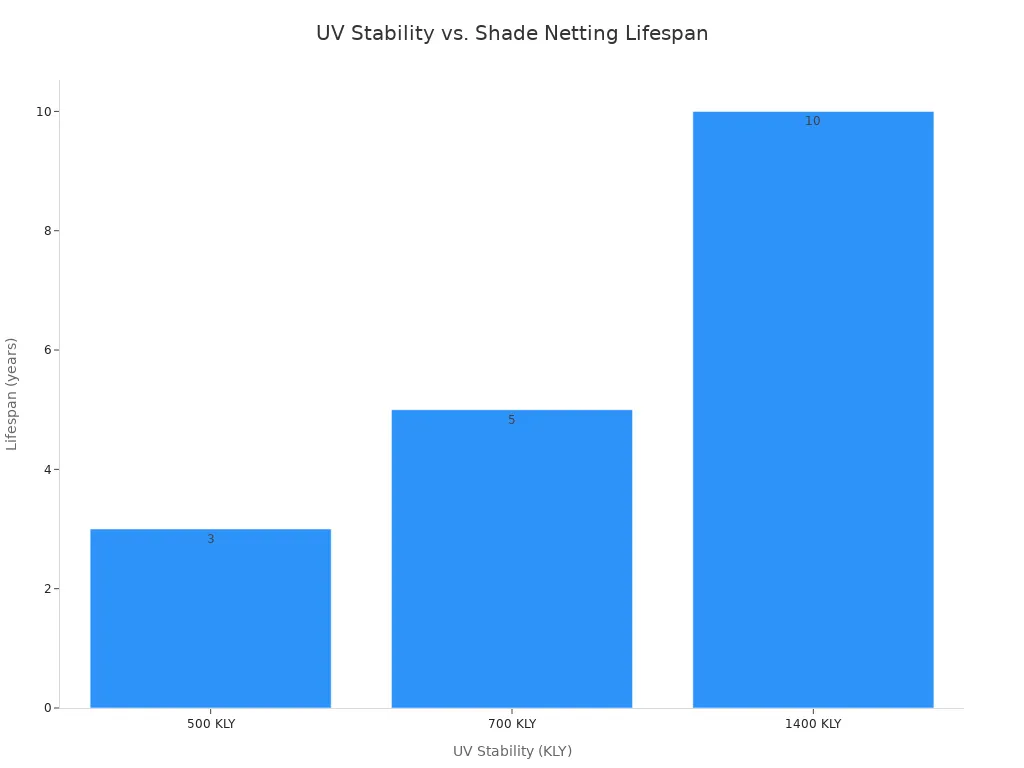
If a net has a higher UV stability rating, it will last longer. For example, a net with a 1400 KLY rating can last up to 10 years, even in strong sunlight. Makers test UV resistance by shining fake sunlight on the netting and checking for color change and strength loss. They use special anti-UV chemicals and follow rules like ASTM G154 to make sure the netting is of good quality.
How much UV light your area gets will change how fast your netting wears out. More sunlight makes the netting break down faster. If you live where the sun is strong, pick netting with extra UV protection. Cleaning your netting and storing it right when not in use can also help it last longer.
Note: Buying better, UV-stabilized netting may cost more at first, but you will save money later because you will not need to replace it as often.
The best way to make your shade netting last is to choose the right material and UV resistance. Always look at the product details and check for certifications before you buy.
Environmental Factors
Sun and Weather
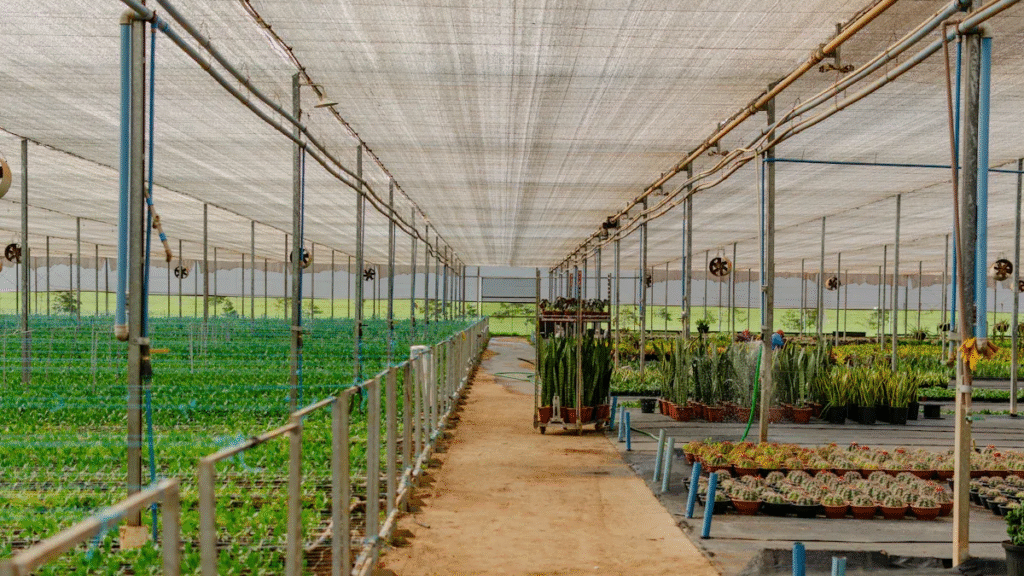
When you use shade netting outside, you face many problems. Sun, rain, and weather changes affect how long your netting lasts. Strong UV rays from the sun can make the fabric fade. They also weaken the fibers and cause rips. Rain and wetness can make the netting droop. Wet netting can also get mold or mildew. If you live where it rains a lot, your netting may wear out faster.
Makers now use strong polymers and better weaving to help nets last. These changes help stop fading and ripping. Some nets have UV-protective coatings. These coatings block bad rays and help shade netting last longer. Cleaning your netting and checking for damage helps you find problems early. This keeps your netting in good shape.
Tip: Pick UV-resistant netting and set it up with good drainage. This stops water from building up and helps stop sagging and mold.
Temperature and Wind
Big temperature changes can hurt your shade netting. Hot days and cool nights make the material stretch and shrink. This can make the netting loose or even crack after a while. Some netting types handle these changes better. Aluminet shade cloth bounces sunlight away and keeps temperatures steady. This kind can last longer, especially in greenhouses.
| Shade Netting Type | Longevity (Years) | Temperature Regulation Properties |
|---|---|---|
| Greenhouse Thermal Screen Aluminet | 3-10 | Cools during the day, insulates at night, stable temperatures |
| Traditional Black Shade Cloth (HDPE) | 2-5 | Absorbs heat, may degrade faster in hot climates |
| Traditional White Shade Cloth (HDPE) | 2-5 | Reflects sunlight, reduces heat buildup |
Wind is also a big problem. Strong winds can pull, twist, or rip your netting if it is not tight. Wind gets stronger as it blows faster, so storms can do a lot of harm. Always tie your netting down well and check it after windy days. Fix the tension if you see any drooping or loose spots.
Cleaning and tightening your netting often helps it last longer in bad weather.
Installation and Maintenance
Installation Tips
Proper installation plays a big role in how long your shade netting lasts. You should always use high-quality materials with UV stabilizers to resist sun damage. Choose the right netting for your needs by looking at color, shade rate, and where you plan to use it. This helps you get the best UV protection and heat control.
Follow these steps for a strong setup:
- Use UV-resistant, soft double-braided rope for lacing through grommets spaced every foot. This spreads out the wind load and keeps tension even.
- Avoid using screws, nails, zip-ties, or wire through the grommets. These can cause stress points and damage the netting.
- Lace all four sides of the netting to the frame or cables in a zig-zag pattern. This trampoline-style lacing helps keep the net tight.
- Do not use bungee cords or elastic ropes. They break down in sunlight and let the net move too much.
- Order panels a bit smaller than your frame. This lets you tension the net without overstretching.
- Hang panels under pergolas or trellises instead of on top. This reduces rubbing and wear.
- Make sure your netting has a slope of at least 20 degrees. This stops water from pooling and causing damage.
Tip: Check your anchors and hardware often. Replace anything rusty or weak to avoid sudden failures.
Common mistakes like sagging nets, weak fixing points, or poor angles can lead to early damage. Regular tension checks and strong anchors help prevent these problems.
Cleaning and Repairs
Routine maintenance keeps your netting in top shape and extends the lifespan of shade netting. You should dust the net weekly and wash it fully once a month, especially during pollen season. Use mild soap and water, and always let the net dry before rolling or storing it. Avoid harsh chemicals that can weaken the fibers.
| Maintenance Task | Frequency | Purpose/Method |
|---|---|---|
| Clean shade fabric | Monthly | Remove dust and dirt; use mild soap and air dry |
| Inspect for tears and fading | Every 3 months | Catch small rips early for quick repair |
| Check hardware and mounts | Every 6 months | Tighten bolts and clean tracks |
| Retract during harsh weather | As needed | Protect from wind, rain, and sun damage |
Inspect your netting for holes, tears, or fraying edges. Patch small holes right away with a repair kit. Reinforce corners and edges with extra ties if needed. Keep the net tight to avoid sagging and water pooling. Replace worn or rusty fasteners to keep the net secure.
Prompt repairs and regular cleaning help prevent bigger problems and save you money over time.
Store your netting in a dry, pest-free place when not in use. Clean and dry it before folding to avoid mold. Careful handling during installation and removal protects the net’s structure for many seasons.
Usage and Storage
Seasonal Use
You can make your shade netting last longer by using it the right way each season. Different places and uses put different stress on your netting. For example, nets on farms get a lot of sun, wind, and bugs. Nets at homes or businesses do not wear out as fast because they face less stress.
- Pick the right thickness for your plants or area. Thick nets are better for strong sun. Thin nets work well in cooler places.
- Tie your netting tightly with strong clips or ties. This stops wind from ripping or loosening it.
- Check your netting often for small holes. Fix them quickly with repair kits or tape.
- Clean your netting often to get rid of dust and dirt. This helps air move through and stops mold.
- Move your netting around each season. This spreads out the wear and helps it last longer.
- Take off or use less netting in winter. This lets more sun and heat reach your plants.
| Usage Type | Typical Stress Level | Maintenance Needs | Expected Durability |
|---|---|---|---|
| Agriculture | High | Frequent checks, fixing, and cleaning | Shorter life, needs strong nets |
| Residential | Low to Moderate | Sometimes, clean, small fixes | Lasts longer, not replaced often |
| Commercial | Moderate to High | Regular checks, cleaning, and repairs | Depends on how much sun and wind |
Tip: Always measure your space and get extra netting to tie it down well. Use strong posts and anchor points to keep it from sagging.
Storage Practices
Storing your shade netting the right way keeps it safe when you are not using it. If you put your netting in a dry, cool, and shady spot, you stop the sun and water from hurting the fibers. Do not leave your netting outside when you are not using it. Sun and rain can wear it out just like using it all the time.
- Fold your netting neatly and keep it off the floor. This keeps bugs and mice from chewing holes in it.
- Keep nets away from sharp things like nails or tools. Sharp things can poke holes or cause rips.
- Make sure your netting is dry before you put it away. Wet nets can grow mold or mildew.
- Be gentle when washing and drying your netting. Do not dry it in direct sunlight, as this can make it weak.
- Check your storage place for leaks or wet spots. Water can make the fabric break down faster.
Note: If you use your netting all the time and do not store it right, it will not last as long. Good storage saves money and keeps your netting strong for next year.
You can make shade netting last longer by doing a few things. Pick UV-stabilized materials and use strong frames for better strength. Set up your netting with tight anchors and fasteners. Check it often to find any damage early. Clean and fix your netting so it does not wear out fast. Think about wind and sun when you plan where to put it. When your netting gets old, try to recycle or reuse it. This helps cut down on waste and is good for the planet. If you follow these tips, you save money and help the Earth.
 English
  German
  French
  Japanese
  Spanish
  Russian