
A 90% shade net is a tightly woven fabric that blocks 90% of sunlight, letting only 10% through. You get strong protection from harsh sun, making it perfect for situations where plants, animals, or people need maximum shade. The higher the percentage, the greater the sun-blocking power. For example, a 90% shade net blocks much more sunlight than common options like 30%, 50%, or 65%. You often see these nets in greenhouses, gardens, construction sites, and livestock areas, where controlling heat, light, and privacy matters most.

Key Takeaways
- A 90% shade net blocks most sunlight, protecting plants, animals, and people from harsh sun and heat.
- Made from strong, UV-stabilized HDPE, these nets last for years and resist weather damage like rain, wind, and mold.
- The net allows air to flow while reducing heat and UV rays, creating cooler, safer outdoor spaces.
- Use 90% shade nets in agriculture, gardens, patios, and livestock areas to improve plant health, conserve water, and increase comfort.
- Proper installation and regular care, like cleaning and repairing, help your shade net last longer and work better.
How It Works

Sunlight Blocking
When you use a 90% shade net, you create a strong barrier against sunlight. The net’s dense weave or knit pattern physically blocks 90% of sunlight from passing through. Manufacturers use tough polymer fibers, such as high-density polyethylene (HDPE), to make these nets. The tightly interlaced threads form a thick fabric that acts as a shield. This structure filters and diffuses sunlight, so only a small amount reaches the area underneath.
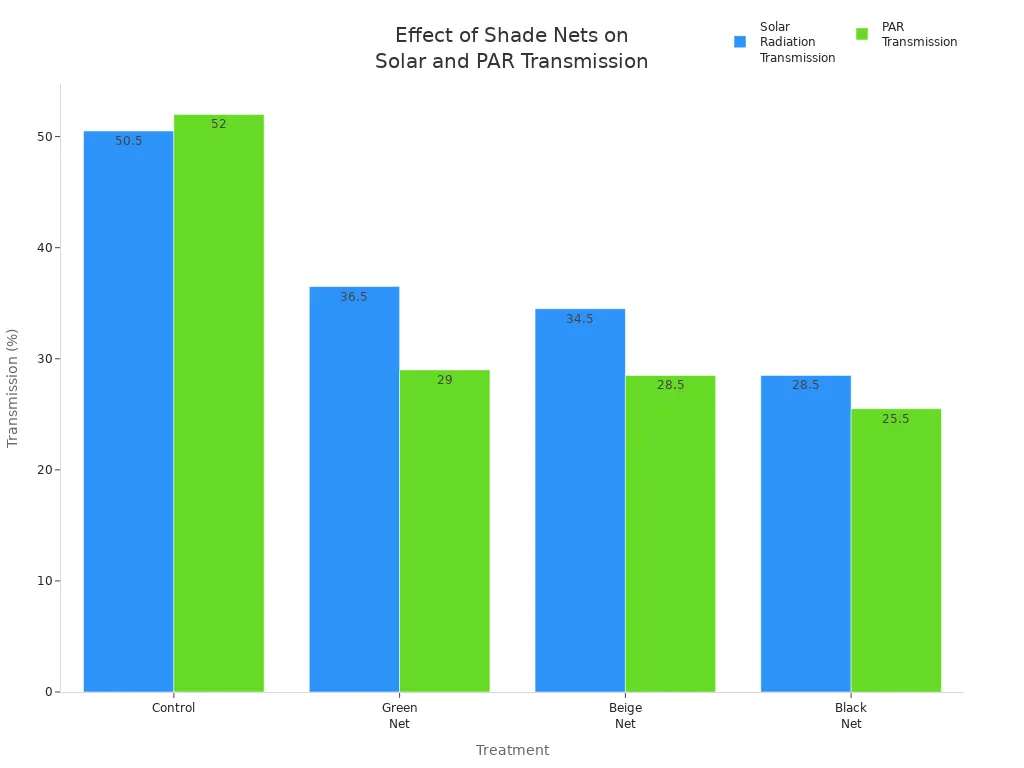
You can see the difference in sunlight transmission by comparing different types of shade nets. Scientific studies show that as the shading percentage increases, less solar radiation and photosynthetically active radiation (PAR) gets through. For example, black shade nets with about 50% shading let only 27-30% of solar radiation and 22-29% of PAR pass through. A 90% shade net blocks even more, making it ideal for privacy, livestock shading, and protecting sensitive plants.
| Treatment | Solar Radiation Transmission (%) | Photosynthetically Active Radiation Transmission (%) |
|---|---|---|
| Control | 50-51 | 43-61 |
| Green Net | 35-38 | 24-34 |
| Beige Net | 32-37 | 27-30 |
| Black Net | 27-30 | 22-29 |
Note: The denser the net, the less sunlight and heat reach your crops or outdoor spaces.
UV and Heat Protection
A 90% shade net does more than just block visible sunlight. It also protects you, your plants, and your animals from harmful ultraviolet (UV) rays. The dense material acts as a physical barrier, stopping most UV rays from getting through. This helps prevent sunburn and heat stress in plants and animals.
The net’s structure also reduces heat buildup. By blocking most of the sun’s energy, it keeps the shaded area cooler. This is especially important in hot climates or during summer months. You can create a more comfortable environment for people, livestock, or delicate crops.
Tip: Using a high-percentage shade net can help you manage temperature and light, making your outdoor spaces safer and more productive.
90% Shade Net Features
Material and Durability
You will find that most 90% shade nets use high-density polyethylene (HDPE) as their main material. HDPE gives the net strength, flexibility, and resistance to chemicals. Manufacturers often add UV stabilizers to the plastic. These additives protect the net from breaking down under strong sunlight. UV stabilization helps the net keep its shape and strength for many years, even in harsh outdoor conditions. This means you can rely on your net to block sunlight, control temperature, and protect crops or animals season after season. The net also resists damage from wind, hail, frost, and rain, which lowers your maintenance costs.
HDPE shade nets come in several colors. The most common options are black, green, and white. Each color affects how much light and heat the net blocks. For example, black nets block the most light and heat, while white nets let in more sunlight. You can see the main differences in the table below:
| Shade Color | Shading Percentage | Evaporation Suppression Efficiency ESE%E %) |
|---|---|---|
| Black | 90% | 54.7% |
| Green | 90% | 54.7% |
| White | 90% | 54.7% |
Polyethylene nets also resist rot and mold much better than natural fiber nets like cotton. Cotton nets break down quickly, especially in humid climates, while polyethylene nets last longer and need less care.
Note: When you choose a 90% shade net made from HDPE, you get a product that stands up to tough weather and lasts for years.
Breathability and Water Resistance
A 90% shade net does more than block sunlight. The net’s design allows air to flow through, which helps keep the area underneath cooler and prevents heat buildup. This breathability is important for plants, animals, and people who need shade but also need fresh air.
You also get strong water resistance with HDPE shade nets. These nets do not absorb water and dry quickly after rain. Here are some key benefits:
- The net acts as a barrier against heavy rain, hail, and strong winds, reducing damage to crops and property.
- HDPE material dries fast, which helps prevent mold and mildew.
- The net shields plants from direct rain impact, lowering the risk of soil erosion and root damage.
- UV-stabilized HDPE stands up to wet weather and keeps its strength.
You can use a 90% shade net in both dry and wet climates. The net’s resistance to rot and moisture makes it a better choice than natural fiber alternatives.
Lifespan and Maintenance
A high-quality 90% shade net can last from 3 to 5 years outdoors, sometimes even longer if you buy from a reputable manufacturer. The net’s lifespan depends on the quality of the HDPE, the amount of UV protection, and the local weather. Strong sunlight, heavy rain, and wind can shorten the net’s life, but UV-treated nets hold up much better.
You can extend the life of your net by following some simple maintenance steps:
- Inspect the net often for tears, frays, or faded spots, especially after storms.
- Clean the net with mild soap and a soft brush to remove dust and algae.
- Repair small holes right away to stop them from getting bigger.
- Store the net in a dry, safe place when you are not using it or during extreme weather.
- Make sure the net is tight and well-supported to avoid sagging and damage.
Polyethylene nets need less maintenance than cotton nets. They resist mold, mildew, and rot, even in humid or rainy conditions. You will spend less time and money on repairs and replacements.
Tip: Regular care and proper installation help your 90% shade net last longer and work better.
Uses
Agriculture and Greenhouses
You can use a 90% shade net in commercial agriculture and greenhouse operations to protect crops from extreme weather. These nets shield plants from harsh sunlight, heavy rain, strong winds, and hail. By blocking most sunlight, you help regulate temperature and humidity, which improves crop quality and yield. You also reduce pest infestations and diseases, so your crops have a longer shelf life and higher market value. Many farmers use these nets for vegetables, fruits, and flowers, especially those that need deep shade, like leafy greens and shade-loving flowers. In hot climates, the net lowers air temperature by several degrees, preventing sunburn and water loss. You also save on energy and water because the net reduces the need for artificial cooling and irrigation.
- Protects crops from extreme weather
- Regulates sunlight, temperature, and humidity
- Reduces pests and diseases
- Improves crop quality and yield
- Saves water and energy
Tip: Use a 90% shade net for delicate plants or in areas with intense sunlight to prevent heat stress and boost productivity.
Gardens and Patios
In home gardens and patios, you can use these nets to create cool, shaded spaces for both plants and people. Black shade nets block up to 95% of light and most heat, making them perfect for ferns, orchids, and succulents. You protect your plants from sunburn and heat stress, which is important in hot climates. The net also helps keep soil moist by reducing evaporation and acts as a barrier against pests and strong winds. You can drape the net over trellises to support climbing plants or use it to create a private, comfortable outdoor area.
- Lowers the temperature around plants by up to 10°C
- Shields plants from harmful UV rays
- Conserves soil moisture
- Acts as a wind and pest barrier
- Supports climbing plants
Note: A 90% shade net can also enhance privacy and protect outdoor furniture from sun damage.
Livestock and Outdoor Areas
You can use these nets to provide shelter for livestock and create comfortable outdoor spaces. The net reduces heat stress in animals, which helps improve their health and productivity. In playgrounds, parking lots, or outdoor work areas, the net offers shade and lowers the risk of heat-related problems. It also acts as a privacy screen, limiting visibility and increasing security for your property. The durable material stands up to tough weather, so you get long-lasting protection for animals, equipment, and people.
- Reduces heat stress in livestock
- Creates safer, cooler outdoor environments
- Enhances privacy and security
- Protects vehicles and equipment from the sun and weather
Callout: In areas with extreme heat or full sun, a 90% shade net helps maintain comfort and safety for both animals and people.
Installation

Methods
You have several options when installing a 90% shade net. Start by measuring the area you want to cover. Choose a net size that fits your space with a little extra for secure attachment. Most people use poles, frames, or existing structures like fences or pergolas as support.
Follow these steps for a basic installation:
- Set up sturdy support posts or frames around the area.
- Unroll the shade net and drape it over the supports.
- Attach the net using clips, ropes, or bungee cords. Make sure the net stays taut but not overstretched.
- Secure the edges tightly to prevent flapping in the wind.
- Use ground stakes to anchor the corners for extra stability.
- If your net does not have grommets, add them along the edges to make attachment easier and more secure.
Tip: Always check that your support structure can handle the weight and tension of the net, especially in windy areas.
Tips
You can extend the life and effectiveness of your shade net by following a few simple tips. Use UV-stabilized nets to resist sun damage and last longer outdoors. Avoid pulling the net too tight during installation, as overstretching can cause tears. Keep the net properly tensioned to prevent sagging and reduce wear.
Secure the net firmly with strong clips or ropes. In areas with strong winds, consider adding extra poles or frames for support. Rotate the net each year to spread out wear and tear. Clean the net regularly with mild soap and water to remove dirt and debris. Repair small holes right away using repair tape or UV-resistant thread.
Note: Store your shade net in a dry, cool place during the off-season to prevent mold and damage. After storms, inspect the net for loose sections or tears and fix them quickly to keep your net working at its best.
A 90% shade net gives you reliable protection from intense sunlight, heat, and UV rays. You can use it for agriculture, gardens, patios, and animal shelters. When choosing the right net, consider your local climate, the plants or spaces you want to protect, and the level of shade needed.
- Select UV-stabilized HDPE for strength and long life.
- Match the net color and shade percentage to your climate and application.
- Maintain your net with regular cleaning and proper storage.
Tip: A 90% shade net offers a cost-effective balance of durability, sun protection, and easy installation for many outdoor needs.
FAQ
How do you choose the right color for a 90% shade net?
You should match the net color to your needs. Black nets block the most light and heat. Green nets blend into gardens. White nets allow more light for delicate plants. Always check your plant or area requirements before buying.
Can you cut a 90% shade net to fit your space?
Yes, you can cut the net with sharp scissors. Use a hot knife or lighter to seal the edges and prevent fraying. Always measure your area first for a clean fit.
Tip: Sealing the edges after cutting helps your net last longer.
Does a 90% shade net protect against rain?
A 90% shade net blocks most sunlight but does not make your area fully waterproof. Water can pass through the mesh. You get some rain protection, but heavy rain will still reach the ground.
How do you clean a 90% shade net?
You can clean the net with mild soap and water. Use a soft brush to remove dirt and dust. Rinse well and let it air dry before reinstalling.
- Avoid harsh chemicals.
- Clean regularly for best results.
Is a 90% shade net safe for all plants?
Not all plants thrive under deep shade. Shade-loving plants like ferns and orchids do well. Sun-loving crops may need less dense nets. Always check your plant’s sunlight needs before installing a 90% shade net.
Note: Too much shade can slow growth for some plants.
 English
  German
  French
  Japanese
  Spanish
  Russian