
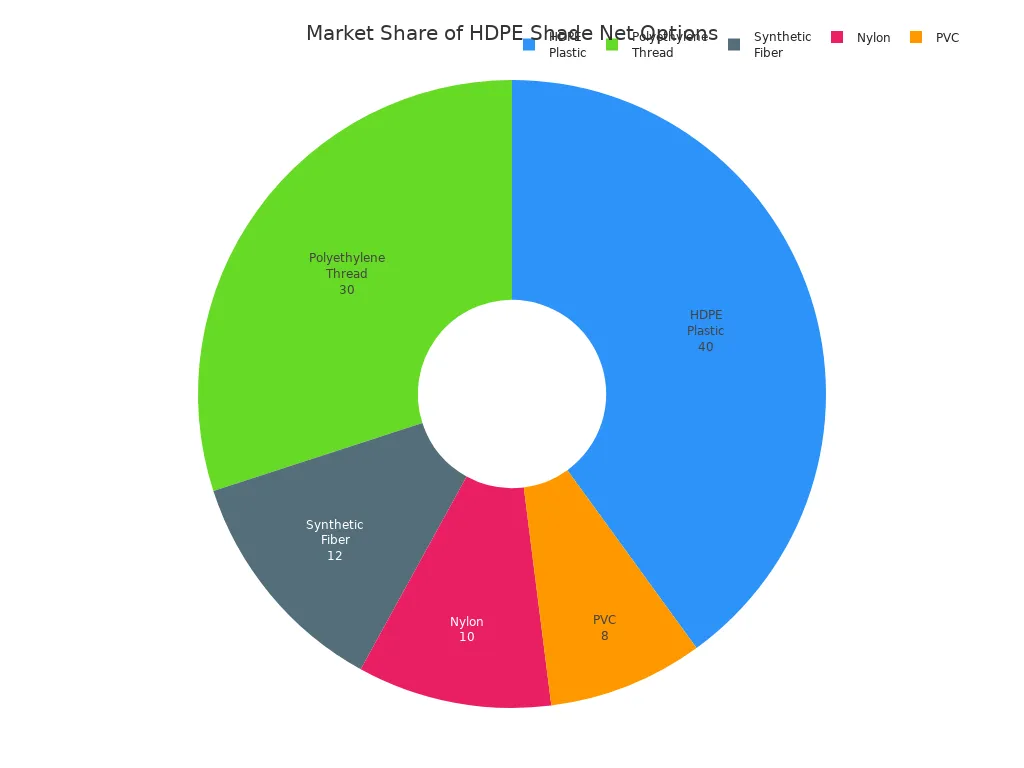
You can achieve better crop yields and protect your fields by choosing the right HDPE shade net. HDPE plastic is the most widely used material in agricultural shade nets, holding the largest market share. Green X Black UV protection agricultural shade nets are especially popular. The 75% shade net provides optimal coverage for most farms. Using the right shade net helps regulate heat, reduces water loss, and prevents crop damage. Studies show that agricultural shade nets can boost crop growth by up to 30%.
| Material Type | Market Share in 2023 |
|---|---|
| HDPE Plastic | 40% |
| Polyethylene Thread | 30% |
| Synthetic Fiber | 12% |
| Nylon | 10% |
| PVC | 8% |
Key Takeaways
- HDPE shade nets help crops by blocking too much sun, heat, and bugs. This can help plants grow up to 30% more. – Pick the right shade percentage and net type for your crop and weather. This gives you the best results. – Knitted nets are flexible and let air pass through. Woven nets are stronger and give even shade. – Install the nets the right way and check them often. This helps them last longer and keeps crops safe. – Good nets with UV protection save water and use fewer chemicals. They also help farms grow more food.
HDPE Shade Net Overview
What Is HDPE?
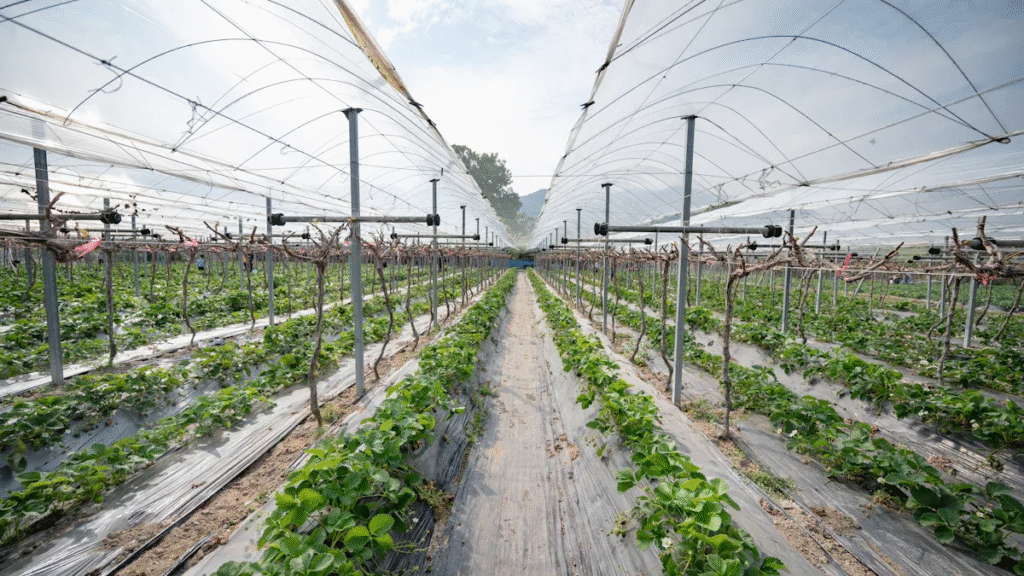
HDPE is a plastic used a lot in farming today. It is strong and light. It does not get damaged by bad weather. HDPE shade nets help keep crops safe from too much sun, wind, and rain. These nets are made with UV-stabilized plastic, so they last a long time. Good HDPE shade nets help plants grow by controlling sunlight and heat. Plants do best under 50-75% shade, which these nets give. You can save money because these nets last 3 to 10 years if you take care of them.
Here are some main features of HDPE shade nets:
| Property | Description |
|---|---|
| UV Stabilized | Does not fade or break from sunlight, so it lasts longer. |
| Weather Resistant | Stays strong in rain, heat, humidity, and dust, so it is good for outdoor farms. |
| Lightweight Yet Strong | Easy to carry and put up, but does not tear or stretch easily. |
| Non-Corrosive & Rust-Free | Does not rust or rot, even if it gets wet or is in humid places. |
| Customizable Mesh Sizes & GSM | Comes in many thicknesses and mesh sizes for different crops. |
| Reusable & Washable | You can wash and use the net again, which saves money. |
| Safe & Non-Toxic | Made from safe plastic, so it will not hurt people, animals, or plants. |
| Recyclable Material | You can recycle it, so it is better for the environment. |
Tip: Always look for UV stabilization and GSM labels when you buy a shade net. These show the net is good quality and will last longer on your farm.
Common Uses
HDPE shade nets have many uses on farms and in other places. Farmers use them to protect crops in nurseries, greenhouses, and shade houses. They also use them in orchards and vineyards to keep fruit trees and vines safe from bad weather. Some nets, like knitted or monofilament, are best for crops that need air and some shade. Woven nets give more shade and stronger protection for some plants.
Here is a table that shows how different HDPE shade nets are used:
| Type of HDPE Shade Net | Agricultural Uses | Non-Agricultural Uses |
|---|---|---|
| Standard Shade Nets | Nurseries, greenhouses, shade houses, gardens | N/A |
| Aluminet Shade Nets | Crop protection with temperature control | N/A |
| Knitted Shade Nets | Farms, vineyards, orchards, and tree nurseries | Construction, landscaping, and recreational spaces |
| Monofilament Shade Nets | Vineyards, tree nurseries, orchards, and farming | N/A |
| Woven Shade Nets | Farms, nurseries, orchards | Patios, privacy screens, sports netting, and construction safety |
HDPE shade nets are also used outside of farming. Builders use them for safety and privacy screens. People use them for pet kennels, and sports places use them for netting. Picking the right net helps your crops or other needs the most.
HDPE Shade Net Types
Woven vs. Knitted
You can choose between woven and knitted HDPE shade nets for your farm. Each type offers unique benefits. Knitted shade nets, often called Raschel nets, give you high breathability and flexibility. They stretch well and resist tearing, making them ideal for windy areas or places where you need to move the net often. Woven shade nets have a tighter weave. They look smoother and provide more consistent shade, but they allow less airflow and are less flexible.
Here is a quick comparison to help you decide:
| Feature | Knitted HDPE Shade Net | Woven HDPE Shade Net |
|---|---|---|
| Breathability | High | Moderate |
| Durability | 5-8 years (with UV) | 3-7 years (with UV) |
| Flexibility | Stretchable | Less flexible |
| Appearance | Rougher texture | Smoother, neat look |
| Best Use | Crop protection | Patios, gardens, and safety |
- Knitted nets work best for crops and plant protection.
- Woven nets suit patios, gardens, and places needing strong, static shade.
Tip: If you want a net that lasts longer and handles wind well, pick a knitted HDPE shade net.
Shade Percentages
Shade percentage tells you how much sunlight the net blocks. For example, a 50% shade net blocks half the sunlight, letting the other half reach your plants. Knitted nets usually come in 30% to 50% shade. Woven nets offer 40% to 70% shade. Higher shade percentages lower the temperature under the net and protect plants from heat stress.
| Shade Net Type | Typical Shade Percentage Range | Characteristics and Effects |
|---|---|---|
| Knitted HDPE | 30% – 50% | More airflow, flexible, good for seasonal use |
| Woven HDPE | 40% – 70% | Stronger shade, less airflow, good for permanent use |
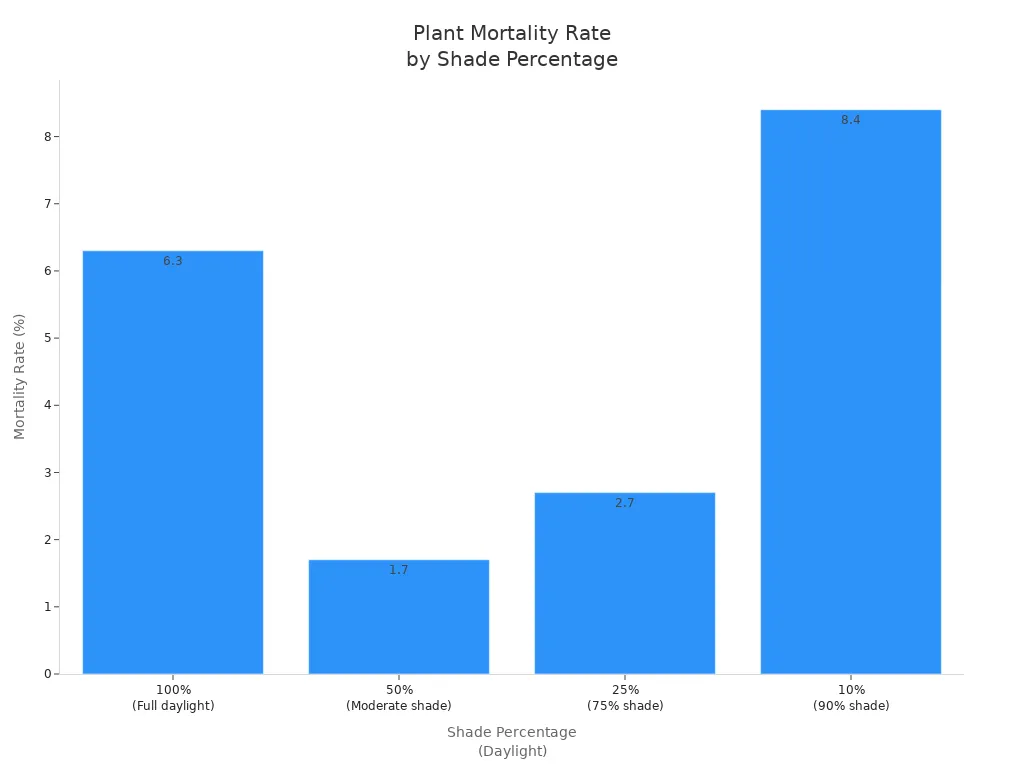
Plants grow best under moderate shade, like 50%. Too much shade, such as 75% or more, can slow growth and raise plant death rates. Moderate shading also cools the air and leaves, helping crops handle heat and drought.
Color Options
You can find HDPE shade nets in several colors. The most common are black, green, white, blue, and red. Each color changes how much light and heat reach your crops.
| Color | Light Transmittance | Effect on Crops |
|---|---|---|
| Black | Blocks 55–60% PAR | Strong shade, less heat, stable light quality |
| Pearl | Blocks UV, lets visible light through | Good for growth, reduces UV damage |
| Blue | Changes the light spectrum | It can affect plant shape and growth |
| Red | High red light, less UV block | May boost fruit quality |

Note: Choose the color based on your crop’s needs and your local climate. Black nets give strong shade and heat protection. Pearl nets let in more light but block harmful UV rays.
Top Options by Crop
Vegetables
Picking the right HDPE shade net helps your vegetables grow. Different vegetables need different amounts of shade. Herbs and leafy greens do well with lighter shade nets. Tomatoes, cucumbers, and squash need medium shade nets. Peppers and cabbages like heavy shade nets in hot places.
| Shade Percentage | Recommended Vegetable Crops |
|---|---|
| 35% | Herbs, vegetables requiring partial shade |
| 50% | Tomatoes, cucumbers, lettuce, spinach, squash |
| 70% | Peppers, broccoli, cabbage |

Choose the shade percentage based on your weather and crop. A 50% shade net usually works best for most vegetables. It gives enough sunlight but also protects from too much sun. This stops sunburn and heat stress, especially in summer.
Tip: Knitted nets are good for vegetables that need more air and movement. Woven nets are better for crops that need more shade and less wind.
Fruit Orchards
Fruit orchards do better with medium shade nets. These nets can make it cooler under them by up to 20°F. Cooler air helps fruit trees grow and give more fruit. Green and white nets are best for most orchards. Green nets give a good mix of sun and shade, helping trees grow healthy. White nets reflect sunlight and keep the orchard cooler.
| Shade Percentage | Benefits for Fruit Orchards |
|---|---|
| 50-70% (Medium) | Lowers temperature by 15-20°F, increases fruit yield by ~30%, improves water retention |
| Net Color | Effects on Fruit Orchards |
|---|---|
| Green | Balances sunlight and shade, promotes healthier growth, increases chlorophyll, and reduces stress. |
| White | Reflects sunlight, keeps the environment cooler, suitable for light shade needs. |
| Black | Blocks most sunlight, absorbs heat, suitable for plants needing heavy shade, but may raise the temperature. |
HDPE shade nets are strong and block UV rays. They help you make a cooler place for your orchard. Medium shade nets in green or white help your trees grow and give more fruit.
Tip: Put nets on tightly and check them often. Taking care of your nets helps them last longer and work better.
Floriculture
HDPE shade nets help flowers grow better and last longer. These nets protect flowers from strong sun, wind, and bugs. They also help control heat and keep in moisture.
| Benefit Category | Description |
|---|---|
| Durability | HDPE nets are durable and resistant to UV degradation, suitable for multiple growing seasons. |
| UV Protection | Protects plants from harmful ultraviolet rays, preventing sunburn and stress on sensitive flowers. |
| Temperature Control | Helps maintain cooler temperatures beneath the net, reducing heat stress during hot periods. |
| Moisture Retention | Limits evaporation, helping retain soil moisture, especially in dry regions. |
| Wind Protection | Acts as a barrier against strong winds, protecting delicate flowers and supporting healthy growth. |
| Pest Management | Reduces access of certain insects and birds, aiding organic farming by lowering chemical use. |
| Extended Growing Season | Creates controlled environments that allow earlier planting and later harvesting. |
| Shade Percentage | Suitable Flower/Plant Types |
|---|---|
| 30% Shade | Light-loving plants such as vegetables, herbs, and flowers need ample sunlight with some protection. |
| 50% Shade | Versatile option for many flower species, balancing sunlight and protection for optimal growth. |
| 70% Shade or more | Delicate, shade-tolerant flowers, ferns, and young seedlings require significant shade relief. |

Most flowers do well with 50% shade nets. Pick 70% shade for flowers that are sensitive. This keeps them safe from sunburn and helps them stay healthy.
Nurseries
Nurseries need a safe place for young plants to grow. HDPE shade nets with 40-60% shade help control light and heat. These nets protect seedlings from wind and hail. They also keep the temperature steady. Studies show green shade nets with UV-stabilized polyethylene film help seeds sprout better. Almost 95% of seeds grow, and only about 3% die. Medium shade also lets air move and lowers the chance of disease.
| Treatment Description | Light Intensity | Seedling Survival Outcome |
|---|---|---|
| A ball seedling grown 2 years under 40% shade net + 1 year open | 40% of full light | The highest survival rate among treatments |
| Bare-root seedling grown for 3 years under the Pinus sylvestris canopy | 35–40% of full light | Moderate survival rate |
| Bare-root seedling grown for 3 years in an open nursery | 100% full light | Lower survival rate compared to shaded treatments |
| Bare-root seedling grown for 3 years in the open with 65% full light | 65% of the highest | The percentage of dead seedlings |
Use a 40% shade net for most nursery plants. This helps young plants live and grow strong. HDPE shade nets also help roots grow and protect them from heat and cold.
Note: Always pick the right shade for the plant’s age and type. Young plants need more shade than older ones.
Benefits
Crop Protection
You want your crops to stay healthy and productive. Shade nets help you create a safer environment for your plants. These nets act as a shield against pests, harsh sunlight, and extreme weather. When you use them, you give your crops a better chance to grow strong.
- Shade nets create a controlled microclimate by regulating light, temperature, and humidity. This reduces heat stress and UV damage.
- They serve as physical barriers, cutting pest numbers by up to 96%. For example, codling moths and apple maggots drop sharply under nets, even more than with insecticides.
- The nets filter out harmful UV-A and UV-B rays, which protect your crops from sunburn.
- You also protect your plants from hail, wind, and intense sunlight. This leads to better growth, higher fruit quality, and improved water retention.
- Some nets, called photoselective nets, change the light spectrum to help plants grow even better.
Using shade nets means you can rely less on chemicals and keep your crops safer from the environment.
Water Conservation
Water is precious, especially when you face dry seasons or drought. Shade nets help you save water by creating a cooler, more humid space for your crops.
- The nets lower the sunlight and temperature, which reduces how much water your plants lose through evaporation.
- Studies show you can cut water use by up to 30% with shade nets.
- Protected cultivation systems using nets can boost yields by 20-40%, showing that your water works harder for you.
- The nets increase air humidity and keep soil moist longer, so you do not need to water as often.
- As climate change brings more extreme weather, shade nets help you manage water better and keep your farm productive.
| Parameter | With Shade Net | Without Shade Net |
|---|---|---|
| Sunlight Intensity (lux) | ~1665 | ~3073 |
| Air Temperature (°C) | 21.4 | 23.3 |
| Air Humidity (%) | 92.4 | 80.0 |
| Plant Height | Higher | Lower |
| Leaf Area | Higher | Lower |
| Plant Dry Weight | Higher | Lower |
Durability
You want your investment to last. Shade nets made from high-quality materials stand up to tough farm conditions.
- Many nets last over five years outdoors, even in strong sun and wind.
- They resist UV rays, stretching, and tearing, so you do not have to replace them often.
- Knitted designs let air and light through while staying strong.
- The nets hold up well against chemicals, but you should avoid too much exposure to pesticides and fertilizers to keep them in top shape.
- Indoor use can make them last even longer, but outdoor nets still perform well if you choose the right strength and UV resistance.
Tip: Check your nets regularly for damage and clean them as needed. This helps you get the most out of your investment.
Choosing HDPE Shade Net
Factors to Consider
When you pick a shade net, you must think about your crops and the weather. Experts say there are some important things to look at:
- The kind of crop and how old it is will decide the shade level. Leafy greens like lettuce and spinach grow best with 30–50% shade. Plants that like heat need less shade.
- Where you live matters, too. Hot, sunny places need 50–70% shade to keep plants cool. Cooler places do better with 30–40% shade.
- Strong nets with tough edges are good for windy spots. These nets last longer and do not tear easily.
- How you put up the net and your garden’s shape affect how well it covers your plants. Good support keeps your crops safe.
- The color and material of the net change how much light and heat get through. This helps your plants get enough sun but not too much.
- The right net helps keep the best temperature and humidity. This makes a good place for your plants to grow.
Tip: Always check what shade level your crop and weather need before buying.
Customization
You can get shade nets made just for your farm. Custom sizes help you cover your crops without wasting net. Small farms might use small nets or only cover some plants. Big farms often need large nets or many rolls.
- UV protection and how thick the shade is should match your weather. If you have strong sun and heat, pick nets with more UV protection and thicker shade.
- UV-stabilized polyethylene nets last about 30% longer than regular ones.
- You can pick nets with shade from 40% to 80%. This lets you control how much light your plants get.
- Nets with strong edges and special holes are easier to put up and last longer.
- Different nets have different UV protection, strength, and weight. The Pro Model is best for big farms in very sunny places. It gives the most protection and is easy to use.
Note: Custom nets help you stop pests, control heat, and protect from bad weather.
Cost and Quality
Shade nets have many prices. The price depends on how good, strong, and special the net is. Features like UV protection and GSM make nets cost more. Good nets last 2 to 6 years, depending on how they are made and used.
| Price Range (USD) | Product Description / Features | Minimum Order Quantity | Performance & Longevity Indicators |
|---|---|---|---|
| $0.08 – $0.12 / sqm | Basic agricultural shade nets, 35%-50% shade factor, lower GSM | 1000-3000 square meters | Lower durability, lifespan ~2-3 years |
| $0.09 – $0.25 / sqm | Heavy-duty HDPE mesh, UV-resistant privacy fence screens | 3000 square meters | UV resistance, moderate durability |
| $0.12 – $0.35 / sqm | High-quality HDPE shade nets with UV stabilization | 1000 square meters | Improved longevity, 3+ years |
| $0.30 – $0.70 / sqm | Aluminum-coated nets, 55% shade rate, enhanced cooling | 1000 square meters | Better weather resistance, longer lifespan |
| $1.11 – $1.89 / sqm | High-density polyethylene, UV-resistant, stretchable shade sails | 200-5000 kilograms/ sqm | Heavy-duty, suitable for specialized applications |
| $2.86 – $6.85 / roll | 340gsm knitted sun shade fabric, for carport use | 30 rolls | High GSM, durable, longer lifespan (up to 6 years) |
| $3.50 – $8.20 / piece | Waterproof, UV-blocking sun shade sails | 100-500 pieces | High performance, weatherproof, extended longevity |
| $15 – $20 / piece | Premium HDPE rainproof, anti-UV sun sails | 100 pieces | Top-tier durability, UV stabilized, lifespan 5-6+ years |
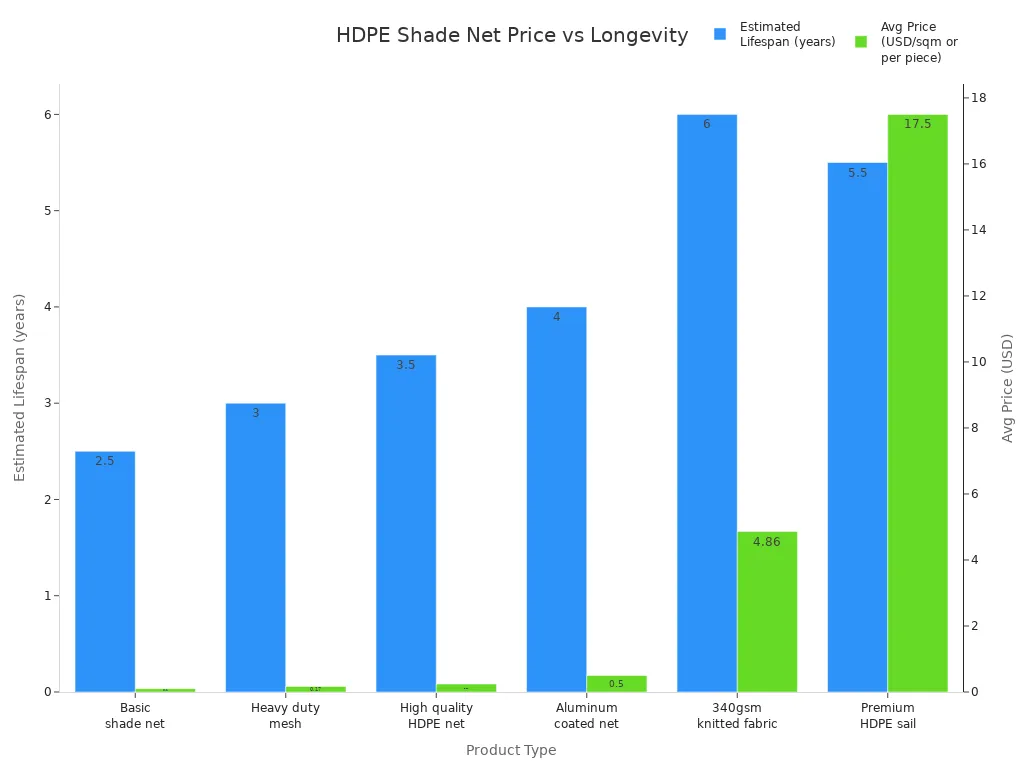
You can see that better nets cost more money. Nets with UV protection and higher GSM are more expensive but last longer. Cheaper nets do not have these features and break sooner. The best nets, which cost $15–$20 each, last the longest and work best in tough weather.
Installation and Care
Installation Tips
Proper installation helps you get the best results and longest life from your shade net. Follow these steps to set up your net correctly:
- Assess your site. Look at your crops, climate, and soil. This helps you decide where and how to install the net.
- Choose the right shade density. Match the net’s shade percentage to your crop’s light needs.
- Secure the net tightly. Use strong poles and fasteners. Make sure the net can handle wind and weather.
- Check the net’s tension. Avoid sagging or loose areas. Tight nets last longer and protect better.
- Overlap edges if you use more than one net. This stops gaps and keeps pests out.
- Leave enough space for air to move under the net. Good airflow helps prevent heat buildup and disease.
Tip: Always inspect your installation after storms or strong winds. Quick repairs prevent bigger problems later.
Maintenance
You can keep your shade net in top shape with simple care. Most nets need little work because they resist water and do not absorb moisture. UV stabilization protects them from sunlight, so they do not fade or break down quickly. Still, you should check your net often for damage or dirt.
Common issues include UV damage, wind tears, dust buildup, and mildew in wet areas. You can avoid these problems by following these steps:
- Clean the net with water to remove dust and debris. Do this every few months or after storms.
- Inspect for holes or tears. Fix small damages right away to stop them from getting worse.
- Replace badly damaged sections. This keeps your crops safe and the net strong.
- Store the net in a dry, shaded place when not in use. Proper storage prevents unnecessary wear.
- Choose nets with the right GSM and UV protection for your climate. High-quality nets last longer and need less care.
Note: Regular cleaning and quick repairs help your net last for years. You save money and protect your crops better.
Picking the right HDPE Shade Net helps protect your crops. It also helps you grow more food and use less water. You can choose nets in many colors, thicknesses, and strengths. This lets you find the best one for your farm. Experts say you should think about your crop, weather, and pests before you buy. Many farmers say their crops do better, and they have fewer problems with these nets. For the best help, ask a good supplier or farming expert.
FAQ
What is the best shade percentage for vegetable crops?
You should use a 50% shade net for most vegetables. This level gives your plants enough sunlight while protecting them from heat and sunburn. Adjust the percentage based on your local climate and the specific needs of your crops.
How long does an HDPE shade net last?
A high-quality HDPE shade net lasts 3 to 10 years. UV stabilization and proper care help extend its lifespan. You should check your net regularly for damage and clean it to keep it in good condition.
Can I use the same shade net for all crops?
You should not use the same net for every crop. Different crops need different shade levels. For example, leafy greens need less shade than fruit trees. Always match the net’s shade percentage to your crop’s requirements.
How do I clean and maintain my shade net?
You can clean your shade net with water and a soft brush. Remove dust and debris every few months. Check for holes or tears. Repair small damages quickly. Store the net in a dry place when not in use.
Does the color of the shade net matter?
Yes, color affects light and temperature. Black nets block more sunlight and heat. Green nets balance shade and light. White nets reflect sunlight and keep the area cooler. Choose the color based on your crop and climate needs.
 English
  German
  French
  Japanese
  Spanish
  Russian