
Imagine your crops under a very hot sun or sudden heat waves. You need something that keeps plants safe and helps them grow better. Agricultural Shade Net lets you manage sunlight, temperature, and crop safety. With a Shade Net, you can handle climate problems:
- You lower heat stress and stop sunburn.
- You save water because less water dries up.
- You help crops use water better, even in dry times.
- You keep plants healthy and make crops better.
Key Takeaways
- Agricultural shade nets keep crops safe from strong sunlight, heat, pests, and bad weather. This helps plants grow better and stronger.
- Picking the right shade percentage and color is important. Different crops need different amounts of light and colors to grow well.
- Shade nets make the area cooler and more humid. This helps save water and lowers heat stress on plants.
- Using good quality, UV-resistant materials like HDPE nets makes the nets last longer. This saves money over time.
- Installing nets with strong supports and tight fastening stops damage. It keeps the nets working well.
- Checking nets often, cleaning them gently, and fixing them quickly helps them last longer. This also keeps your crops safe.
- Changing shade nets with the seasons helps crops grow better. It matches the weather and crop needs.
- Choosing the right net type, shade level, and features for your crop, climate, and budget helps you get more crops. It also helps farming stay strong for the future.
Agricultural Shade Net Overview
Definition
You use an agricultural shade net to keep crops safe from strong sunlight and bad weather. These nets are tough and last a long time. They are made from materials like High-Density Polyethylene (HDPE) or polypropylene. The nets are made by knitting or weaving. They block some sunlight by a certain shade percentage. This helps you control how much light and heat your plants get. Using an agricultural shade net creates a special climate for your crops. It protects them from too much sun, heat stress, pests, and storms. When you pick a net, you should look at the material quality, UV resistance, and shade percentage.
Tip: Always check the shade percentage and UV resistance before you buy a net. These things help you choose the right net for your crops.
| Shade Percentage | Material Quality | UV Resistance | Typical Applications |
|---|---|---|---|
| 30% – 90% | Made from polypropylene or HDPE, produced with Raschel knitting technology, ensuring durability and flexibility | UV stabilized with warranties up to 5 years. | Used for various crops such as roses, strawberries, leafy greens, and also for livestock shelters and greenhouses |
Purpose
You use agricultural shade nets for many reasons. These nets help you:
- Control light, temperature, and humidity for your plants.
- Spread sunlight so plants can make food and not get burned.
- Protect plants from heat and UV stress, so they grow better.
- Use different colors to change the light for some crops.
- Stop water from drying up, so plants get enough moisture.
- Keep plants safe from cold and keep the climate steady.
- Make crops grow taller and stronger, with better stems.
- Save water and use fewer chemicals, which lowers costs.
Key Features
Agricultural shade nets have special features that help your crops. When you use these nets, you get:
- Sunlight control, so plants get the right amount of light and less heat.
- UV protection to stop sunburn and damage from strong rays.
- Better soil moisture because less water dries up.
- Wind protection to keep plants safe from strong winds.
- A barrier that keeps pests and birds away, so you use fewer chemicals.
- A longer growing season, so you can plant earlier and harvest later.
- Temperature control to make a cooler place for your crops.
- You can pick the net’s density and color to fit your crop and weather.
- Support for sustainable farming by saving water and using fewer chemicals.
How It Works
Sunlight Control
You control sunlight for your crops by choosing the right shade net. Agricultural Shade Net blocks a certain percentage of sunlight, which helps you manage how much light reaches your plants. You can pick nets with shade rates from 30% to 90%. This lets you match the net to your crop’s sunlight needs. For example, you might use a 30-50% shade net for grapes or flowers, while leafy greens often need 60-75% shade.
- Shade nets filter and block part of the sun’s rays, reducing sunlight intensity.
- Different colors of nets let you select the best light for your crops. Red nets help tomatoes and strawberries, while blue nets work well for leafy greens.
- The net spreads light more evenly, so all parts of your plants get enough light. This stops sunburn and helps plants grow evenly.
- By blocking harsh sunlight, you lower heat stress and keep soil moisture from drying up too fast.
Tip: Choose the shade percentage and color based on what your crop needs most—light, protection, or both.
Microclimate
Shade nets help you create a better environment for your crops. They change the temperature and humidity around your plants, making it easier for them to grow strong and healthy.
Temperature
You can lower the temperature in your field by using a shade net. The net blocks some of the sun’s rays, which keeps the air and plant canopy cooler. This cooler environment helps your plants avoid heat stress and grow better, even during hot weather.
- Shade nets can lower air and canopy temperatures by 1.7 to 6.2 °C compared to open fields.
- Lower temperatures help plants use water more efficiently and keep their leaves from burning.
- You can extend your growing season because your crops stay safe from extreme heat.
Humidity
Shade nets also help you keep more moisture in the air and soil. By blocking direct sunlight, the net reduces evaporation and traps dew. This means your plants get more water and stay hydrated longer.
- Relative humidity under shade nets can rise by about 8% compared to open areas.
- Higher humidity supports better plant growth and reduces the need for frequent watering.
- The net also slows down wind, which helps keep moisture in the soil and protects plants from drying out.
Note: A stable microclimate helps your crops grow evenly and improves both yield and quality.
Crop Protection
You protect your crops from many dangers when you use a shade net. The net acts as a barrier against pests, birds, and harsh weather.
- Shade nets reduce pest infestations and lower the risk of viral diseases spread by birds.
- You shield your crops from storms, strong winds, and hail, which can damage plants and lower yields.
- The net helps conserve soil moisture, so your plants stay healthy even during dry spells.
- You can harvest more and better-quality vegetables because the net reduces sunburn, cracking, and postharvest losses.
- Some farmers use shade nets to grow two crops in one year, thanks to the safer and more stable environment.
Alert: While shade nets protect crops, they may also reduce pollinator activity. You should monitor pollination and consider hand pollination if needed.
Types
Shade Ratios
There are different shade ratios for Agricultural Shade Nets. Shade ratio means how much sunlight the net blocks out. Some common ratios are 30%, 50%, 70%, and 90%. Each one is good for certain crops and weather. A 30% shade net lets in a lot of sunlight. You use it for crops that need lots of light, like grapes or tomatoes. A 50% shade net is good for leafy greens and flowers. It gives a balance of light and protection. A 70% or 90% shade net blocks most sunlight. These are best for sensitive crops or very hot places.
Studies show shade ratio changes how crops grow. For palak, a green net with 50% shade made seeds sprout faster. Plants grew taller and had bigger leaves. The yield was higher, too. White and red nets helped plants make more dry matter and chlorophyll. Shade nets with 50% shade also lowered sunlight and temperature. This helped crops grow better in summer. You can help your crops by picking the right shade ratio.
Tip: Always check what your crop needs for light before you pick a shade ratio. Too much shade can slow down growth. Too little shade can make plants get too hot.
Colors
Shade nets come in many colors. Each color changes the light and affects how plants grow. Common colors are green, black, blue, red, and pearl. Green nets are popular because they give a good mix of light and shade. Black nets block the most light and make things cooler. Blue and red nets change the kind of light plants get. They can help some crops grow better and give more yield.
The table below shows how colors affect plant growth and yield:
| Shade Net Color | Plant Morphology Effects | Biomass Production | Essential Oil Yield (mL/100g) | Notes |
|---|---|---|---|---|
| Blue | Biggest leaves, taller plants, more branches | Most fresh and dry biomass | Highest in sage (1.98) and Melissa officinalis | Blue nets block most PAR, helping make more plant chemicals |
| Red | Big leaves, tall plants, more branches | High biomass, a bit less than blue | Like an open field in sage (1.67) | Changes red/blue light, helps plants grow |
| Pearl | Smaller leaves than red/blue, fewer branches | Less biomass than red/blue | Like an open field in sage (1.65) | Changes light but not as much as blue/red |
| Full Sunlight | Smallest leaves, shortest plants, fewest branches | Least biomass | Lower oil yield than blue net | Too much sun makes plants use energy to stay alive |
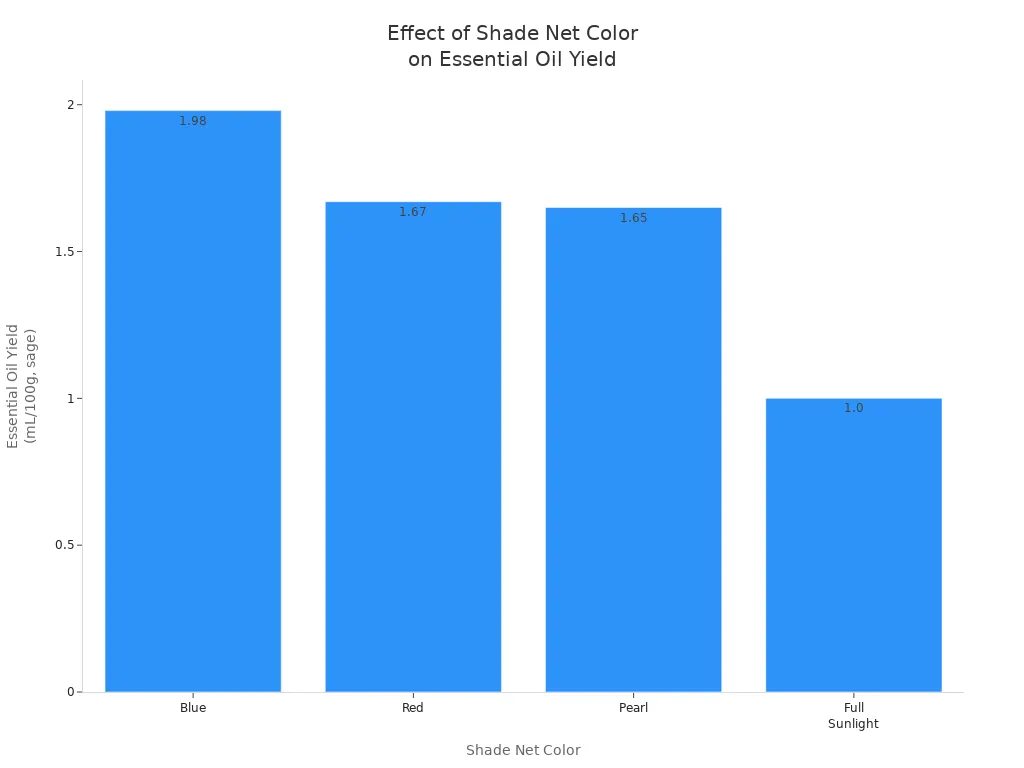
Blue and red nets often help plants grow bigger and give more yield. Blue nets also help some plants make more oil. Black nets block the most light but can slow plant growth. Green nets work well for many vegetables.
Note: The color you pick can change leaf size, plant height, and oil amount. Try different colors to see what works best for your crop.
Materials
You need a strong material for your shade net. Most Agricultural Shade Nets use High-Density Polyethylene, or HDPE. HDPE has many good points. It gives great shade, lasts a long time, and costs less than other materials. It is strong, tough, and stands up to heat, cold, and chemicals. HDPE does not wear out fast, so it is good for outdoor use.
| Material | Advantages |
|---|---|
| HDPE (High-Density Polyethylene) | Great shading, lasts long, works well, low cost, can be recycled, strong, tough, heat resistant, electrical insulation, does not wear out, stretches well, cold resistant, does not rust. |
HDPE shade nets protect your crops from the sun, wind, and pests. The material helps you make a better climate for your plants. It keeps water in the soil and helps crops stay healthy. HDPE nets are also good for the environment because you can recycle them.
Tip: Always check if your shade net has UV protection. UV protection makes the net last longer and keeps your crops safe.
Agricultural Shade Net Types
When you pick a shade net, you see many choices. Each type has special features. These features help you match the net to your crop and weather. Knowing about these types helps you choose the best one for your plants.
Here are the main types you might find:
- Monofilament Shade Nets use single strands. They are strong and give about 50% shade. You use them in hot places for good protection.
- Multi-Filament Shade Nets have many strands twisted together. They are thick and hard to tear. They give around 70% shade. These nets work well in very sunny spots.
- HDPE Shade Nets use high-density polyethylene. They do not let water in and block UV rays. These nets last longer in the rain or strong sun.
- Knitted Shade Nets use one piece of polymer. They cover evenly and let air move through. Farmers use them in greenhouses to keep plants healthy.
- Agro Shade Nets for Greenhouses are made for greenhouses. They help control humidity and temperature. These nets protect soft crops from bad weather.
- Laminated Shade Nets have many layers of polymer. They are tough and do not tear easily. You use them in windy places for steady shade.
You also need to know how nets are made. The two main ways are knitted and woven. Each way has good and bad points.
| Type | Material | Key Features | Advantages | Disadvantages |
|---|---|---|---|---|
| Knitted Shade Nets | Lightweight polyethylene | Open lockstitch desig, allows 2-3% stretch/shrinkage, better air circulation | Cheap, lasts long, stands up to weather and chemicals, easy to put up and fix | Not as strong, less UV protection, color fades faster |
| Woven Shade Nets | 100% polypropylene | Tight weave, blocks more sunlight, minimal stretch/shrinkage | Stronger, better UV protection, color stays bright | Heavy, costs more, not flexible, less air flow, harder to put up and fix |
Tip: If you want easy setup and good air flow, pick knitted nets. If you need strong nets and UV protection, woven nets are better.
Always match the net type to your weather and crop needs. Use laminated or multi-filament nets in windy or sunny places. Pick knitted nets for greenhouses or places needing more air. The right net helps your crops grow strong and healthy.
Comparison
Features Table
You need to compare shade nets before you choose one for your farm. The table below shows the main features of different types of nets. You can see how each type stands out in terms of material, shade ratio, color options, and best uses.
| Net Type | Material | Shade Ratio Options | Color Choices | Best Use Cases | UV Protection | Air Flow | Tear Resistance |
|---|---|---|---|---|---|---|---|
| Knitted HDPE | HDPE | 30% – 90% | Green, Black, Blue, Red | Greenhouses, nurseries, open fields | Yes | High | Moderate |
| Woven Polypropylene | Polypropylene | 50% – 90% | Green, Black | Commercial farms, windy areas | Yes | Moderate | High |
| Laminated Multi-layer | HDPE/Polypropylene | 70% – 90% | Green, Black | Windy, harsh climates | Yes | Low | Very High |
| Monofilament HDPE | HDPE | 50% – 75% | Green, Black | Hot regions, fruit crops | Yes | High | High |
Tip: Always match the net type to your crop and climate needs. Stronger nets work better in windy places. Nets with more air flow help in humid regions.
Durability
You want your shade net to last as long as possible. Good-quality nets, especially those made from UV-stabilized HDPE, usually last between three and five years under normal farming conditions. The net’s lifespan depends on the material, climate, and how well you care for it.
- HDPE monofilament nets with UV stabilization can last five years or more.
- These nets resist dust, algae, chemicals, and sunlight, which helps them last longer.
- You can extend the net’s life by storing it in a cool, shaded place during the off-season.
- Nets go through tough tests for tear resistance and light filtration to make sure they hold up in the field.
- Proper care, such as cleaning and checking for damage, helps you get the most out of your investment.
Note: UV stabilization is key. Nets without it break down faster in the sun.
Cost
You need to consider cost when choosing a shade net. Prices depend on the material, size, and installation needs. HDPE shade nets cost between $0.50 and $1.50 per square foot. Polypropylene nets are more expensive, ranging from $1.50 to $3.00 per square foot. Green shade nets in India cost about Rs. 140 per kilogram or Rs. 18 to Rs. 20 per square meter.
| Material Type | Cost Range (per unit) | Size/Installation Cost Range |
|---|---|---|
| HDPE Shade Nets | $0.50 – $1.50 per sq. ft. | Small structures: from $75 |
| Polypropylene Nets | $1.50 – $3.00 per sq. ft. | Large commercial installations: up to $30,000 |
| Green Shade Net | Rs. 140 per kg | Rs. 18 – Rs. 20 per square meter |
Labor and installation add to the total cost. Complex projects and larger farms need more support structures, which increases expenses. Regional factors and net quality, such as UV resistance, also affect pricing.
Tip: Invest in quality nets with UV protection. They last longer and save you money over time.
Crop Suitability
Choosing the right shade net for your crops makes a big difference in your harvest. Each plant type needs a specific amount of sunlight. You must match the shade net density to your crop’s needs. This helps you protect your plants and improve their growth.
Some vegetables, like eggplants, tomatoes, and capsicums, need a lot of sunlight. You should use a shade net with a 30% density for these crops. This net blocks just enough light to prevent sunburn but still lets in plenty of sunshine. Your plants will stay healthy and strong.
Dark leaf vegetables, such as spinach, chard, and lettuce, prefer less direct sunlight. These crops grow best under a 60% shade net. This net gives them moderate shade. It keeps the leaves tender and prevents them from wilting in the heat.
Orchids, ferns, and palms need even more protection. These plants thrive under high-density shade nets. You should use a net with 70% to 90% density for these crops. This level of shade keeps them cool and safe from harsh sunlight.
Here is a quick guide to help you choose the right shade net for your crops:
| Crop Type | Suitable Shade Net Density | Notes on Crop Sunlight Requirement |
|---|---|---|
| Vegetables (eggplants, tomatoes, capsicums) | 30% | Require high sunlight exposure |
| Dark leaf vegetables (spinach, chard, lettuce) | 60% | Prefer moderate shade, less direct sunlight |
| Orchids, ferns, palms | 70%-90% | Need high-density shade for protection |
Tip: Always check your crop’s sunlight needs before you select a shade net. Using the wrong density can slow growth or cause damage.
You can also experiment with different net colors. Some crops respond better to blue or red nets, which change the quality of light. Try small sections first to see what works best for your farm.
Matching the right net to your crop type helps you get better yields and healthier plants. You save water, reduce stress on your crops, and protect them from extreme weather. Your farm becomes more productive and sustainable.
Choosing
Crop Needs
You must start by understanding what your crops need. Each crop type has its own requirements for sunlight, temperature, and protection. Some crops, like lettuce or spinach, need more shade to stay cool and tender. Others, such as tomatoes or peppers, grow best with more sunlight and less shade. You also need to think about pests and diseases. If your crops often face insect attacks, you may want to use anti-insect or anti-bird nets.
The table below helps you compare the main factors when choosing a net for your crops:
| Factor | Explanation |
|---|---|
| Crop Type | Some crops need more shade, others need more sun. Choose the net density based on the crop. |
| Climatic Conditions | Use anti-hail nets in hail-prone areas. Use shade nets in hot, sunny regions. |
| Pest Problems | Anti-insect and anti-bird nets help reduce pest damage and pesticide use. |
| Installation & Maintenance | Some nets are easier to install and maintain than others. |
| Net Type & Purpose | Shade nets lower sunlight and heat. Other nets protect from pests or hail. |
| Material & Features | Pick materials with UV resistance and the right mesh size for your needs. |
Tip: Always match the net’s shade level and features to your crop’s growth stage and local problems.
Climate
Your local climate shapes your choice of shade net. If you farm in a region with strong sunlight and high temperatures, you need a net that blocks more light and keeps crops cool. In areas with frequent hailstorms, you should use nets that protect against hail damage. Some climates have big temperature swings between day and night. In these places, nets that improve airflow and balance shade with oxygen help your crops stay healthy.
- In hot, dry climates, nets lower heat stress and keep soil moist.
- In hail-prone regions, strong nets prevent physical damage to plants.
- In places with changing weather, nets help crops handle temperature swings.
Note: Always check your weather patterns before you buy a net. The right net helps you protect your crops and save water.
Farm Size
You need to pick the right net size for your farm. Standard net sizes include 2m x 100m, 3m x 50m, 4m x 50m, and 6m x 50m. These sizes work for small gardens and large fields. If your farm has an unusual shape or size, you can order custom nets to fit your land exactly. Custom nets help you cover all your crops without wasting material.
- Small farms often use smaller nets or cover only certain crops.
- Large farms may need bigger nets or several rolls to cover wide areas.
- Custom nets let you match the net to your field’s shape and crop layout.
Tip: Measure your field before you buy. Custom sizes help you save money and get the best coverage.
Budget
You should think about your budget before buying shade nets. First, figure out how much land you want to cover. Measure your fields and count how many nets you will need. Bigger farms need more nets, so they cost more. Small farms use fewer nets and spend less money.
Check how much each net costs for every square foot or meter. HDPE nets are usually cheaper than polypropylene nets. Nets with higher shade rates, special colors, or UV protection cost more. You also need to think about installation costs. If you pay workers or build frames, your costs go up.
Make a list of all the things you need to pay for:
- Net material (HDPE, polypropylene, or other types)
- Shade rate and color choices
- Tools and labor for installation
- Frames and supports, like poles and wires
- Supplies for cleaning and fixing nets
Ask different sellers for prices and compare them. Some sellers give discounts if you buy a lot at once. You can save money by buying nets in big rolls or bundles. Always check if the price includes delivery and setup.
Pick nets that have a good warranty. A longer warranty means you will not need to buy new nets soon. Good nets last longer and save you money in the long run. Cheap nets can break or lose color fast, so you may spend more fixing or replacing them.
Use a simple table to help you compare costs:
| Item | Estimated Cost | Notes |
|---|---|---|
| Net Material | $0.50-$3.00/sq.ft. | HDPE is cheaper, and polypropylene costs more |
| Installation Labor | $75-$500+ | Depends on the farm size |
| Support Structures | $50-$1,000+ | Poles, wires, fasteners |
| Maintenance | $20-$100/year | Cleaning, repairs |
Tip: Buy nets with UV protection and strong stitching. These nets last longer and you will not need to replace them often.
Plan your spending carefully. Pick nets that work for your farm and give you the best deal. Spending a bit more on good nets helps you save money later.
Installation

Preparation
You need to prepare your site before you install shade nets. Good preparation helps you avoid mistakes and makes the installation last longer. Follow these steps:
- Clean the area where you plan to install the net. Remove debris and weeds from the edges and surrounding space. This step is important for nurseries and large planting areas.
- Gather all the materials you need. Collect the shade net, iron wire, bamboo or wooden sticks, and all necessary tools.
- Use a measuring tape to measure the area you want to cover. Accurate measurements help you avoid waste and ensure full coverage.
- Cut the net to the right size. Leave a few extra inches on each side so you do not cut too short.
- Prepare the edges of the net. Use a match or lighter to seal any frayed ends. This keeps the net neat and prevents unraveling.
Tip: Double-check your measurements before you cut the net. Mistakes here can lead to wasted material.
Tools
You need the right tools to install shade nets safely and efficiently. Gather these items before you start:
- Cutting tools such as a tape cutter or special scissors for plastic.
- Trimming tools for cutting tarps and channels.
- Anchoring tools, like a screwdriver, wrench, or drill, are used, are used for attaching panels to metal frames.
- A sturdy ladder to reach high places and anchor the net securely.
- Large fabric bills or reinforcement strips to strengthen seams against wind and sun.
- Personal protective equipment: gloves, goggles, and a construction helmet.
- First aid supplies, including adhesive tape and alcohol, for safety.
Note: Always wear gloves and goggles to protect yourself from sharp edges and flying debris.
Steps
Structures
Start by choosing the right type of net for your crops and climate. Consider the color and material. For example, white nets cool the area, black nets deter pests, and green nets blend with the environment. Measure the area and select nets that fit. If your field has an irregular shape, use multiple nets for better coverage.
Set up support structures using poles or frames. Place them at regular intervals to keep the net stable. Make sure the supports are strong enough to handle wind and rain.
Attaching
Attach the net to the support structure using hooks, ropes, clips, or ties. Pull the net tight to avoid sagging. Secure all corners and edges. Check that the net covers the entire area without gaps.
Securing
After attaching the net, inspect all fastenings. Tighten any loose ties or clips. Make sure the net stays stable during strong winds. Regularly check the supports and repair any damage quickly.
Common Mistake: Many farmers forget to leave extra netting at the edges. This can cause the net to shrink or tear over time. Always leave a margin for adjustments.
Tip: Clean the net regularly and check for damage. Proper maintenance extends the life of your installation.
Maintenance
Inspection
You need to inspect your shade nets often to keep them working well. Regular checks help you find problems early and prevent bigger damage. Always look over your nets after storms or strong winds. Use this checklist to guide your inspections:
- Look for cracks, tears, or frayed edges along the net.
- Check for loose or missing ties, clips, or fasteners.
- Inspect support poles and frames for rust or bending.
- Watch for sagging areas that collect water or debris.
- Examine the net for faded spots, which may mean UV damage.
Tip: Schedule inspections at the start of each season and after any severe weather. Early action keeps your nets strong and your crops safe.
Cleaning
Clean nets let in more light and last longer. Dirt, dust, and plant debris can block sunlight and weaken the net fibers. You should clean your nets gently to avoid damage. Follow these steps for the best results:
- Brush away loose dirt and leaves with a soft broom or brush.
- Rinse the net with a hose using a mild soap solution.
- Use a soft-bristle brush to scrub any stubborn spots.
- For large areas, use a low-pressure sprayer to wash off dust and grime.
- Let the net air-dry fully before putting it back or securing it.
- After cleaning, check for holes or weak spots that need repair.
Note: Avoid harsh chemicals or high-pressure washers. These can damage the net and shorten its life.
Repairs
Fixing small problems right away helps your nets last longer. If you see a tear or hole, act quickly. Here is a simple repair process:
- Find and measure the damaged area. Trim rough edges to make a smooth repair.
- Clean the spot with soapy water and rubbing alcohol. This helps repair tape stick better.
- Use repair tape that matches your net’s thickness. Place tape on both sides of the tear. Ask someone to help hold the net tight.
- For bigger holes, add extra layers of tape and a plastic patch that covers a few inches beyond the damage.
- Check your repairs often. Fix small tears before they get worse.
Tip: Store extra repair kits and tape on your farm. Quick repairs save you money and protect your crops.
| Common Repair Mistakes | How to Avoid Them |
|---|---|
| Ignoring small tears | Fix them right away |
| Using weak tape | Match tape to net strength |
| Leaving wrinkles | Keep the net tight when taping |
Regular inspection, gentle cleaning, and prompt repairs keep your nets in top shape. These steps help you get the most value from your investment and protect your crops season after season.
Adjustments
You need to adjust your shade nets throughout the year to get the best results for your crops. Seasonal changes affect sunlight, temperature, and humidity. By making the right adjustments, you help your plants stay healthy and productive.
Start by checking the weather and the needs of your crops. In summer, the sun gets stronger and temperatures rise. You should use nets with higher shading percentages. These nets block more sunlight and keep your plants cool. In cooler months, switch to nets with lower shading percentages. This lets in more light and helps your crops grow when the days are shorter.
The table below shows how seasonal adjustments can change your growing environment:
| Environmental Factor | Seasonal Adjustment Impact |
|---|---|
| Solar Radiation Reduction | 15%–39% less sunlight in summer |
| Air Velocity Control | 50%–87% less wind, less plant stress |
| Relative Humidity Change | 2%–21% more humidity, better moisture |
| Air Temperature Change | 2.3–2.5°C cooler in hot seasons |
| Evapotranspiration Reduction | 17.4%–50% less water loss |
You can see that adjusting your nets helps you control sunlight, wind, and moisture. This creates a better microclimate for your crops. Your plants use water more efficiently and face less stress from heat or wind.
Follow these steps to make the right adjustments:
- Inspect your nets at the start of each season.
- Change to a higher or lower shade percentage based on the weather.
- Make sure the nets fit tightly and cover all plants.
- Watch your crops for signs of too much or too little light.
- Adjust the net height or angle if needed to improve airflow or light.
Tip: Always match your netting strategy to your crop type and local weather. Some crops need more shade, while others need more sun.
You should also check your nets after storms or strong winds. Tighten any loose areas and replace damaged sections. Regular adjustments help your nets last longer and keep your crops safe all year.
By making these changes, you protect your plants, save water, and improve crop quality. Smart adjustments help you get the most from your investment and support sustainable farming.
Challenges
Common Issues
You may face several challenges when using shade nets on your farm. These problems can affect both the nets and your crops. Here are some of the most common issues:
- Strong winds can damage nets if you do not secure them well.
- UV rays from the sun can break down the net material over time, making it weak.
- Choosing the wrong shade percentage can harm your plants. Too much shade can slow growth, while too little can cause sunburn.
- Poor installation, such as bad measurements or loose fixings, often leads to tears or gaps.
- Lack of regular maintenance allows small problems to become bigger. Dirt, tears, and weak supports can shorten the net’s life.
- Using low-quality materials or the wrong type of fixings reduces durability and protection.
Tip: Always check your nets after storms or strong sunlight. Early action prevents bigger problems.
Solutions
You can solve most net problems with good habits and the right tools. Here are some solutions that help you keep your nets in top shape:
- Inspect your nets often. Look for tears, loose ties, or faded spots.
- Patch small holes right away using repair kits. This stops damage from spreading.
- Use sunscreen sprays to protect your skin from UV rays. These sprays help prevent fading and keep the material strong.
- Clean your nets regularly. Remove dust and debris to let in more light and reduce wear.
- Make sure support structures stay sturdy. Tighten or replace any weak poles or wires.
- Choose nets made from high-quality, UV-resistant materials. These last longer and protect your crops better.
Note: Regular care saves you money by reducing the need for new nets.
Replacement
Sometimes, you need to replace your nets to keep your crops safe. Watch for these signs:
- The net has many tears or large holes that repairs cannot fix.
- The material feels brittle or breaks easily after years in the sun.
- The color fades so much that the net no longer blocks enough sunlight.
- The net sags or does not fit well, even after adjustments.
When you see these problems, plan to buy new nets before the next growing season. Measure your fields again to get the right size. Choose nets with strong UV protection and sturdy fixings. Good planning helps you avoid gaps in crop protection.
Tip: Keep a record of when you install and replace nets. This helps you track their lifespan and plan for future needs.
Applications
Real-World Use
Farmers use shade nets all over the world. These nets protect crops from strong sun and bad weather. In India, farmers cover nurseries and vegetable fields with nets. This helps lower heat and saves water. In California, berry farmers use nets to stop sunburn. Nets also help them pick berries for a longer time. You can use shade nets for animal shelters, seedling nurseries, and flower gardens. Many big greenhouses use nets to keep plants safe and healthy. Shade nets help you grow better crops and lose fewer plants.
Tip: Visit farms nearby to see how shade nets work. You can learn new ideas and avoid mistakes.
Crop Examples
Shade nets work for many crops. Here are some examples:
- Tomatoes: Use 30% shade nets to stop sun damage and keep fruit firm.
- Lettuce and Spinach: These greens like 50%–60% shade. You get soft leaves and more crops.
- Strawberries: Nets keep birds away and lower heat stress. You pick sweeter berries.
- Orchids and Ferns: These need 70%–90% shade. Nets keep them cool and stop leaf burn.
- Capsicum and Peppers: Use 30%–50% shade nets to keep color and stop cracking.
- Herbs: Sage and basil grow well under colored nets. These nets help make more oil.
The table below shows which shade nets fit each crop:
| Crop Type | Recommended Shade (%) | Main Benefit |
|---|---|---|
| Tomatoes | 30 | Stops sun damage |
| Lettuce/Spinach | 50–60 | Soft leaves |
| Strawberries | 30–50 | Sweet berries, bird safety |
| Orchids/Ferns | 70–90 | Stops leaf burn |
| Peppers | 30–50 | Keeps color |
Best Practices
You get better results if you use shade nets the right way. Always measure your field before you buy nets. Pick the right shade level for your crop and weather. Put nets on tight so they do not sag or blow away. Clean the nets often to keep the light steady. Check for holes after storms and fix them fast. Change the net height and angle when seasons change. Move crops around under nets to stop diseases. Store nets in a cool, dry place when not in use.
Note: Write down when you put up nets and how your crops do. This helps you see what works best for next time.
Using shade nets the smart way helps your farm do better. You save water, use fewer chemicals, and pick better crops.
You gain better crop protection and higher yields when you use Agricultural Shade Net on your farm. Select the right net for your crops and climate to improve plant health and save water. Follow the steps in this guide to install, maintain, and adjust your nets for each season. Take action now to boost your harvest. For more tips, visit local agricultural centers or join farmer groups online.
FAQ
What is the best shade percentage for vegetables?
You should use a 30% to 50% shade net for most vegetables. This range gives enough sunlight for growth and protects plants from heat stress.
How long does an agricultural shade net last?
A high-quality, UV-stabilized shade net lasts three to five years. You can extend its life with regular cleaning and quick repairs.
Can you use shade nets in rainy seasons?
Yes, you can use shade nets during rainy seasons. The nets protect crops from heavy rain and wind. They also help prevent soil erosion.
Do shade nets reduce water usage?
Yes, shade nets help you save water. They lower evaporation rates and keep soil moist longer. Your crops use water more efficiently.
How do you clean a shade net?
You should brush off loose dirt, then rinse the net with water and mild soap. Let the net dry completely before reinstalling it.
Can shade nets protect against pests?
Shade nets act as a barrier against many pests and birds. You may still need extra protection for small insects, but nets reduce most pest problems.
What crops benefit most from colored shade nets?
Colored shade nets help herbs, flowers, and some vegetables. For example, blue nets boost leaf growth in leafy greens. Red nets improve fruit quality in tomatoes and strawberries.
Is it hard to install a shade net?
You can install a shade net with basic tools and careful planning. Use strong supports and secure all edges tightly. Always follow the manufacturer’s instructions.
 English
  German
  French
  Japanese
  Spanish
  Russian